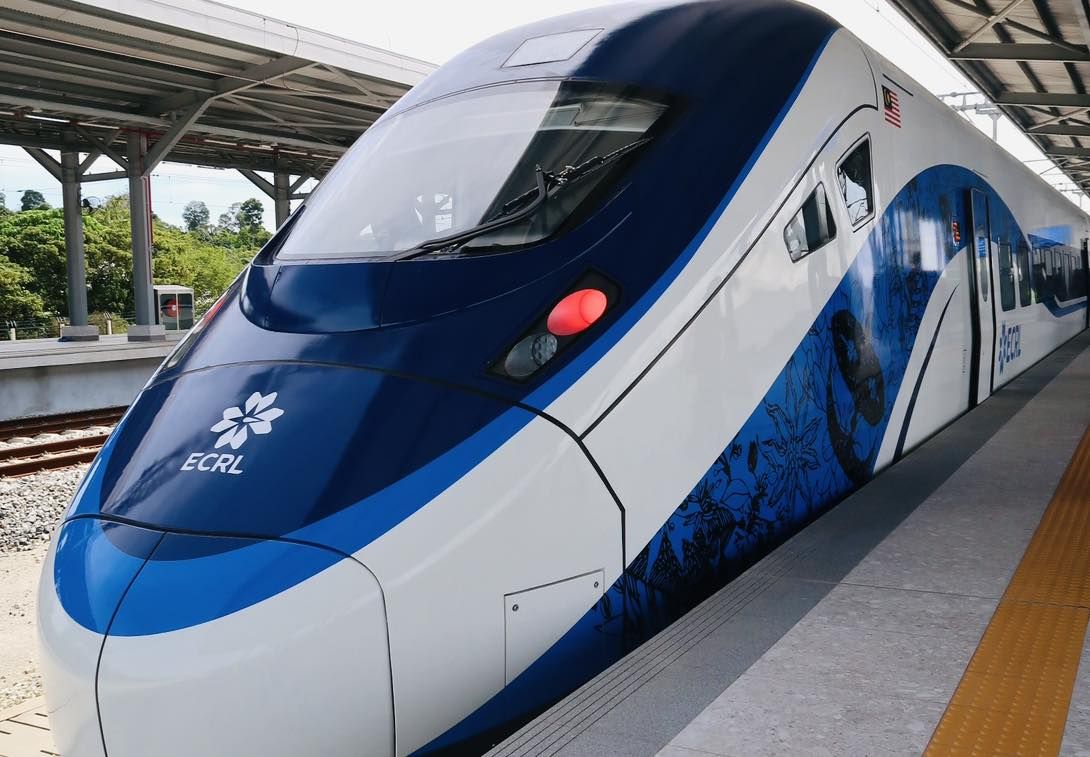
The East Coast Rail Link (ECRL) is expected to fundamentally reshape Malaysia's economic geography, with projections indicating a cumulative contribution of RM80 to RM90 billion to gross domestic product by 2047. Deputy Economy Minister Datuk Mohd Shahar Abdullah has framed the RM50.27 billion infrastructure project as far more than a transportation link—it represents a deliberate strategy to catalyse regional economic development and narrow the persistent productivity gap between the east and west coasts. The project's completion in December 2026, with operations commencing in January 2027, positions it as a critical enabler for Malaysia's industrialisation agenda over the coming decades.
At the heart of this economic transformation lie 21 Economic Accelerator Projects (EAPs) strategically positioned along the 665-kilometre corridor. These initiatives are designed to convert ECRL stations into engines of growth rather than mere transit points. The deputy minister's emphasis on treating the rail link as a catalyst for sustainable economic development aligns with broader policy objectives under the MADANI Economy framework, which prioritises inclusive growth and equitable distribution of infrastructure benefits. This approach signals a deliberate pivot away from traditional west-coast-centric development models that have historically concentrated economic activity in the Klang Valley and Penang.
Three locations have been specifically earmarked for transformation into regional logistics hubs. Pasir Puteh in Kelantan will occupy 213 acres and serve as a major distribution centre, while Kemaman in Terengganu has allocated 68 acres for similar purposes. Temerloh in Pahang, positioned at the southern stretch of the corridor, will develop a 50-acre facility. These hubs represent a fundamental reimagining of how goods will flow through Malaysia's supply chains. Rather than concentrating logistics operations in established urban centres, the government is deliberately dispersing infrastructure to unlock economic potential in historically underutilised regions. This decentralisation strategy carries significant implications for small and medium-sized enterprises throughout the east coast, which will gain improved access to national and regional markets.
The Perodua logistics hub in Paya Besar, Kuantan, exemplifies how private sector engagement will drive implementation. The completion of its first phase by 2029 demonstrates tangible momentum toward realising these ambitious economic goals. Perodua's commitment to develop this facility reflects growing confidence among major industrial players that the ECRL corridor will become commercially viable. Manufacturing companies, retailers, and logistics operators are positioning themselves to capitalise on improved connectivity and reduced transportation costs. For Malaysia's automotive sector, the Paya Besar hub offers particularly significant opportunities, enabling more efficient distribution of vehicles and components across the peninsula.
Deputy Minister Mohd Shahar has been careful to situate the ECRL within Malaysia's existing logistics ecosystem rather than positioning it as disruptive to established shipping routes. This measured framing is politically and economically significant, as it acknowledges concerns from Westport and other port operators who might perceive the rail link as a threat to their market share. Instead, the narrative emphasises complementarity—the ECRL will absorb certain cargo flows that benefit from rail's cost efficiency and environmental advantages while allowing maritime operations to focus on international trade and bulk commodities. This coexistence strategy suggests the government recognises that Malaysia's logistics sector must remain diversified across multiple modes to maintain competitiveness in regional and global supply chains.
The project's alignment with the 13th Malaysia Plan underscores institutional commitment to maximising its economic returns. The integration of the Malaysia Development Composite Index and MyRMK system ensures that associated development initiatives are strategically targeted toward communities most in need of economic stimulus. This data-driven approach to accompanying infrastructure investment reduces the risk of speculative development and concentrates resources where they will generate broadest social benefit. For east coast states including Kelantan, Terengganu, and Pahang—regions that have experienced slower economic growth relative to their west coast counterparts—this represents a significant redirection of national investment priorities.
The project's impressive rolling stock allocation reflects its dual role as both passenger and cargo infrastructure. The 11 six-car electric multiple unit train sets will provide modern passenger services connecting the corridor's major towns and cities, while 12 electric locomotives dedicated to cargo operations will form the backbone of freight capacity. This specialisation of equipment demonstrates sophisticated planning that separates passenger and freight operations for optimal efficiency. The emphasis on electric propulsion also signals Malaysia's commitment to sustainable transport and reduced carbon emissions, positioning the ECRL as aligned with climate commitments and regional sustainability standards.
From a regional perspective, the ECRL's development carries implications extending beyond Malaysia's borders. As Southeast Asia increasingly integrates economically through initiatives like the ASEAN Comprehensive Investment Agreement, improved connectivity within Malaysia strengthens the nation's ability to serve as a regional logistics hub. Thai and Vietnamese companies seeking efficient entry to Malaysian and broader ASEAN markets will benefit from enhanced east coast infrastructure. The rail link thus becomes not merely a domestic development project but a regional asset that enhances Malaysia's competitive positioning within Southeast Asia's evolving supply chain networks.
Employment creation emerges as a tangible benefit dimension that deserves emphasis. The construction phase has already generated thousands of jobs, while the operational phase will create permanent positions in rail operations, logistics, warehousing, and related services. For rural communities along the corridor, particularly in Kelantan where unemployment and economic opportunities have historically lagged, these employment prospects represent meaningful pathways for economic participation. The deputy minister's explicit commitment to creating quality job opportunities reflects recognition that infrastructure projects must translate into improved living standards for affected populations.
The RM80 to RM90 billion GDP contribution projection warrants careful contextualisation. Over a 20-year period to 2047, this represents annual average GDP additions of RM4 to RM4.5 billion—substantial but not transformative relative to Malaysia's current annual GDP of approximately RM2 trillion. However, these figures capture only direct contributions from ECRL-related activities and the 21 Economic Accelerator Projects. Indirect and induced effects—such as supply chain improvements, reduced logistics costs benefiting downstream industries, and agglomeration benefits as businesses cluster near hubs—could substantially amplify these contributions. The projection likely represents a conservative baseline rather than an upper-bound estimate.
Implementation challenges remain significant. Ensuring that projected logistics hubs achieve commercially viable scale will require sustained private sector engagement and competitive advantages over existing alternative routes. Kelantan and Terengganu's historical underperformance in logistics development suggests that infrastructure alone cannot guarantee economic transformation without complementary investments in skills development, business facilitation, and market access. The government's success in realising the ECRL's economic potential will depend on whether accompanying policies and investments address these broader structural constraints.

