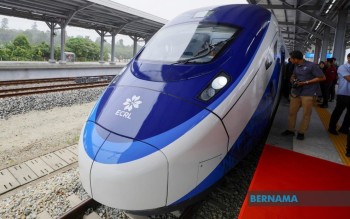
Malaysia's East Coast Rail Link (ECRL) represents far more than a transportation upgrade—it embodies a strategic reimagining of regional commerce and growth potential. According to Datuk Mohd Shahar Abdullah, Deputy Minister of Economy, the project will fundamentally reshape how entrepreneurs operate across Pahang, Terengganu, Kelantan and Selangor by dismantling traditional geographical and logistical constraints that have historically limited market reach in these states.
The anticipated benefits extend well beyond moving cargo from point A to point B. Rather, the ECRL framework establishes an integrated economic ecosystem where construction, operational, and maintenance activities generate employment and ancillary business opportunities alongside the core transportation function. This multiplier effect means that the project's economic footprint will ripple through multiple industry layers, creating interconnected supply chains that strengthen regional resilience and diversification.
At the heart of the ECRL's transformative potential lies the principle of transit-oriented development. By concentrating commercial, industrial, and logistics facilities along the rail corridor, planners have essentially created pre-positioned hubs where entrepreneurs can establish warehouses, distribution centres, and manufacturing bases with reduced infrastructure costs. This strategic clustering reduces barriers to entry for small and medium enterprises that previously faced prohibitive real estate and setup expenses in densely populated or distant locations.
For entrepreneurs currently operating within the East Coast region, the logistics revolution promises tangible competitive advantages. Substantially lower transportation costs combined with dramatically reduced delivery times will enable local manufacturers to serve distant markets previously considered economically unviable. A producer in Terengganu, for instance, could now cost-effectively distribute products to Selangor-based consumers or retailers—a market expansion that directly translates into increased production volumes and operational efficiency gains.
Mohd Shahar's observation about production scaling illustrates the economics driving regional transformation. Manufacturing 20,000 units instead of 10,000 fundamentally alters unit costs, profit margins, and competitive positioning. This scaling opportunity attracts investment and encourages business expansion precisely because market access has improved, not because raw materials or labour conditions changed. The ECRL essentially removes artificial distance-based handicaps that previously constrained East Coast entrepreneurs.
The cargo-oriented and industrial park development strategy embedded within the ECRL project specifically targets sectors where Malaysia possesses comparative advantages. These purpose-built facilities will accommodate food processing, agricultural value-added production, manufacturing, and light industry—sectors where East Coast states hold significant resource bases or labour availability. By providing modern infrastructure tailored to these industries' needs, the project accelerates investment and capability development in high-potential sectors.
Tourism represents another substantial growth vector often overlooked in infrastructure discussions. Improved rail connectivity to heritage sites, natural attractions, and cultural destinations across the East Coast will likely generate meaningful tourist traffic, particularly from Selangor-based day-trippers and international visitors arriving through Kuala Lumpur. This tourism stimulus directly benefits small traders, handicraft producers, and local food entrepreneurs who operate within destination economies.
The batik industry exemplifies how traditional crafts gain commercial traction through infrastructure-enabled market access. Artisans currently selling primarily through local markets or sporadic tourism channels could establish formal relationships with retailers across Malaysia, participating in organized supply chains rather than relying on occasional walk-in customers. Infrastructure improvements that reduce transportation friction fundamentally alter the commercial viability of niche, high-value products.
However, realizing these opportunities requires deliberate business model evolution among East Coast entrepreneurs. Mohd Shahar's emphasis on technology adoption and moving beyond traditional business practices acknowledges a critical reality: infrastructure alone cannot drive transformation. Businesses must simultaneously upgrade their operational capabilities, adopt digital tools for supply chain management, implement quality assurance systems, and develop professional customer relationships. The ECRL provides opportunity; entrepreneurs must provide innovation and adaptation.
The project's construction progress—97.33 percent completion in Pahang as of April, with overall project progress at 93.66 percent and December completion targeted—suggests that practical implementation is imminent rather than theoretical. This timeline urgency makes forward planning essential for entrepreneurs considering ECRL-related positioning. Businesses must assess how improved logistics could reshape their competitive strategy, identify new markets within the corridor states, and prepare operational capabilities to serve expanded customer bases.
From a Malaysian economic perspective, the ECRL investment yields returns precisely through this entrepreneurial multiplication effect. Rather than creating wealth concentrated among transport operators, the infrastructure generates distributed economic activity across multiple business categories and geographic communities. Small traders in remote East Coast locations gain access to urban markets; manufacturers achieve economies of scale previously impossible; tourism-dependent communities develop more stable economic foundations.
Regionally, the ECRL also positions Malaysia as a logistics hub within Southeast Asia. Enhanced rail connectivity across East Coast states creates potential for deeper integration with Thai and eventually broader ASEAN supply chains. Entrepreneurs strategically positioned along the corridor could function as regional distribution nodes, further multiplying the infrastructure's economic benefit.
Ultimately, the ECRL represents an opportunity window with defined temporal dimensions. Entrepreneurs who recognize the shifting competitive landscape and adapt proactively will capture disproportionate value; those maintaining conventional operational models risk displacement by more sophisticated competitors. The infrastructure transformation is certain; business success remains contingent on recognition and response.

