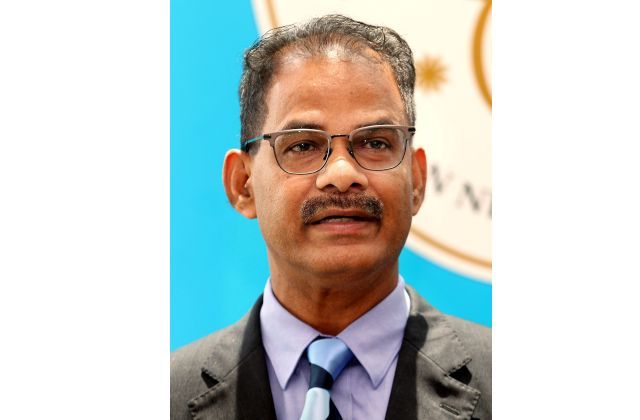
The ongoing East Coast Rail Link (ECRL), a RM50.27 billion national infrastructure venture, is poised to unlock roughly 2,000 employment positions within Selangor's locomotive industry as the megaproject progresses. Speaking during state assembly proceedings in Shah Alam on Tuesday, V. Papparaidu, chairman of Selangor's human resources and poverty eradication committee, emphasised that approximately four-fifths of the positions generated by this substantial undertaking would depend on domestic talent. The revelation underscores the significant economic ripple effects anticipated from this critical transport infrastructure development, which has become increasingly central to Malaysia's regional connectivity ambitions and long-term economic planning.
Papparaidu framed the employment surge as a pivotal opportunity for Selangor's younger workforce, positioning it within the state government's broader strategy to build human capital in emerging industries. Rather than viewing the jobs simply as temporary positions, state officials are treating this influx as a catalyst for systematic skills enhancement. The administration has committed to delivering targeted education and vocational training initiatives designed to align precisely with the locomotive sector's technical demands. This proactive approach reflects growing recognition that infrastructure projects yield their maximum developmental benefit when coupled with intentional workforce preparation, transforming capital investment into human capability gains.
The state government has already mobilised several mechanisms to connect jobseekers with employment opportunities across high-growth sectors. Kerjaya Selangor, executed in partnership with the Social Security Organisation (PERKESO) via the MyFuture Jobs digital platform, operates as a sophisticated matching system. Rather than simply posting vacancies, this initiative evaluates candidate qualifications, existing competencies, and industry prerequisites before facilitating introductions. This targeted methodology acknowledges that a skills gap often persists between available positions and applicant readiness, necessitating intelligent intermediation beyond traditional recruitment channels.
Beyond digital platforms, the state has activated tangible employment bridging events such as JobCare Selangor, which combines job fair functionality with direct interview access. These gatherings specifically concentrate on Technical and Vocational Education and Training (TVET) graduates, a cohort whose qualifications frequently remain underutilised despite robust labour market demand. According to PERKESO statistics cited during the assembly session, Selangor produced 10,111 TVET graduates alone between January and July of this year, representing a substantial pool of potential workers equipped with practical, industry-relevant capabilities.
The labour market landscape across Selangor reveals striking disparities between available positions and candidate supply. Within the same January to July timeframe, approximately 78,030 vacancies requiring diploma-level or higher qualifications existed across the state economy. More significantly, 3,965 of these openings concentrated within sophisticated, high-value sectors including automotive manufacturing, semiconductor fabrication, and advanced industrial production. These positions span roles such as automotive engineers, data scientists, and software developers—careers demanding sophisticated technical foundations that TVET training systematically provides, yet often remain difficult to fill due to talent acquisition challenges and geographic mismatches.
The locomotive industry opportunities arising from the ECRL represent merely one dimension of this broader ecosystem, though a particularly important one given the project's scale and timeline. The rail link project functions as both immediate employment generator and long-term sectoral stimulant, potentially catalysing supply chain development and related manufacturing clusters throughout Selangor. This multiplier effect means the direct 2,000 positions could eventually expand as supporting industries establish themselves to service the locomotive manufacturing sector, from component suppliers to specialised services.
Recognising these opportunities requires deliberate coordination between educational institutions and industrial stakeholders, a challenge Papparaidu acknowledged during questioning from assemblyperson Nushi Mahfodz. The notion of conducting comprehensive skills mapping exercises across Selangor's diverse districts addresses a genuine planning gap. Different economic zones maintain distinct industrial profiles—Shah Alam and Port Klang, for instance, function as manufacturing and logistics hubs respectively, requiring fundamentally different workforce competencies. Without granular district-level data on graduate distributions by specialisation and employment demand by sector, workforce planning becomes guesswork rather than strategic allocation.
Implementing such mapping initiatives demands institutional collaboration that transcends traditional government silos. The state government would require systematic data collection from universities and technical colleges regarding graduate production by discipline, combined with employer surveys detailing precise skill requirements and future hiring trajectories. This intelligence would then feed into curriculum adjustments and career guidance programmes, creating feedback loops ensuring education supply responds dynamically to industry demand. Malaysian educational institutions, while expanding TVET offerings substantially, still contend with curriculum lag—training programmes often reflect yesterday's industrial needs rather than emerging requirements.
The ECRL project itself exemplifies how mega-infrastructure investments can anchor broader economic development strategies when coupled with intentional human capital planning. Rather than merely constructing physical assets, the state recognises opportunities to embed productivity improvements within the workforce itself. The 2,000 projected positions become meaningful only if filled by adequately prepared personnel, underscoring why vocational education investment deserves priority alongside physical construction spending.
Looking forward, Selangor's experience with ECRL-related employment planning may establish templates applicable across Malaysia as other major infrastructure projects progress. The Klang Valley's dense industrial base, coupled with its proximity to the ECRL corridor, positions the state as a proving ground for coordinating infrastructure development with workforce preparation. Success here—effectively matching TVET graduates with locomotive sector positions while establishing training pipelines for future demand—would demonstrate viable approaches for replicating in other states undertaking comparable megaprojects.
The state government's commitment to skills development through tailored TVET programming reflects evolving understanding that infrastructure's true multiplier emerges through employment quality rather than mere job quantity. The 2,000 positions mean little if they remain unfilled due to skills deficits or if qualified workers cannot be efficiently matched with employers. Strategic workforce planning, supported by comprehensive data and inter-institutional coordination, transforms infrastructure investment into sustainable economic benefit extending well beyond construction timelines.

