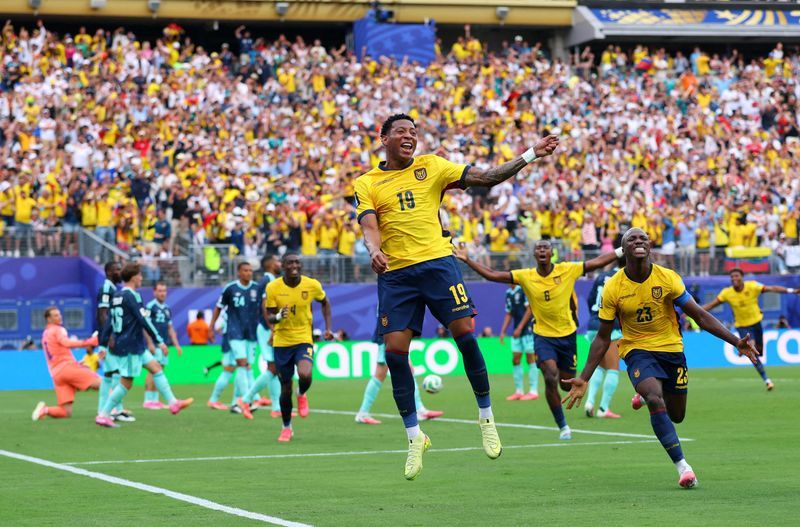
Ecuador pulled off one of the tournament's most improbable turnarounds at the Meadowlands stadium in East Rutherford, New Jersey, on Thursday, overcoming Germany with a 2-1 victory that transformed their World Cup campaign from crisis to qualification. Facing the prospect of elimination after disappointing results against Ivory Coast and Curacao, the South American side delivered a performance of grit and resilience when it mattered most, securing a spot among the eight best third-placed teams heading into the knockout stage.
The task appeared insurmountable when Germany, already assured of advancing as group winners, struck within 120 seconds of the opening whistle. Leroy Sane latched onto a perfectly weighted through ball from Florian Wirtz following a quick throw-in, finishing left-footed from close range to register his first ever goal at a major international tournament despite 15 previous appearances for his country. The early setback might have spelled disaster for Ecuador, who had mustered a staggering 39 shots without finding the net across their opening two matches.
Yet Ecuador's response came with surprising speed and precision. By the ninth minute, Nilson Angulo levelled matters with a delicately curled effort from the edge of the penalty area that caught goalkeeper Manuel Neuer off guard. The goal marked a watershed moment for Felix Sanchez's squad, finally converting their attacking toil into a tangible reward and igniting hope among thousands of yellow-shirted supporters who had travelled to the New York-New Jersey venue.
Controversies punctuated the encounter throughout, beginning with the opening goal itself. Ecuador protested vehemently that Aleksandar Pavlovic had committed a foul with a raised foot against Pedro Vite during the build-up to Sane's strike, but American referee Tori Penso allowed the goal to stand, denying the South Americans an opportunity to reset. The decision would prove consequential given how events unfolded, though Ecuador would ultimately benefit from another officiating intervention before the match concluded.
The second half introduced further drama when Penso awarded Germany a penalty after Felix Nmecha's pass found Kai Havertz, who appeared to tumble under contact from Ecuador defender Joel Ordonez. However, upon reviewing the incident on the pitchside monitor, the referee identified a prior foul committed by Germany in the attacking sequence and overturned his initial decision. The VAR intervention proved pivotal, denying the Germans what would have been a decisive second goal and maintaining Ecuador's lifeline.
With clear-cut opportunities remaining scarce for either side, the outcome hinged on moments of improvisation and alertness. Gonzalo Plata provided the decisive contribution in the 78th minute, demonstrating predatory instincts at the far post when substitute Kevin Rodriguez flicked a corner kick toward the near post. Plata reacted quickest to the loose ball, stabbing a finish past Neuer to complete Ecuador's improbable turnaround and send the sold-out stadium into pandemonium.
Germany's defeat represented a concerning trend for Hansi Flick's squad, who failed in their quest for a third consecutive Group E victory and extended their run without a clean sheet. Despite dominating possession and controlling large portions of the match, the Germans had now conceded in all three group games, exposing defensive vulnerabilities that could prove problematic in knockout football. The setback would not prevent their progression as group winners with six points, a tally garnered through victories in their opening matches.
Ivory Coast's 2-0 triumph over Curacao in a parallel Group E fixture ensured the African representatives finished as runners-up on goal difference, though their advancement appeared secure well before Ecuador's stunning comeback. The structural complexity of World Cup group dynamics meant that Ecuador's qualification came at no cost to Germany's passage through, as the Germans' six-point haul guaranteed top spot regardless of Thursday's result.
Ecuador's journey from desperation to qualification carries broader significance for South American football and the tournament's competitive balance. The squad arrived at the finals with limited preparation time and faced scepticism regarding their capacity to compete at the elite level, yet they demonstrated the character and tactical acumen necessary to overturn seemingly impossible circumstances. Their progression as a third-placed team reflects both the strength of determination and the expanded opportunities available within the World Cup format, where eight third-place finishers earn knockout stage berths.
The victory also highlighted the unpredictability that defines knockout football preparation. Germany, despite qualification assurance, suffered a result that may impact confidence and squad rotation planning as preparations intensify for elimination matches. Ecuador, conversely, carries momentum and psychological advantage heading into the last 32, having demonstrated capacity to overcome superior opponents through intensity and precision in crucial moments.
For Southeast Asian observers and Malaysian football enthusiasts, the Ecuador-Germany encounter underscores how international football's grandest stage rewards not merely technical superiority but also resilience, timing, and the intangible qualities that emerge when teams confront elimination. Ecuador's transformation from floundering scoreless to clinical finishers in a single match offers lessons in performance psychology and tactical adaptation that resonate across all levels of competitive sport.

