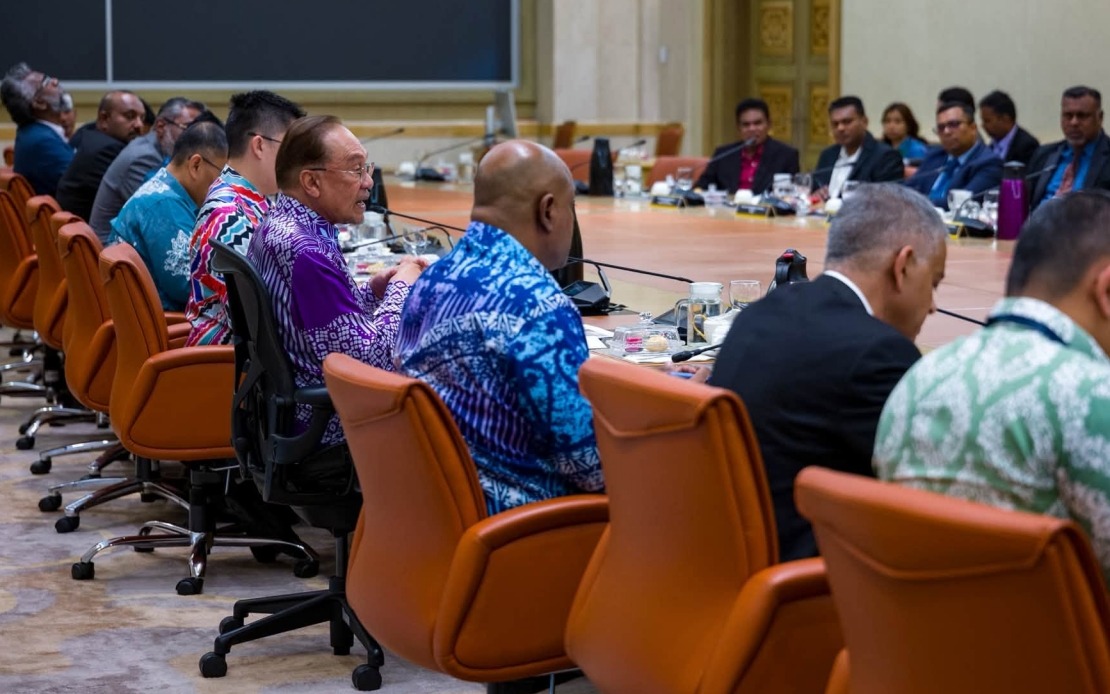
Prime Minister Datuk Seri Anwar Ibrahim has set out an ambitious agenda for advancing the Indian community's socioeconomic standing, placing particular emphasis on educational quality, welfare systems, and pathways to meaningful employment. Speaking following consultations with community leaders, Anwar articulated a vision where targeted interventions address the specific needs of this demographic segment, moving beyond broad-brush policies toward tailored initiatives grounded in lived realities.
The Prime Minister's remarks signal a recognition that effective community empowerment requires understanding the granular challenges facing ordinary families. Rather than imposing top-down solutions, Anwar stressed the importance of listening to community representatives and translating their insights into concrete policy action. This consultative approach reflects an acknowledgment that previous efforts may have lacked sufficient connection to ground-level conditions, where barriers to advancement often go unaddressed by distant bureaucratic structures.
Anwar, who also holds the Finance portfolio, has directed the Malaysian Indian Transformation Unit (MITRA) and partner agencies to adopt a more assertive role at the community level. The directive reflects frustration with passive administration and signals expectations for proactive engagement rather than reactive service delivery. MITRA, established to coordinate development initiatives within the Indian Malaysian population, now faces clearer marching orders to transform its operational model from policy implementation to community-driven problem-solving.
Educational quality emerged as the cornerstone of Anwar's framework. Access alone has proven insufficient; Malaysia's Indian community faces persistent gaps in learning outcomes relative to other demographic groups, a phenomenon traceable to socioeconomic disparities, resource allocation imbalances, and systemic disadvantages. By prioritising quality over mere access, Anwar acknowledges that schooling infrastructure must enhance pedagogical effectiveness, educator capability, and student support systems—particularly in under-resourced areas where Indian families remain disproportionately concentrated.
Welfare provision forms the second pillar of the agenda. Social protection systems in Malaysia have evolved considerably, yet targeted communities often struggle to navigate eligibility criteria or access available benefits. Anwar's emphasis on comprehensive welfare suggests attention to gaps in the existing safety net, whether through expanded assistance programmes, simplified application procedures, or enhanced support for vulnerable household categories. This dimension directly impacts household stability and children's capacity to remain in school, creating synergies between education and welfare initiatives.
Skills development represents a critical third element, acknowledging that labour market participation alone guarantees neither stable income nor upward mobility. Training programmes must align with market demands while remaining accessible to individuals from disadvantaged backgrounds. The emphasis here reflects recognition that many community members lack credentials valued by employers or access to networks facilitating job placement. Bridging these gaps requires targeted vocational education, apprenticeship opportunities, and employer engagement initiatives.
Employment opportunity expansion completes the empowerment architecture. Beyond job creation, Anwar's framing suggests deliberate efforts to ensure Indian Malaysians access positions matching their qualifications and aspirations. Discrimination remains an underlying challenge within Malaysian labour markets; proactive measures addressing hiring biases, promoting diverse recruitment, and creating protected procurement pathways for Indian-owned enterprises form logical complements to individual capability-building.
Central to Anwar's message is accountability—agencies must demonstrate tangible impact rather than mere activity. The Prime Minister's reminder that initiatives should benefit those genuinely requiring assistance signals impatience with leakage, bureaucratic capture, or targeting failures. This insistence on genuine need-based allocation reflects broader governance concerns about ensuring state resources reach intended beneficiaries, a persistent challenge throughout Southeast Asia where implementation gaps frequently undermine well-intentioned programmes.
The articulated approach emphasises compassion alongside accountability, rejecting false dichotomies between fiscal discipline and social concern. Effective empowerment requires adequate resource commitment combined with rigorous oversight ensuring funds reach deserving recipients. Good governance becomes the enabler—transparent processes, community oversight mechanisms, and performance monitoring create conditions where compassion translates into sustained advancement rather than temporary relief.
For Malaysia's Indian community specifically, these commitments address longstanding grievances about underrepresentation in policy discourse and resource allocation. The historical narrative includes migration waves, economic marginalisation, and persistent socioeconomic disparities relative to other communities. Anwar's emphasis on preventing segments from being left behind in national development implicitly acknowledges this history while positioning inclusive growth as essential to national cohesion and stability.
The regional context amplifies these considerations. Southeast Asia encompasses substantial Indian diaspora populations facing similar challenges—education gaps, welfare access disparities, and employment discrimination. Malaysia's experience developing coordinated empowerment strategies carries lessons for neighbours addressing equivalent demographic realities. Effective approaches here potentially inform policy discussions across the region.
Implementation will ultimately determine whether these principles translate into transformative outcomes. Community leaders will scrutinise MITRA and related agencies' response to Anwar's directives, measuring progress through quantifiable improvements in school completion rates, welfare programme penetration, skills certification attainment, and employment stability. The Prime Minister's framing creates clear expectations against which performance can be assessed, establishing accountability mechanisms that empower communities to demand results.
Anwar's emphasis on continuous grassroots engagement suggests recognition that empowerment requires ongoing dialogue rather than periodic consultation. Communities evolve; needs shift; emerging challenges demand adaptive responses. By institutionalising regular engagement, the framework creates space for course correction and learning, positioning the Indian community not as passive beneficiaries but active partners in designing their advancement pathway.

