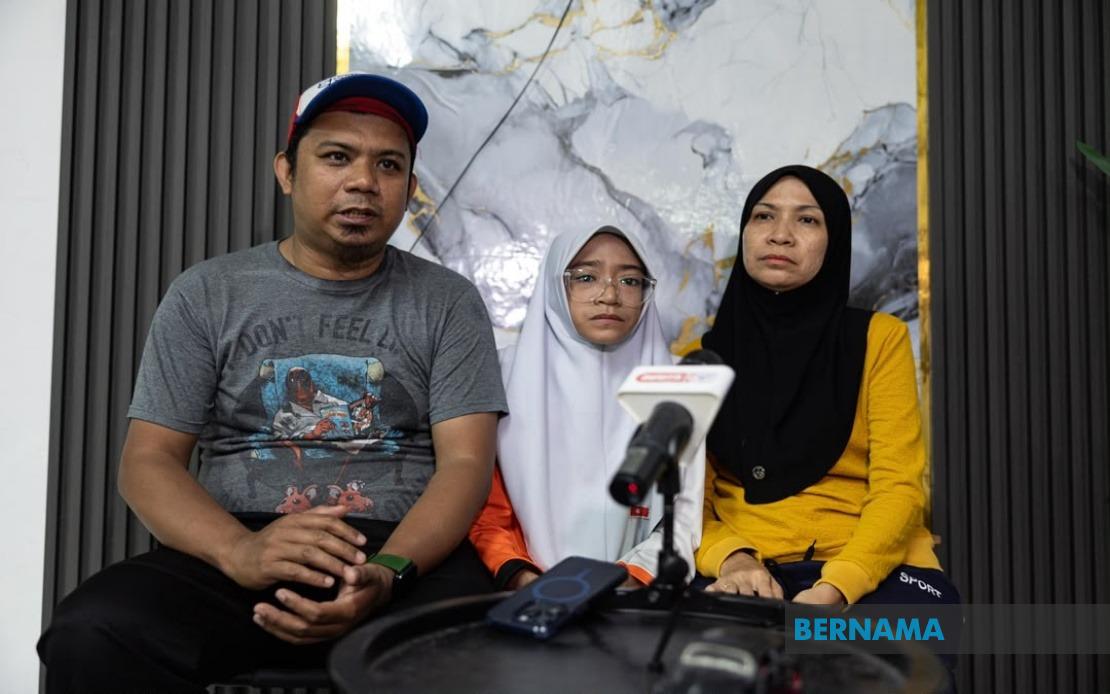
Education Minister Fadhlina Sidek has announced that she and the Tun Hussein Onn Teachers' Foundation (YGTHO) will jointly cover RM10,000 in medical expenses for 13-year-old Arissa El Zahra Reduan's scoliosis surgery, scheduled for September 8 at Raja Permaisuri Bainun Hospital in Ipoh. The commitment, made public through a Facebook post, represents a swift response to the teenager's family appeal for financial assistance to proceed with the corrective spinal procedure.
The minister conveyed the news directly to Arissa and her mother through a video call, emphasizing her personal commitment to ensuring the girl receives necessary treatment without financial strain. During the conversation, Fadhlina stressed that the full amount had been secured and that her office would handle all arrangements to facilitate the surgery. Her remarks highlighted the emotional dimension of the case, noting the teenager's determination to resume school attendance once recovered from the operation.
Arissa's father, Reduan Saad, had publicly appealed for financial assistance to meet the surgical costs, as the family faced difficulty covering the expenses independently. The rapid intervention by Fadhlina and YGTHO demonstrates how government figures and institutional foundations can mobilize resources to address healthcare challenges facing ordinary Malaysians. Such cases often gain traction through media coverage, creating pathways for those in need to access support networks beyond conventional health financing mechanisms.
Scoliosis, a condition characterized by abnormal curvature of the spine, can significantly impact a young person's quality of life and academic engagement if left untreated. For teenage patients, corrective surgery represents a critical intervention that can prevent long-term complications and restore normal functioning. The decision to fund this procedure reflects broader healthcare policy considerations regarding equitable access to specialist treatment, particularly for families without adequate insurance or savings.
The involvement of YGTHO, an educational foundation with historical roots in Malaysia's teaching profession, underscores the institutional commitment to supporting students' welfare beyond classroom instruction. Teacher foundations typically focus on holistic development of young people, recognizing that physical health directly influences educational outcomes and overall well-being. By contributing to Arissa's surgical costs, YGTHO aligns its mission with practical intervention in students' lives.
Fadhlina's approach of personally communicating with the beneficiary—rather than handling the matter through bureaucratic channels alone—demonstrates a leadership style increasingly expected in Malaysian governance. The video call format allowed the minister to provide reassurance directly to an anxious family while simultaneously creating shareable content that humanizes government assistance. This communication strategy reflects evolving public expectations regarding transparency and personal accountability from elected officials.
The September 8 surgery date provides a specific timeline for the family's planning and recovery period, potentially allowing Arissa to resume school during the academic year following her convalescence. The coordination of medical scheduling with educational calendars is a practical consideration that enables students to minimize disruption to their studies. Recovery from spinal surgery typically requires several weeks to months, making the timing relevant to Arissa's return to normal activities.
Raja Permaisuri Bainun Hospital, where the procedure will occur, is a major public healthcare facility in Perak serving a broad geographic catchment. The selection of this institution suggests that appropriate specialist spine surgery capabilities are available within Malaysia's public hospital system, potentially reducing pressure on private healthcare providers for such procedures. This reflects ongoing investment in public hospital infrastructure and specialized services throughout the country.
The case illustrates how media coverage functions as a critical bridge between families facing medical hardship and potential supporters within government and civil society. Bernama's initial reporting of Reduan's appeal effectively publicized the family's situation, attracting attention from senior policymakers. This mechanism, while often effective, also raises questions about equity and access—some families may secure assistance through publicity while others facing similar circumstances lack media platforms or public visibility.
For Malaysian healthcare policy, such interventions highlight ongoing challenges regarding healthcare affordability and the gaps between available public services and family capacity to pay. While major surgical procedures are subsidized under the public system, additional costs associated with specialized care, pre-operative assessments, and post-operative management can accumulate significantly. Government and foundation contributions help bridge these gaps but cannot address the systematic pressures facing families repeatedly.
The broader implications for Southeast Asian health systems are noteworthy, as scoliosis and other orthopedic conditions affecting young people present comparable challenges across the region. Malaysia's approach of combining government ministerial support with foundation resources offers a model for how multiple institutional actors can collaborate to ensure no student is prevented from pursuing education due to untreated medical conditions. Such partnerships may become increasingly important as healthcare costs continue rising across developing economies.

