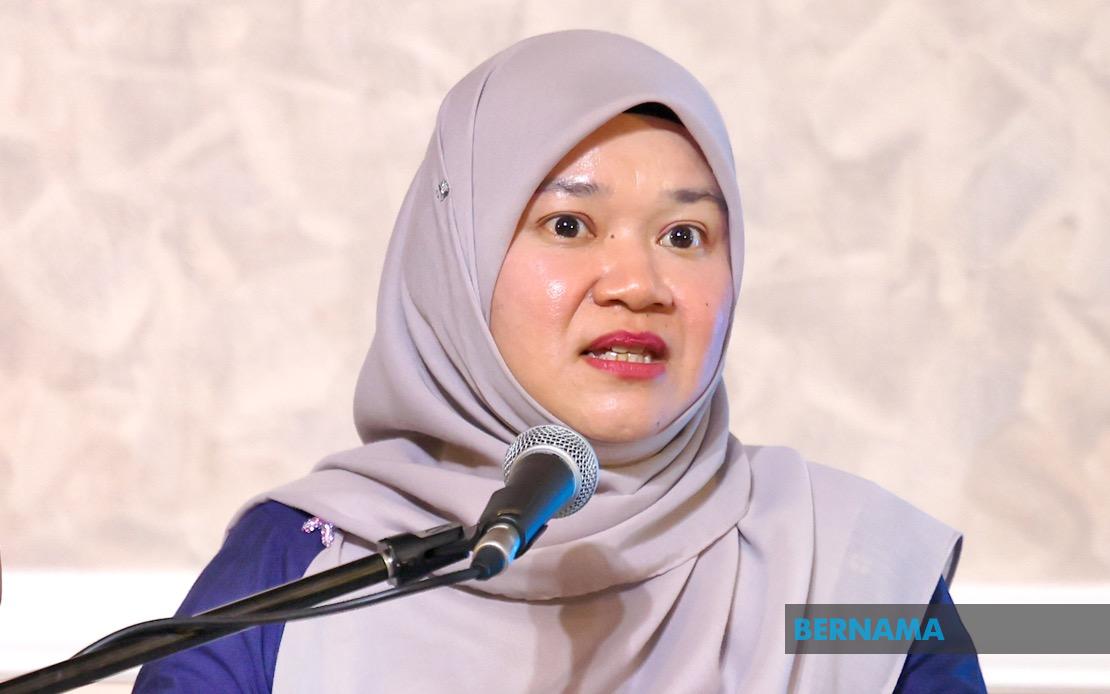
Education Minister Fadhlina Sidek, who leads PKR Wanita, has escalated her response to a deepfake video by lodging a formal police report in Kuala Lumpur. The artificial intelligence-generated content, which spread across digital platforms, contained fabricated allegations designed to damage her standing and undermine her political position. In a statement released on June 24, the minister characterised the video's distribution as a deliberate attack on her integrity and reputation, signalling her determination to pursue legal remedies through law enforcement channels.
The circulation of the malicious content reflects a troubling trend in Malaysian politics where synthetic media technology is weaponised against public figures, particularly women in leadership roles. Deepfake and AI-generated videos have become increasingly sophisticated, making it difficult for ordinary citizens to distinguish authentic material from fabricated content. Fadhlina's decision to involve the police indicates recognition that such attacks require formal institutional responses rather than remaining confined to social media disputes or public statements.
In her formal response, Fadhlina explicitly urged investigative authorities to pursue the matter with appropriate legal rigour. She did not merely condemn the video in abstract terms but set a clear expectation that law enforcement agencies would identify those responsible for creating and distributing the content, as well as determine what criminal statutes might apply. Her language suggested frustration not only with the immediate incident but also with the broader ecosystem that enables such attacks to proliferate with limited consequences.
The minister's statement extended beyond her personal grievance to address a systemic problem affecting women in Malaysian politics. She called on stakeholders across government, civil society, and the private sector to adopt unequivocal positions against slander, character assassination, and sexual harassment directed at female politicians. This framing acknowledges that her experience, while significant, forms part of a larger pattern of gendered political intimidation that constrains women's participation in public life and creates a chilling effect on their political expression.
The targeting of women politicians through defamatory deepfakes carries particular weight in Malaysia's political landscape, where female representation in senior positions remains limited. When such attacks succeed in creating doubt about a woman's fitness for office or personal character, they can disproportionately undermine her authority and effectiveness in ways that male counterparts may not experience. The intersection of technology, politics, and gender therefore creates unique vulnerabilities that existing legal frameworks may not adequately address.
Malaysia's legal arsenal for combating defamation and character assassination includes provisions under the Penal Code relating to criminal defamation, as well as civil remedies available through the courts. However, the emergence of AI-generated content has created jurisdictional and evidential challenges that traditional legal mechanisms were not designed to handle. Establishing who created the video, determining intent, and proving damages become more complex when artificial intelligence is involved, potentially requiring expertise in digital forensics and technology that police units may lack.
The case also highlights the inadequacy of platform governance in preventing the spread of synthetic media. While social media companies maintain policies against misleading content, enforcement remains inconsistent and often reactive rather than proactive. By the time such videos are flagged and removed, they may have already reached hundreds of thousands of viewers, and their removal does not prevent the distribution of copies across encrypted messaging services or other platforms with weaker content moderation.
Fadhlina's approach of pursuing both official complaint channels and public advocacy represents a multifaceted strategy increasingly adopted by Malaysian politicians facing digital attacks. The police report creates an official record and initiates investigation; the public statement frames the issue as one of principle and systemic concern rather than isolated personal victimisation. This dual approach may also prompt political parties and civil society organisations to mobilise around the issue.
The incident comes amid growing international concern about the use of synthetic media to undermine political figures and democratic processes. Democracies worldwide are grappling with how to regulate deepfakes without infringing on free expression, and Malaysia's approach through existing criminal defamation law represents a more traditional strategy than some jurisdictions that are exploring specific deepfake legislation. Whether current legal tools prove sufficient will partly depend on how vigorously enforcement authorities pursue the investigation.
For women in Malaysian politics, Fadhlina's willingness to pursue formal action may offer both precedent and protection, demonstrating that such attacks carry legal consequences and that institutional support exists for those targeted. However, it also underscores the additional burden female politicians face in defending their reputations and professional standing against threats that male colleagues are less likely to encounter. The resolution of this case will likely influence how similar incidents are handled in future.