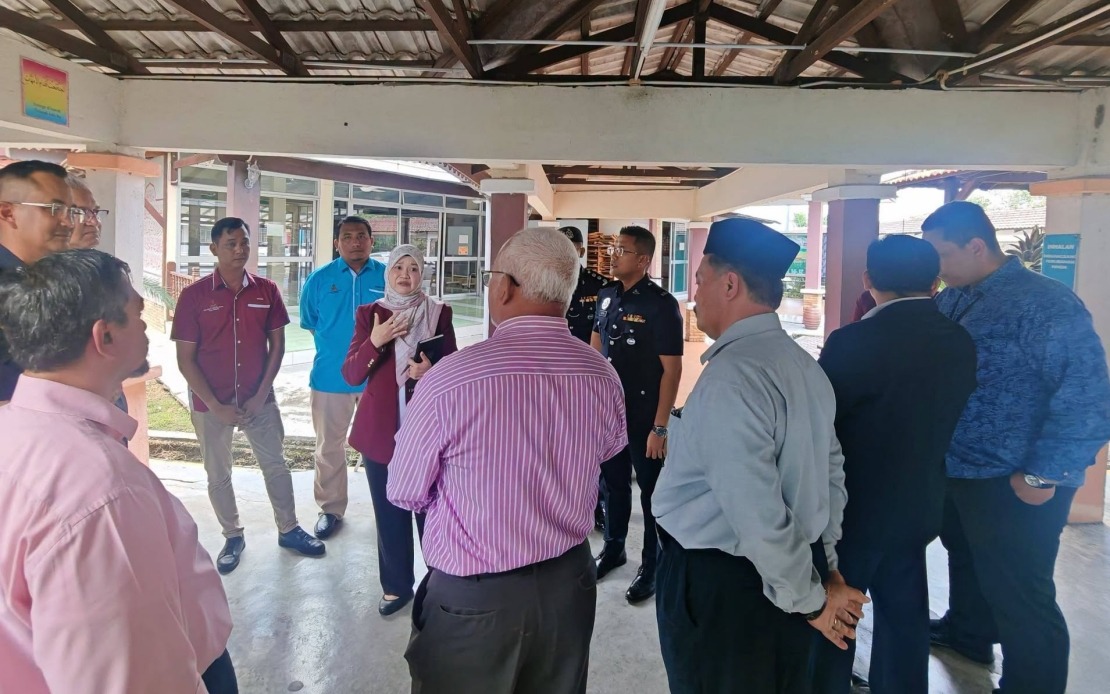
Education Minister Fadhlina Sidek made an unscheduled visit to a secondary school in Banting, Kuala Langat, on Friday afternoon following a stabbing incident involving a Form Three student that occurred earlier in the morning. The minister arrived at the institution at 1.20 pm to assess the situation firsthand and consult with the school's management team about the circumstances surrounding the attack.
According to the Kuala Langat district police, authorities received an alert about the incident at 9.50 am. Investigations revealed that the schoolgirl had been stabbed with a knife by another female student at the school. The victim remains in stable condition and is receiving medical treatment at Banting Hospital, while police have taken the suspected attacker into custody for further questioning and investigation.
In her response to the incident, Fadhlina stressed that the government's immediate focus is twofold: ensuring the injured student receives comprehensive medical care and providing psychological support to both students and staff members who may be traumatised by the violent occurrence. She expressed confidence in the Royal Malaysia Police's handling of the case, noting that authorities have secured the school environment and taken appropriate action to apprehend the suspect.
Through a social media statement, Fadhlina appealed to the public to exercise restraint and avoid spreading unverified claims or speculation while the police investigation remains ongoing. She called for strength and resilience from the school's principal, teaching staff, and student body as they navigate this distressing experience. The minister also acknowledged the various agencies involved in managing the immediate aftermath and pledged to provide further information once authorities have cleared the details for public release.
V. Paparaidu, the Selangor Human Resources and Poverty Eradication Committee chairman and elected assemblyman for Banting, welcomed the swift response from the State Education Department in deploying psychosocial support and counselling services to the victim, her family, and traumatised students. His statement underscored the critical need for enhanced vigilance and security protocols within school compounds, particularly around entry and exit points where students congregate at the beginning and end of each school day.
Pararaidu emphasised that compromising on school security is unacceptable and called for guards to maintain heightened alertness at all times, meticulously monitoring individuals entering and leaving the premises. He stressed that unauthorised persons must be prevented from accessing school grounds, viewing this as fundamental to protecting the welfare of the student population. The assemblyman's remarks reflected growing concerns about campus safety and the adequacy of existing security frameworks in Malaysian educational institutions.
The incident raises broader questions about violence prevention in schools and the psychological preparedness of educational communities to respond to traumatic events. While most school-based violent incidents in Malaysia involve isolated cases rather than systemic problems, each occurrence prompts renewed scrutiny of security measures and crisis management procedures. The involvement of two students rather than an external threat adds a complex dimension, suggesting that preventive strategies must address peer-related conflicts and aggression among pupils themselves.
Educational authorities across Malaysia have increasingly recognised that physical security alone cannot address the root causes of student violence. Mental health support, conflict resolution training, and early intervention programmes targeting at-risk youth have become subjects of policy discussion. The psychosocial support being deployed in response to this Banting incident represents a recognition that trauma extends beyond the victim to encompass the broader school community, including witnesses, friends, and staff members.
For Malaysian education stakeholders, this incident underscores the ongoing tension between maintaining open, welcoming school environments and implementing security measures robust enough to prevent dangerous situations. Schools serve as spaces where hundreds of young people spend significant portions of their day, making their safety a paramount concern for parents, educators, and policymakers alike. The challenge lies in achieving a balance that does not transform educational institutions into fortress-like environments while still providing appropriate protection.
The incident also highlights the responsibilities of school management to establish clear protocols for responding to crises, training staff to identify warning signs of potential violence, and creating support systems for students experiencing emotional distress or conflict with peers. As investigations proceed, the focus will likely extend beyond immediate law enforcement response to encompass a broader examination of what led to the confrontation between the two students and what preventive measures might have been implemented.

