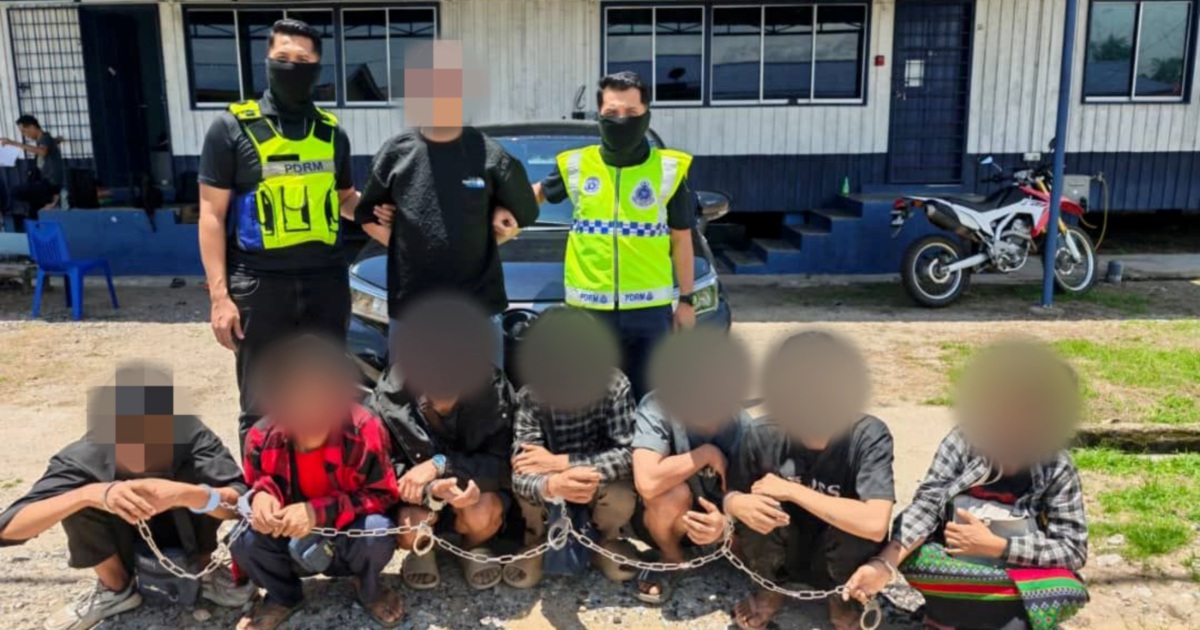
Law enforcement authorities in Kelantan have intensified their crackdown on human trafficking networks operating within the state, with the arrest of eight people in a coordinated operation conducted in Kota Baru during the early hours of the day. Among those apprehended was a Malaysian national suspected of orchestrating the transportation of seven undocumented migrants from Myanmar, signalling continued vulnerability in the state's border security and transport corridors to organised migrant smuggling operations.
The operation represents the latest in a series of enforcement actions targeting illicit movement of foreign nationals through the northern corridor. Kelantan, positioned along Malaysia's land border with Thailand, has emerged as a critical transit point for irregular migration networks seeking entry into the country or passage towards other Southeast Asian destinations. The state's geography and infrastructure create particular vulnerabilities that trafficking syndicates continue to exploit with apparent impunity.
The specific circumstances of the arrest—occurring during pre-dawn hours when enforcement visibility is typically reduced—suggest that authorities are adapting their operational tactics to intercept smuggling activities when criminal networks are most active. The timing of such operations reflects intelligence-led policing strategies increasingly employed by state police commands to disrupt trafficking schedules and apprehend perpetrators during transit operations rather than at static locations.
The presence of seven Myanmar nationals without documentation among the detained group highlights the human dimension of what remains a sophisticated criminal enterprise. These individuals, likely facing economic desperation in their home country or transit zones, become commodities within networks that exploit vulnerability for profit. The involvement of a Malaysian citizen as an alleged smuggler underscores how domestic criminal elements have become integrated into transnational trafficking infrastructure, providing local knowledge and transport logistics essential to operational success.
Myanmar continues to generate significant irregular migration flows, driven by economic hardship, political instability, and limited employment opportunities within the country. Displaced persons and economic migrants from Myanmar represent a substantial proportion of undocumented foreign nationals encountered by Malaysian authorities, reflecting broader migration patterns across Southeast Asia where economic disparities and conflict situations create persistent push factors. The passage of Myanmar nationals through Malaysia often represents one segment of longer migration journeys toward Thailand, Malaysia, or third countries offering perceived employment prospects.
The arrest operation carries implications for Malaysia's ongoing efforts to balance labour market demands against irregular migration control. While Malaysia maintains chronic labour shortages in agriculture, construction, and service sectors where migrant workers constitute essential components of production capacity, the shadow labour market created by irregular migration channels generates profound complications. Undocumented workers lack legal protections, creating exploitation opportunities while simultaneously imposing administrative and security costs on enforcement agencies.
Kelantan authorities have allocated enhanced resources toward border security and transportation checkpoints as part of broader national initiatives targeting migrant smuggling networks. The state's police command has coordinated with immigration departments and customs agencies to establish integrated enforcement frameworks designed to detect and intercept irregular movement. However, the persistence of smuggling operations despite these interventions suggests that criminal networks possess sufficient economic incentives and operational sophistication to maintain activities despite enforcement risks.
The eight individuals arrested face investigation and potential prosecution under immigration and human trafficking legislation. Malaysian law provides considerable penalties for those convicted of migrant smuggling, reflecting government determination to penalise trafficking participants through the criminal justice system. However, prosecution success depends on establishing evidence demonstrating intentional participation in smuggling activities, a legal threshold that requires careful investigation and case development.
Beyond immediate legal proceedings, this arrest illuminates structural vulnerabilities within Malaysia's migration control architecture. The reliance on vehicle interdiction as a primary enforcement method addresses symptoms rather than underlying factors driving organised smuggling. Sustainable reduction of trafficking requires complementary strategies addressing economic incentives motivating both smugglers and migrants, international cooperation with source and transit countries, and labour market policies reducing employer demand for undocumented workers.
Regional cooperation remains essential for addressing migrant smuggling networks that operate across multiple jurisdictions. Myanmar, Thailand, and Malaysia all experience trafficking flows requiring coordinated intelligence sharing, joint investigation protocols, and harmonised legal frameworks. The ASEAN framework for addressing transnational crime provides mechanisms for such cooperation, though implementation effectiveness varies across member states depending on institutional capacity and political priority allocation.
The Kelantan operation underscores government awareness of migrant smuggling as a persistent security challenge requiring sustained enforcement attention. Malaysian authorities continue developing operational capacity to detect and intercept trafficking activities, though the scale of irregular migration and limited resources allocated to enforcement suggest that many smuggling operations likely remain undetected. Future policy effectiveness will depend on whether Malaysia adopts complementary strategies addressing demand-side factors and labour market dynamics alongside traditional law enforcement interdiction.

