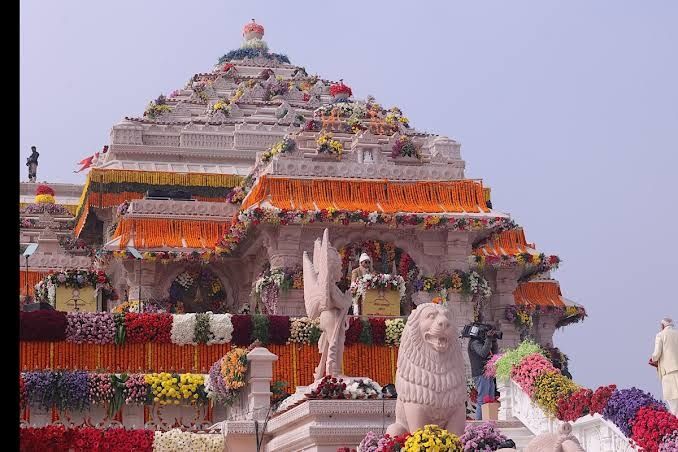
Police in India's northern Uttar Pradesh state have arrested eight individuals in connection with allegations of systematic theft and mishandling of donations at the Ram Mandir, a temple that has become emblematic of Prime Minister Narendra Modi's Hindu nationalist political agenda. The arrests followed a criminal investigation launched Thursday, June 25, after authorities registered a formal case concerning irregularities in how the shrine manages the substantial financial contributions it receives from devotees visiting the site.
The Ram Mandir occupies ground that was transformed into one of India's most symbolically significant religious landmarks. The location previously housed the Babri Mosque, a structure that stood for centuries until its demolition in 1992, an event orchestrated by Hindu nationalist activists. Modi himself presided over the temple's grand inauguration in 2024, marking a momentous occasion for his political base and underscoring the facility's importance to his ruling Bharatiya Janata Party's ideological narrative.
Among those detained are multiple temple personnel whose roles encompassed the critical functions of receiving, counting, and safeguarding monetary contributions as well as precious metal offerings such as gold and silver donated by worshippers. These positions provide significant access to the temple's financial operations and the material valuables that constitute a substantial portion of its holdings. The individuals now face serious criminal charges including breach of trust, larceny, conspiracy, and misconduct in public office.
While official statements have remained deliberately vague about the magnitude of the alleged theft, opposition politicians and investigative reporting suggest the missing funds could total more than 1.7 billion rupees, equivalent to approximately $20 million in United States currency. This substantial figure has intensified public concern about governance and accountability at one of India's most visible religious institutions. The silence from authorities regarding specific loss figures has only amplified speculation and criticism.
The scandal has shaken confidence among the temple's devotee community, many of whom view their contributions as sacred offerings. Viti Saxena, a 44-year-old homemaker who had given donations to the shrine, expressed profound disappointment and concern about whether her gifts actually reached the temple's accounts. Her distress reflects a broader anxiety spreading through Hindu communities nationwide, as believers grapple with the uncomfortable reality that their pious contributions may have been diverted through fraudulent schemes.
Uttar Pradesh Chief Minister Yogi Adityanath, whose administration established the Special Investigation Team tasked with examining the allegations, declared publicly that investigators would pursue every guilty party with determination. His statement attempted to reassure the public that the state government takes the matter seriously and intends to hold perpetrators fully accountable. The Chief Minister's emphatic stance suggests recognition of the political damage the scandal poses to his administration and the broader Hindu nationalist movement.
The temple's construction represented an enormous undertaking, requiring approximately $240 million in expenditure that the managing trust sourced entirely through voluntary public donations. This financing model means that worshippers essentially funded the entire project through their own generosity and devotion. The discovery that portions of these contributions may have been stolen undermines the sacred compact between believers and the institution entrusted with their offerings.
The Ram Mandir holds profound religious significance for India's Hindu majority. According to devout belief, the deity Ram was born in Ayodhya, the town that hosts the temple, more than seven millennia ago. The Babri Mosque that previously occupied the site was constructed in the 16th century during Mughal rule, as emperors expanded their religious architecture across the subcontinent. This religious and historical layering gave the mosque's demolition and the temple's construction an outsized symbolic importance extending far beyond ordinary religious architecture.
The Bharatiya Janata Party, now India's ruling force, played an instrumental role in orchestrating the public campaign that ultimately led to the Babri Mosque's destruction. This political mobilization fundamentally transformed Indian electoral dynamics, establishing the BJP as an electoral powerhouse capable of displacing the Indian National Congress, which had dominated governance structures since the country's independence from British colonial rule. The Ram Mandir project represents the culmination of decades of political effort and ideological commitment, making the current embezzlement scandal particularly damaging to the party's political narrative.
For Malaysian and Southeast Asian observers, this scandal illuminates broader concerns about religious institution governance and financial oversight in South Asia. The case demonstrates how even high-profile, politically significant religious sites can become vulnerable to internal corruption when appropriate financial controls remain inadequate. The incident underscores the importance of institutional transparency and independent auditing mechanisms in managing donations and public offerings, matters equally relevant to Malaysia's own diverse religious communities and their fundraising practices.
The investigation's progress and the eventual judicial outcomes will likely carry significant political implications for Modi's administration as it seeks to maintain the support of Hindu nationalist constituencies while simultaneously managing public expectations for ethical governance. The scandal threatens to undermine the moral authority that religious institutions typically command, potentially creating openings for political opponents to question the BJP's stewardship of Hindu-majority sentiment and resources.

