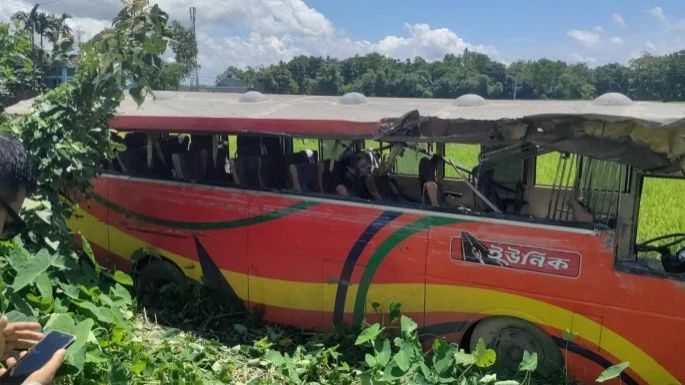
A head-on collision between two passenger buses in northeastern Bangladesh claimed eight lives and left 25 others injured on Friday morning, underscoring the persistent dangers on the country's highways. The accident occurred around 7:30 a.m. local time in the Sylhet region, approximately 240 kilometres northeast of the capital Dhaka, according to Golam Mostafa, the officer-in-charge of Osmani Nagar police station in Sylhet district.
The precise circumstances that led to the collision remain under investigation by authorities, who have yet to determine whether mechanical failure, driver error, or other factors contributed to the crash. Preliminary reports indicate that both buses were travelling at significant speeds along the route when the vehicles collided directly, suggesting the impact would have been particularly severe given the combined momentum of both vehicles.
The casualty toll from this single incident reflects the broader pattern of transportation disasters that have become tragically routine across Bangladesh's road network. Sylhet district, which lies in the northeastern corner of the country, has long been identified as a corridor where such accidents occur with distressing regularity, a consequence of the region's heavy reliance on long-distance coach services that connect major urban centres.
Bangladesh's transport sector has become synonymous with preventable catastrophes, a situation rooted in multiple systemic failures that authorities have struggled to address despite growing public concern. The quality of highways across the nation remains substandard, with many primary routes deteriorating into dangerous conditions during monsoon seasons and showing signs of poor construction and inadequate maintenance even during dry periods. This infrastructure deficit places heavy-duty vehicles like intercity buses under constant stress, increasing the likelihood of mechanical failures that could precipitate accidents.
The state of vehicle maintenance compounds these highway deficiencies significantly. Many operators of passenger buses and commercial vehicles prioritise cost-cutting over safety standards, deferring essential repairs and failing to upgrade aging fleets that may lack modern braking systems or safety features. Regular inspections that could identify dangerous vehicles before they enter service remain inconsistently enforced across the country, allowing substandard buses to continue operating without adequate oversight.
Driver behaviour and competency present another critical vulnerability within Bangladesh's transportation ecosystem. Traffic rule violations occur with alarming frequency, with speeding, reckless overtaking, and aggressive driving commonplace on intercity routes. Many drivers operate vehicles for extended periods without adequate rest, their fatigue dulling reaction times and judgment at moments when alertness proves essential for accident prevention. The recruitment and training standards for long-distance bus drivers often lack rigour, permitting individuals with questionable qualifications or poor safety awareness to operate vehicles carrying dozens of passengers.
The capacity of Bangladesh's traffic enforcement apparatus to prevent and deter dangerous driving remains severely constrained. The traffic department operates with limited resources and personnel, making sustained monitoring of highways impossible. Checkpoints exist in theory but function sporadically, and penalties for violations often prove insufficient to modify driver behaviour. This enforcement vacuum creates an environment where traffic rules become suggestions rather than requirements, with drivers calculating that the probability of meaningful consequences for recklessness remains low.
For Malaysian observers, Bangladesh's road safety crisis holds salutary lessons about the interconnection between infrastructure investment, regulatory rigour, and public safety outcomes. While Malaysia's highways and enforcement mechanisms represent considerable advances over neighbouring systems, complacency poses its own danger. The Malaysian road fatality rate, though lower than Bangladesh's, remains a persistent policy challenge that demands ongoing attention to vehicle standards, driver training, and infrastructure quality.
The investigation into Friday's accident will likely proceed along familiar lines, with conclusions about driver error or mechanical failure filed away without triggering the systemic reforms that might prevent similar tragedies. Bangladeshi policymakers have acknowledged the need for comprehensive road safety initiatives, including highway rehabilitation, stricter vehicle inspection regimes, and enhanced driver training programmes, yet implementation has consistently lagged behind recognition of the problem.
This latest disaster occurs within a broader context of transport-related fatalities that claim thousands of lives annually across Bangladesh. Each collision becomes another statistic in a grim accumulation, representing not just individual tragedies but a collective failure to prioritise the safety of citizens undertaking ordinary journeys between cities. The 25 injured passengers from Friday's collision now face recovery processes that will likely prove lengthy and costly, adding economic hardship to the physical trauma of survival.

