Eight individuals now face serious federal charges stemming from an alleged conspiracy targeting a high-profile mixed martial arts event hosted at the White House during President Donald Trump's 80th birthday celebration, the US Department of Justice announced on Thursday. The charges represent one of the more audacious alleged attack plots involving the presidential residence in recent years, highlighting ongoing security concerns despite the elaborate protections surrounding such high-level events. The scope of the conspiracy and the sophistication of the alleged methods have raised fresh questions about the evolving nature of potential threats to US government facilities and official gatherings.
The criminal charges brought against the eight suspects include conspiracy to provide material support to terrorists, conspiracy to commit murder on federal government property, and conspiracy to murder a federal government official. Should they be convicted on all counts, each defendant faces a potential sentence of life imprisonment, underscoring the gravity with which federal prosecutors view the alleged scheme. The charges were filed by a federal grand jury in Columbus, reflecting the jurisdiction where much of the investigative work took place and where several suspects were apprehended or coordinated.
According to prosecutors, the alleged plot involved a carefully orchestrated sequence of violent actions designed to create maximum chaos and casualties. The plan reportedly centred on deploying explosive-laden unmanned drones around the event venue to trigger an evacuation and panic among attendees. Once the crowds began fleeing the specially constructed arena, the conspirators allegedly intended to position snipers at strategic locations to eliminate what prosecutors described as "high-value targets" among those evacuating the premises. This two-stage approach suggests a level of tactical planning that distinguishes the alleged conspiracy from more spontaneous or disorganized threats.
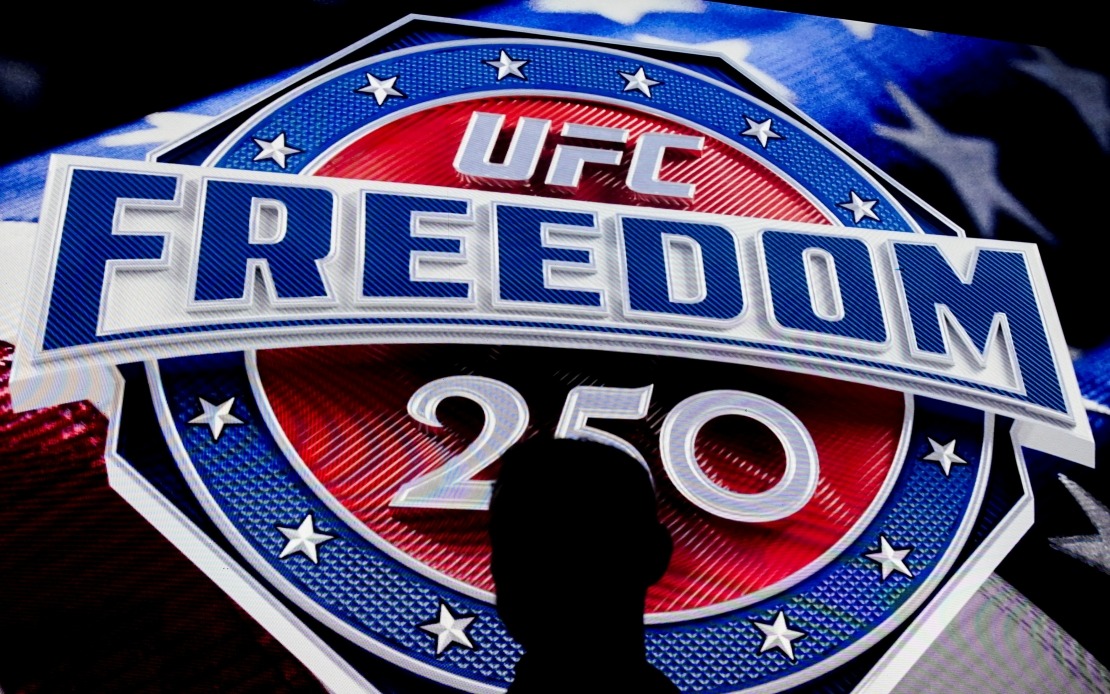
The event in question, branded "UFC Freedom 250" by the Ultimate Fighting Championship, took place on June 14 at a specially built arena situated outside the South Lawn of the White House. The gathering brought together significant national figures, including Trump himself, members of his immediate family, and several cabinet-level officials. The concentration of high-ranking government and political figures at a single outdoor venue necessarily created substantial security planning challenges for law enforcement and Secret Service personnel responsible for protecting attendees.
While the event coincided with Trump's 80th birthday, authorities have emphasized that it was formally designated as part of broader celebrations commemorating the 250th anniversary of American independence. The June 14 date, however, fell well before the traditional Independence Day observance on July 4, suggesting the event was specifically timed to coincide with the presidential birthday milestone. This timing distinction underscores how major political and cultural celebrations in Washington often overlap and serve multiple commemorative purposes simultaneously.
The investigation into the alleged conspiracy unfolded over several weeks, with law enforcement announcing arrests in stages. Seven of the eight suspects were arrested during earlier phases of the investigation, but authorities held back details about a critical eighth participant until the final stages of their enforcement action. This eighth suspect, a 21-year-old individual, was apprehended more recently in West Virginia. According to prosecutors, this younger suspect had been specifically earmarked to serve as one of the designated snipers in the alleged attack plan, placing him in a particularly central role within the conspiracy.
The decision to charge the suspects with material support to terrorism indicates that federal authorities believe the alleged plot was connected to or inspired by extremist ideologies or organizations. This classification carries significant legal implications and allows prosecutors to employ specific statutory provisions designed to address terrorist-related activities. The material support charge is particularly potent in the federal criminal arsenal, as it does not require proof that the alleged conspirators themselves carried out any violent acts, only that they intended to provide assistance to those planning or executing terrorist operations.
The White House event represents the type of high-profile public gathering that has historically attracted intense security scrutiny from federal law enforcement. The outdoor venue and the presence of the president, his family, and senior government officials necessitated unprecedented security measures, including likely electronic surveillance, intelligence gathering, and undercover operations. The fact that authorities were able to disrupt the alleged conspiracy before any attack materialized demonstrates the effectiveness of these preventative security protocols, though it also suggests that persistent threats against major US government facilities remain a concerning reality.
For Malaysia and other Southeast Asian nations, the incident carries implications for how regional governments approach security at major events involving political leaders and dignitaries. The sophisticated nature of the alleged plot—involving coordination of multiple actors, use of unmanned aerial vehicles, and tactical weapons positioning—reflects evolving threat landscapes that security professionals across Asia must anticipate and counter. The case demonstrates that even the most heavily protected political venues and events cannot eliminate all risks entirely, requiring continuous innovation in security strategies and threat assessment protocols.
The alleged conspiracy also underscores broader tensions within American political discourse and the security challenges these tensions create. The targeting of an event celebrating both the president's birthday and national independence suggests possible political motivations underlying the alleged plot. Law enforcement agencies across democratic nations, including in Southeast Asia, increasingly grapple with how to balance open political participation and public gatherings with the security imperatives necessary to protect government officials and citizens from targeted violence.
As the cases proceed through the federal court system, the trials will likely provide additional details about how the conspiracy developed, what ideological or political motivations animated the alleged conspirators, and what intelligence techniques proved decisive in disrupting the plot. These details will offer valuable insights for security professionals and policymakers not only in the United States but globally regarding emerging threat patterns and effective counter-terrorism methodologies. The evolution of attack planning to incorporate technological elements like explosive drones reflects a concerning trend that security agencies worldwide must monitor and address proactively.

