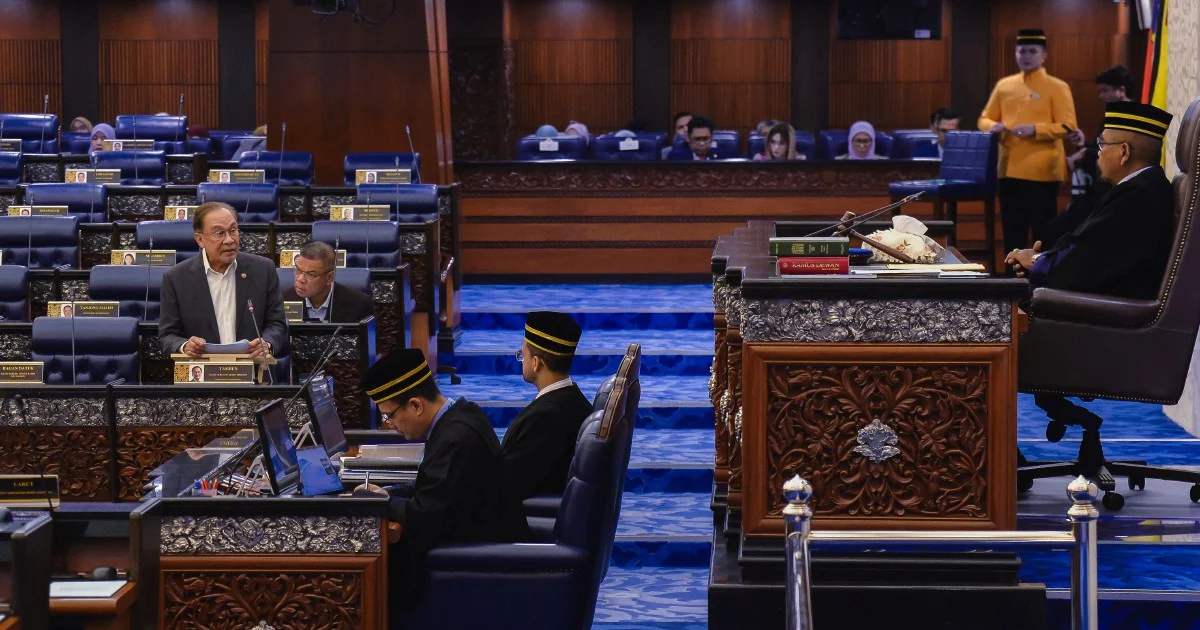
Malaysia's top electoral authority is preparing to tighten oversight of caretaker administrations, with Prime Minister Datuk Seri Anwar Ibrahim confirming that the Election Commission will take enforcement action against any caretaker government that violates campaign guidelines by announcing policies or making decisions carrying financial consequences. The statement signals a shift toward more rigorous monitoring of interim administrations during election periods, a traditionally murky zone where the boundaries between campaign conduct and routine government operations often blur.
Caretaker governments in Malaysia occupy a constitutionally uncertain space. Once an election is called, the sitting government transitions to caretaker status while campaign rules technically apply, yet essential state functions must continue. This creates persistent tension between electoral regularity and administrative necessity. The Prime Minister's declaration indicates growing frustration with how previous caretaker administrations have navigated this grey area, with some using the period to make popular announcements or allocate resources in ways critics argue exceed prudent interim governance.
The Election Commission's mandate to ensure fair electoral competition has historically struggled with enforcement against caretaker governments, partly because such administrations retain technical control of state machinery and resources. By publicly committing to take action against financial announcements, the EC under Anwar's government is attempting to rebalance the asymmetry that has allowed incumbent administrations to exploit their remaining authority during campaign periods. This approach reflects international best practices where caretaker conventions are embedded in law rather than merely convention.
The practical implications of this policy remain to be seen. Defining which decisions constitute breaches with "financial implications" will test the EC's enforcement capacity and invite inevitable disputes. A routine contract renewal, a standard salary adjustment, or maintenance spending could theoretically trigger scrutiny, yet blanket restrictions would paralyse essential services. The Commission will need to develop clear guidelines distinguishing between necessary administrative continuity and electioneering disguised as governance.
Previous Malaysian elections have featured caretaker governments announcing major infrastructure projects, civil service bonuses, or regulatory changes perceived as advantageous to ruling coalitions. These actions create lasting resentment among opposition parties and undermine public confidence in electoral impartiality. By pre-committing to enforcement, the current government aims to establish credible constraints on its own interim executive once the next election is called, effectively binding future iterations of itself.
The announcement also reflects broader concerns about election integrity in Southeast Asia. Regional democracies have grappled with how caretaker governments can legitimately govern while respecting electoral fairness. Thailand's constitution restricts caretaker powers significantly; Indonesia requires explicit prohibitions on major policy changes. Malaysia has relied more on convention than statute, leaving interpretation to political actors with obvious conflicts of interest. Anwar's statement pushes toward more institutional independence in monitoring compliance.
For Malaysian voters, this development carries mixed significance. Stronger constraints on caretaker governments theoretically level the electoral playing field by preventing incumbents from using state resources for last-minute campaigns. However, enforcement depends on EC independence and political will from multiple stakeholders. If applied selectively or inconsistently, such rules could become another flashpoint in polarised Malaysian politics rather than a genuine restraint.
The timing of this announcement is notable given Malaysia's complex political landscape. Coalition stability between parties in the ruling government remains uncertain, and several states operate under different political control than federal authorities. Caretaker conventions become especially important in fragmented systems where no single party dominates comprehensively. A clear framework protecting electoral fairness across all levels could strengthen democratic institutions during a period when institutional trust is fragile.
Implementation will test whether the Election Commission possesses sufficient independence to investigate and penalise a caretaker government, including one formed from the current ruling coalition. Historically, Malaysian voters have expected such agencies to show political bias, reflecting weak institutional autonomy. For this initiative to succeed, the EC must demonstrate that enforcement applies equally regardless of which government holds caretaker status. That requires both technical capacity for investigation and political cover to resist pressure from whoever occupies the prime minister's office.
Beyond elections themselves, the principle underpinning this policy reflects growing recognition that interim administrations shape governance quality between electoral cycles. Resources misallocated or commitments made during caretaker periods create cascading effects through subsequent administration. By preventing caretaker governments from making financially consequential decisions beyond genuine operational necessity, Malaysia can better ensure that major policy directions remain genuinely subject to electoral choice rather than predetermined by departing administrations.

