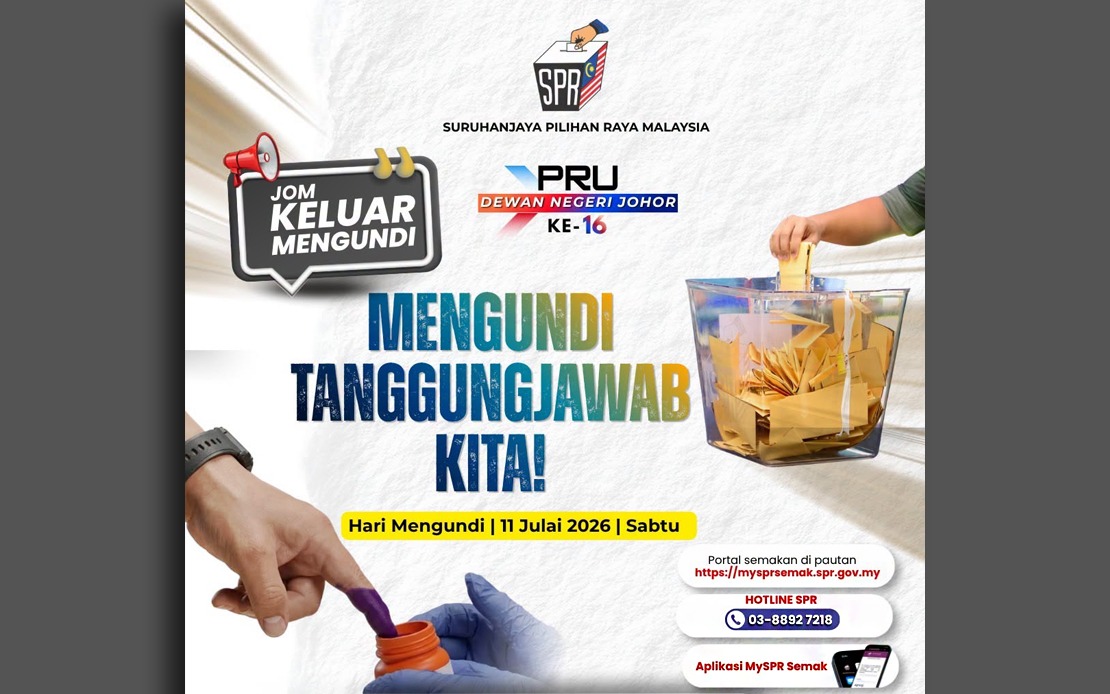
The Election Commission of Malaysia has issued a fresh directive to employers across Johor, insisting that they grant their workers adequate time to participate in Saturday's state election, responding to public concerns that some businesses might obstruct voting activities. Datuk Khairul Shahril Idrus, the EC's secretary, underscored that the commission had received reports of potential workplace barriers preventing employees from fulfilling their civic duty. The reminder arrives amid heightened focus on voter accessibility during the 16th Johor State Election, when 172 candidates will compete across 56 seats.
The EC's intervention centres on Section 25 of the Election Offences Act 1954, a provision that explicitly protects workers' voting rights. Under this legislation, employers are strictly prohibited from deducting wages, withholding remuneration, or imposing penalties on staff members who take time off to vote. This legal framework exists to safeguard a fundamental principle of democratic participation: that earning a livelihood should never come at the expense of exercising one's voting power. The commission's statement emphasises that these protections apply universally to all registered voters employed across private and public sectors.
Employers who violate these protections face substantial legal consequences that underscore the seriousness with which Malaysia's electoral framework treats voter suppression. Anyone convicted of directly or indirectly preventing an employee from voting, or denying them reasonable time to cast a ballot, risks fines reaching RM5,000, imprisonment for up to one year, or both penalties combined. This dual punishment structure—financial and custodial—reflects the legislature's determination to eliminate workplace-based impediments to voting. The potential consequences are severe enough to serve as meaningful deterrents to unethical business practices that prioritise production over democratic participation.
The timing of the EC's reminder reflects practical experience with past electoral cycles. Malaysian workplaces have occasionally become flashpoints for voter suppression, whether through deliberate obstruction or employer indifference to worker needs. By issuing advance warnings before the Johor election, the commission attempts to establish clear expectations and preempt violations. The statement functions both as a legal notice and a moral appeal, signalling that the electoral body will not tolerate interference with voting rights, and that employers should instruct their management teams to cooperate fully with staff seeking to vote.
For Malaysian workers, particularly those in lower-wage sectors where employer pressure can be acute, this directive provides explicit legal backing for their rights. Many employees across manufacturing, retail, hospitality, and service industries have historically faced informal pressure or scheduling barriers when attempting to vote. The EC's statement makes clear that such obstacles are unlawful, and that workers have recourse if their employers attempt to prevent or discourage voting. This protection extends to various forms of workplace coercion—not only direct refusals but also indirect intimidation through scheduling manipulation, workload increases, or other subtle discouragement tactics.
The Johor state election represents a significant political moment for Malaysia's most industrialised state and a key economic region. With 172 candidates vying for 56 legislative seats, high voter participation could meaningfully influence the electoral outcome and the state's political complexion for the coming term. Election officials recognised that worker participation directly impacts overall turnout figures, making employer cooperation essential to achieving representative results. States with lower voter engagement risk decisions made by narrower constituencies, potentially reducing the democratic legitimacy of the resulting government.
The EC's approach reveals broader institutional recognition that formal voting rights mean little without practical access to ballot boxes. Malaysian election law has evolved to protect not only the right to vote itself but the conditions necessary to exercise that right. By reminding employers of their legal obligations, the commission acknowledges that many voting problems stem not from individual voter apathy but from structural barriers within workplaces. This institutional attention to practical voting access aligns Malaysia with broader democratic best practices emphasising removal of participation barriers.
Employers who comply with these requirements contribute to democratic health in multiple ways. Allowing workers to vote demonstrates respect for their citizenship status and reinforces the principle that all Malaysians—regardless of employment status or income level—possess equal standing in electoral processes. Organisations that facilitate voting often report positive workplace culture effects, as employees appreciate recognition of their civic importance. This collaborative approach to voting access can enhance employer-employee relationships while ensuring electoral legitimacy.
The commission's statement also serves an informational function for workers who may be unaware of their legal protections. Many employees, particularly migrant workers or those in precarious employment situations, may not know that Malaysian law explicitly protects their voting rights and prohibits employer retaliation. By publishing the reminder widely, the EC ensures that vulnerable workers understand they cannot be legally punished for voting and have avenues for complaint if employers attempt to prevent their participation. This information dissemination component recognises that legal protections exist only when potential rights-holders know about them.
Moving forward, the EC has signalled its willingness to enforce these provisions if violations occur during the Johor election. The commission maintains mechanisms for receiving and investigating complaints from workers who face voting obstacles, and any substantiated violations can trigger prosecutions against offending employers. This enforcement capacity transforms the directive from aspirational guidance into binding legal requirement with real consequences. Employers who remain tempted to restrict worker voting face not only criminal penalties but reputational damage and potential civil liability.
The Johor election will serve as a test case for Malaysia's commitment to worker voting rights in the contemporary context. As economic pressures intensify and competitive business environments sometimes encourage cutting corners on labour protections, the election provides an opportunity to demonstrate that democratic participation remains non-negotiable. The EC's role in defending this principle through advance reminders, legal clarity, and enforcement readiness affirms that Malaysia's electoral system, while facing various challenges, maintains robust safeguards for fundamental voting access among working populations.

