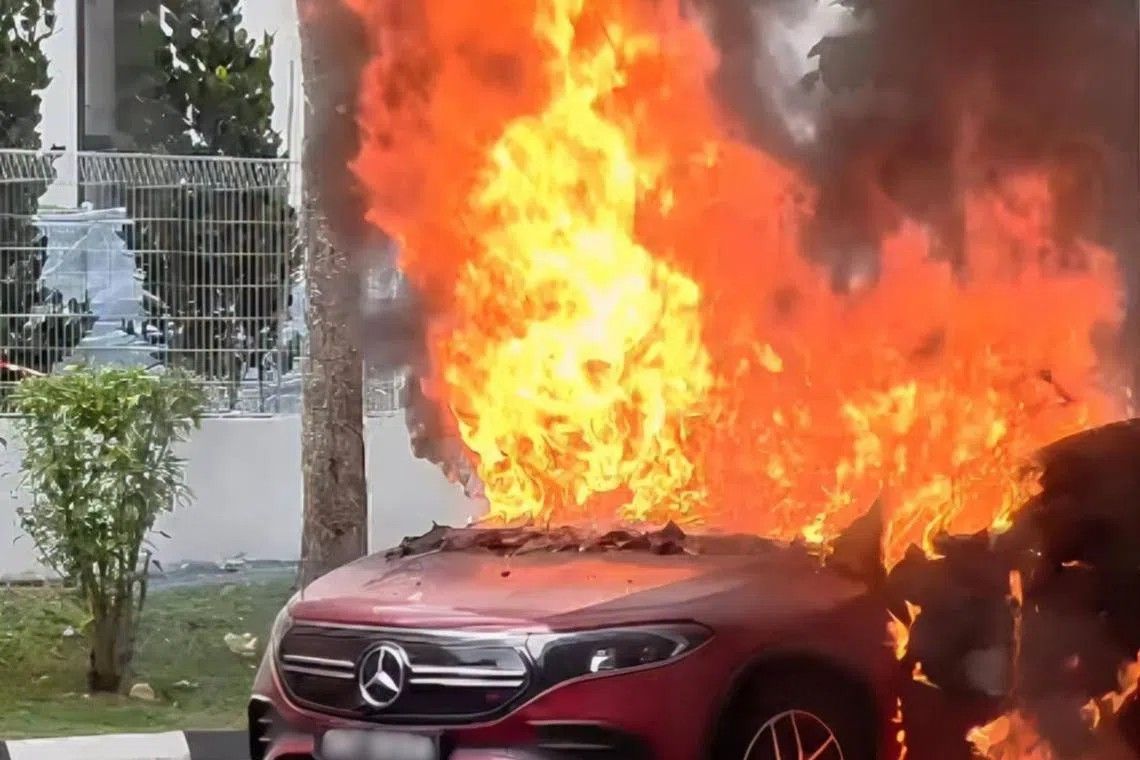
A fully-charged electric vehicle burst into flames near the entrance of an HDB carpark in the Woodlands area of Singapore on the morning of July 21, triggering a swift emergency response that prevented any casualties. The Singapore Civil Defence Force received an alert shortly after 10.10am regarding a fire at the multi-storey carpark entrance at Block 548 Woodlands Drive 44, near Vista Point. Firefighters extinguished the blaze using a single water jet, leaving no injuries in its wake, though authorities indicated that the investigation into the precise cause was ongoing.
The incident began while the vehicle owner was exiting the carpark. She reported detecting a distinctive burning smell emanating from her car during the drive out. Upon pulling to a stop, she observed smoke pouring from inside the vehicle—a critical warning sign that would prove prescient given what followed. Initial flames appeared in the narrow space between the driver and front passenger seats, precisely where the vehicle's lithium-ion battery pack is housed in most modern electric vehicles. This anatomical detail is significant because it suggests the fire originated from the battery system itself rather than electrical wiring or other secondary components.
When the driver alerted nearby security personnel, they responded immediately by attempting to contain the fire using portable fire extinguishers—a reasonable first response that unfortunately proved inadequate. The intensity and spread of the blaze overwhelmed the effectiveness of handheld extinguishers, forcing the security team to prioritize personal safety. Recognizing the escalating danger, particularly the risk of catastrophic battery failure or thermal runaway, they withdrew to a safe distance and contacted the Singapore Civil Defence Force. This decision likely prevented potential injuries from explosion or toxic fume inhalation.
Photographic evidence from the scene reveals the severity of the thermal damage sustained. The vehicle's interior was completely charred, with the dashboard severely melted and deformed beyond recognition. The structural frames that typically support the front seats were left exposed, their materials having been consumed by the extreme heat. The level of destruction indicates temperatures well exceeding what standard fire suppression equipment in residential areas can manage. The vehicle was subsequently towed away at approximately 12.15pm, allowing investigators to conduct forensic analysis of the battery system and electrical components.
For Malaysian and broader Southeast Asian readers, this incident carries particular significance given the rapid expansion of electric vehicle adoption across the region. Malaysia has emerged as a key EV manufacturing hub, with companies like BYD establishing production facilities and local manufacturers racing to capture market share. Singapore's stringent regulatory environment and comprehensive incident reporting make it a bellwether for safety issues that may affect neighboring markets. Battery thermal runaway—when cells overheat and ignite sequentially—represents one of the most challenging safety hurdles facing the EV industry globally, and incidents like this one underscore the need for continued vigilance.
The timing of this fire coincides with a period of heightened scrutiny regarding EV battery safety standards. While electric vehicles remain statistically safer than conventional petrol vehicles in terms of overall fire incidents, battery-related fires are qualitatively different—they burn hotter, release toxic fumes, and are more difficult to extinguish using conventional methods. Regulators across Asia are grappling with whether current safety standards adequately account for these differences. The incident in Woodlands will likely prompt authorities to review whether residential carpark infrastructure, particularly in high-density housing estates, requires specialized fire suppression systems designed specifically for lithium-ion battery fires.
The driver's account provides valuable practical insight into how such emergencies unfold in real time. Her recognition of the burning smell as an early warning signal enabled her to move the vehicle to a safe location rather than continuing through a crowded carpark. However, the inability of conventional fire extinguishers to contain the blaze highlights a gap between public perception of fire safety and the reality of modern battery technology. Many residents and security personnel may not yet understand that EV battery fires require specialized suppression agents—typically dry powder extinguishers rated for Class D fires, or in some cases, water applied in specific ways.
Investigators will examine multiple potential causes as they analyze the vehicle's battery management system, charging history, and physical condition. EV fires can result from manufacturing defects, design flaws, impact damage to the battery pack, excessive charging or discharging cycles, or exposure to extreme temperatures. The fact that the fire originated specifically in the battery housing area narrows the investigation's focus considerably. Understanding the root cause matters not only for the affected owner's insurance claim but also for the manufacturer's quality assurance processes and for regulators determining whether design changes are necessary across production lines.
The incident also raises questions about carpark design and emergency preparedness in densely populated residential areas throughout Southeast Asia. Many HDB estates and comparable public housing developments across Malaysia, Singapore, and other regional cities were designed before electric vehicles became commonplace. Adequate ventilation to prevent toxic gas accumulation, fire suppression systems capable of handling lithium-ion blazes, and clear evacuation procedures specifically for battery-related incidents represent emerging requirements that older facilities may lack. As EV adoption accelerates—driven by government incentives, environmental concerns, and improving battery technology—property developers and facility managers face mounting pressure to upgrade infrastructure accordingly.
The swift response by SCDF personnel demonstrates the effectiveness of Singapore's emergency services, yet it also illustrates the limitations of conventional firefighting techniques when confronted with novel hazards. The fact that no injuries occurred should not obscure the seriousness of what occurred or the systemic questions it raises. As the regional electric vehicle market matures, shared learning from incidents like this one becomes invaluable. Malaysia's growing EV manufacturing sector, in particular, stands to benefit from transparent incident analysis and cross-border knowledge exchange regarding battery safety standards and best practices. The investigation's findings, once completed, should be publicized widely to help inform public understanding and emergency preparedness across the region.

