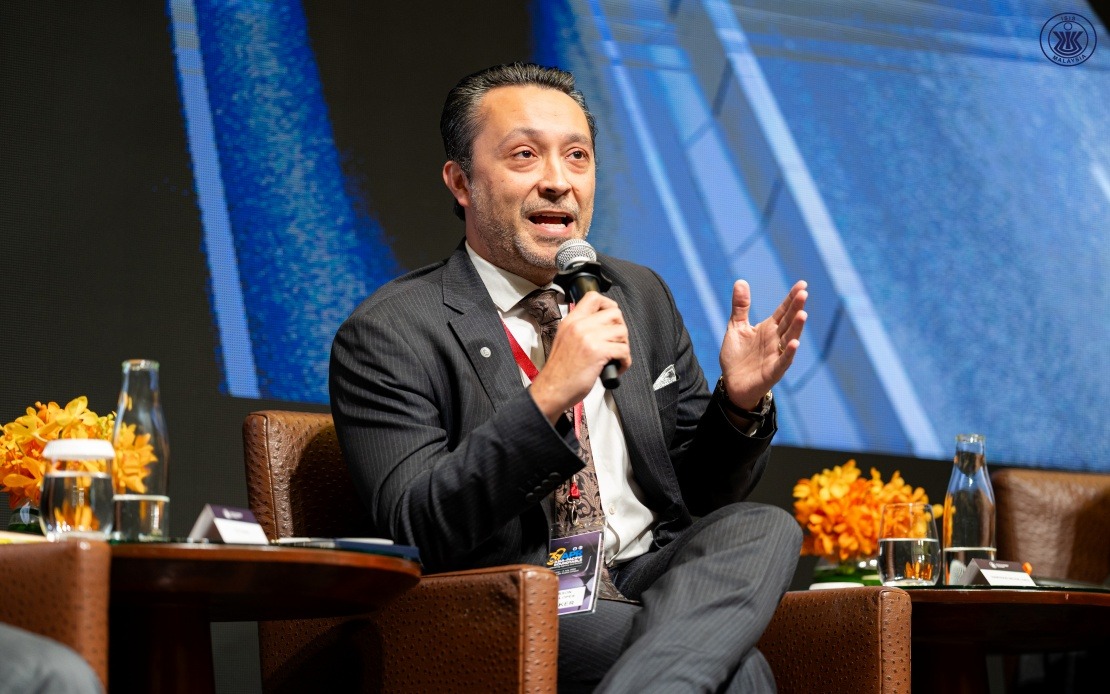
The international system that has dominated global affairs since 1945 is progressively unravelling, creating both risks and unprecedented opportunities for rising nations across the Global South to assert their own strategic priorities. This assessment emerged from leading international relations scholars gathered at the 39th Asia-Pacific Roundtable in Kuala Lumpur, where discussions centred on how emerging middle powers should navigate a world in flux without simply adopting the frameworks of established powers.
Dr Dawisson Belém-Lopes, Professor of International and Comparative Politics at the Federal University of Minas Gerais in Brazil, drew a critical distinction between emerging and established middle powers, emphasising they represent fundamentally incompatible political realities and should never be conflated into a single category. This differentiation matters considerably for Malaysia and fellow nations of the Global South. Emerging middle powers, he explained, have never genuinely accepted the architecture of the post-World War Two liberal international order that Western powers constructed and continue to dominate. For decades, these nations have advocated—often from marginal positions—for comprehensive restructuring of global institutions and governance mechanisms that perpetually reflect the interests of their established counterparts.
The historical trajectories and strategic priorities of countries such as Malaysia, Brazil, India, Indonesia, Türkiye, and Mexico diverge sharply from those of established middle powers like Canada, South Korea, or Australia. Where established middle powers largely benefited from and integrated into the Western-led system, emerging economies have consistently confronted its structural constraints and inequities. This divergence has created space for a new assertiveness. As Dr Belém-Lopes noted, the Global South now commands greater material resources and enjoys institutional platforms—from BRICS to regional development banks—that were unavailable in previous decades. These mechanisms provide genuine alternatives to the traditional Western-dominated forums, enabling developing nations to pursue strategies independent of Washington or European prescriptions.
Peter Varghese, Chancellor of the University of Queensland and former secretary of Australia's Department of Foreign Affairs and Trade, characterised the contemporary moment as a transitional phase between two distinct international orders. The post-war system, long anchored to American leadership and liberal institutions, is gradually disintegrating—a process driven not merely by shifts in current US policy but by profound structural transformations reshaping global power distribution. China's rise has fundamentally altered the balance of capabilities across Asia and beyond. The world is moving inexorably toward multipolarity, undermining the unipolar moment that characterised the 1990s and early 2000s. Simultaneously, the Washington Consensus on economic governance has lost much of its persuasive authority, while identity politics and cultural nationalism have gained salience in ways that traditional liberal internationalism struggled to accommodate.
Yet Varghese cautioned against assuming that agency alone suffices to create a functioning new international order. The capacity to act independently—crucial though it remains—cannot substitute for the painstaking institutional architecture required to manage global commons, coordinate responses to transnational challenges, and establish predictable rules for state interaction. Construction of a comprehensive replacement system will demand extensive time and complex multilateral negotiation. Instead, he advocated for nations to prioritise strengthening regional and cross-regional cooperation mechanisms that can operate effectively within the current transitional space. For Malaysia and Southeast Asia, this emphasis carries particular weight, suggesting that deepening ASEAN cohesion and expanding frameworks for regional economic and security dialogue may prove more immediately fruitful than waiting for a new global system to crystallise.
Dr Ken Jimbo, Professor of International Relations at Keio University in Japan, underscored that Asia will retain centrality in the evolving global architecture despite unpredictable fluctuations in American foreign policy orientation. Even under an America First agenda prioritising narrow national advantage, the United States will require robust regional partnerships to pursue its strategic objectives across the Indo-Pacific. This structural necessity means that countries like Japan—and by extension, other Asian nations including Malaysia—retain considerable leverage in bilateral and multilateral negotiations with Washington. Simultaneously, nations such as Japan remain dependent on maintaining a free and open rules-based international order for their economic prosperity and security guarantees. This creates complex incentives: Asian states must simultaneously hedge against potential American disengagement while investing in regional resilience and institutional alternatives.
The discussions at the 39th Asia-Pacific Roundtable, conducted under the theme "Accelerating Agency and Action," organised by the Institute of Strategic and International Studies Malaysia, captured a pivotal moment in geopolitical recalibration. For Malaysian policymakers and the broader Southeast Asian community, the expert consensus suggests neither alarmism nor complacency is warranted. Rather, the transition period presents a window for emerging powers to expand their institutional capacity, deepen intra-regional cooperation, and develop negotiating positions that reflect genuine national interests rather than inherited Cold War alignments.
The implications for Malaysia specifically warrant careful consideration. As a mid-sized economy with significant regional influence and global trade dependencies, Malaysia cannot afford to remain passive as the international order reconfigures. The nation has historically maintained diplomatic flexibility and pursued pragmatic relationships across major power divides. The emerging consensus among international scholars reinforces the wisdom of this approach while suggesting it should be accompanied by stronger institutional anchors—both within ASEAN and through non-aligned movement mechanisms—that reinforce genuine autonomy rather than merely reactive balancing.
Ultimately, the period ahead demands that emerging middle powers think strategically about their collective interests without fragmenting into competing camps aligned with established powers. The Global South possesses sufficient combined economic weight, demographic resources, and geopolitical positioning to shape outcomes rather than merely absorb them. Whether Malaysia and peer nations can effectively translate this structural advantage into tangible institutional gains and policy influence remains the defining question for the next phase of global affairs.

