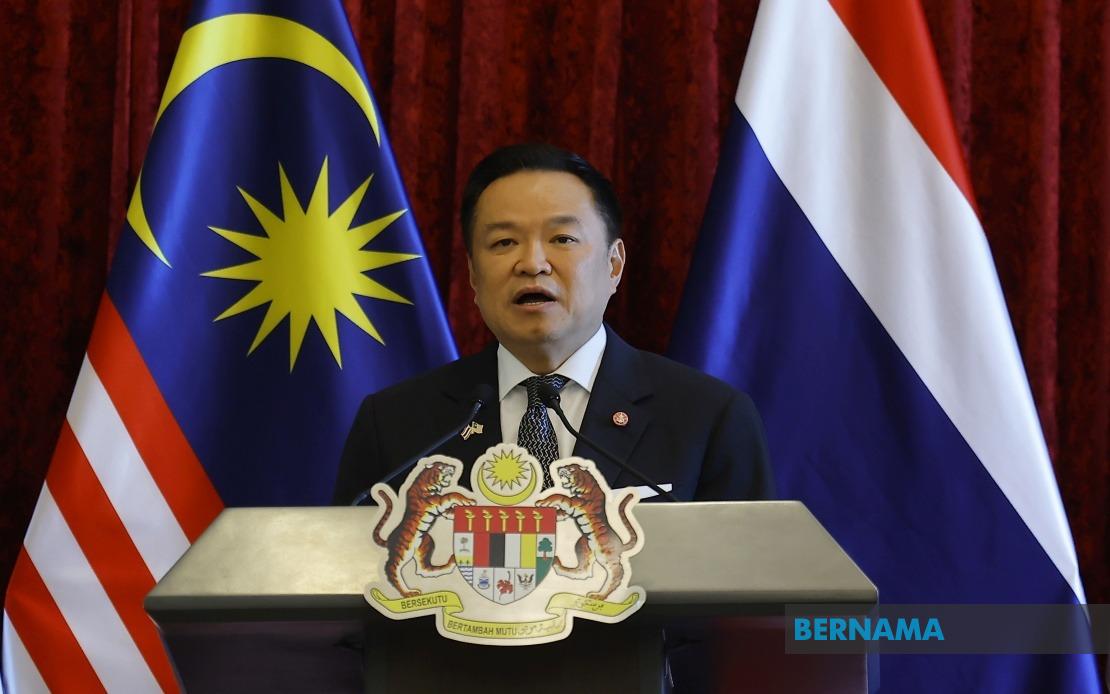
Thai Prime Minister Anutin Charnvirakul has reaffirmed his government's commitment to resolving the protracted conflict gripping Thailand's southern border provinces, positioning the peace process as integral to his administration's governance agenda. Speaking alongside Malaysian Prime Minister Datuk Seri Anwar Ibrahim during a joint press conference in Putrajaya on Thursday, Anutin underscored that addressing the violence and underlying challenges in these strategically sensitive areas remain among his government's highest priorities, signalling the persistence of a conflict that has claimed thousands of lives and displaced communities over the past two decades.
The Thai premier articulated a strategic vision linking security and economic progress, emphasising that peace provides the essential foundation upon which sustainable development can be constructed, while conversely, development initiatives strengthen the social cohesion and economic opportunity necessary for maintaining long-term stability. This formulation reflects a recognition that purely military or security-focused approaches have proven insufficient in resolving the deep-rooted insurgency, and that addressing legitimate grievances through economic inclusion and development represents a more comprehensive pathway forward for the border regions inhabited by communities whose concerns span security, livelihood, and cultural recognition.
Central to Thailand's peace strategy is Malaysia's role as an active facilitator and diplomatic intermediary in the Southern Thailand Peace Dialogue process, a multilateral engagement that brings together the Thai government and various relevant stakeholders in pursuit of negotiated settlement. Anutin explicitly acknowledged and appreciated Malaysia's commitment to this facilitating role, recognising that Bangkok's neighbour brings credibility, geographic proximity, and established relationships with multiple parties that enhance the prospects for meaningful dialogue and eventual agreement. This Malaysian involvement has evolved into a substantial diplomatic undertaking, reflecting the recognition that border conflicts in Southeast Asia often require regional coordination and good offices to achieve breakthroughs.
On the Malaysian side, Prime Minister Anwar provided assurances that his government maintains an unequivocal stance against violence and remains committed to collaborating with Thailand to identify and prosecute those responsible for cross-border incidents and terrorist activities affecting both nations. This commitment extends beyond rhetorical support, with Malaysia pledging concrete cooperation in intelligence-sharing, law enforcement coordination, and joint operations designed to disrupt militant networks and prevent the use of Malaysian territory for staging attacks or recruitment activities targeting Thailand. Such bilateral coordination has become increasingly sophisticated, with both governments recognising that contemporary security challenges demand integrated approaches transcending traditional border frameworks.
The facilitation framework involves several key institutional players whose roles have become more defined in recent months. Malaysia's negotiating team is headed by Datuk Mohd Rabin Basir, a senior diplomat and former director-general of the National Security Council whose appointment on July 1, 2024, signals Malaysia's elevation of the Thai peace process. Basir brings extensive experience in national security matters and understanding of Malaysia's own experience managing internal security challenges, positioning him to engage productively with all parties. Thailand's chief negotiator is Thanat Suwannanont, director of the National Intelligence Agency, whose intelligence background suggests an approach balancing security concerns with openness to dialogue.
The Barisan Revolusi Nasional, the principal insurgent organisation, represents the primary armed group with which both negotiating teams must engage. The BRN's participation in dialogue remains episodic and conditional, reflecting the fractious nature of the insurgent landscape where multiple factions and commanders maintain varying commitments to the peace process. Some elements of the movement view negotiations as a legitimate path to addressing grievances and achieving political recognition, while hardline factions dismiss dialogue as capitulation and continue prosecuting armed operations. This internal fragmentation within the insurgency complicates negotiations and requires patient engagement to build consensus among fractious elements.
For Malaysia, the southern Thailand conflict carries particular significance given geographic and demographic realities. The Thai southern provinces bordering Malaysia contain substantial Malay-Muslim populations whose cultural and religious affinity with Malaysia creates transnational networks that can facilitate both cooperation and cross-border complications. Malaysian support for the peace process reflects Kuala Lumpur's understanding that instability and violence in Thailand's border regions generate refugee flows, displace trade, complicate cross-border commerce, and create security vacuums potentially exploited by transnational terrorist groups with interests extending into Malaysia. Conversely, successful peace-building in southern Thailand would enhance regional stability and create conditions for economic integration and development benefiting all parties.
The violence in Thailand's southern provinces has evolved significantly since the resurgence of organised insurgency in 2004. What began as localised separatist agitation has broadened into a complex conflict involving ideological dimensions, criminal networks, territorial control competitions, and legitimate grievances regarding marginalisation and representation. Casualty figures have fluctuated with tactical intensity and counterinsurgency operations, but cumulatively represent a severe toll on civilian populations. Communities in affected provinces have experienced decades of disruption to education, commerce, and normal civic life, creating populations increasingly receptive to peace initiatives that promise stability and normalcy.
The diplomatic engagement highlighted during the Putrajaya press conference reflects broader Southeast Asian trends toward managing intractable conflicts through sustained dialogue and multilateral facilitation rather than attempting military solutions alone. Thailand's willingness to maintain negotiations despite occasional breakdowns and setbacks, combined with Malaysia's constructive facilitation role and both governments' security cooperation, suggests institutional commitment to exploring diplomatic pathways. However, success remains uncertain given the incentive structures facing various actors and the historical difficulty of translating dialogue into durable agreements that command support from all relevant constituencies.
For Malaysia and other ASEAN members monitoring developments, the southern Thailand peace process carries implications extending beyond bilateral Thai-Malaysian relations. The capacity of the region's governments to manage internal conflicts through dialogue and multilateral cooperation establishes precedents and institutional practices applicable to other tensions. Furthermore, successful resolution of the southern Thailand insurgency would enhance ASEAN's collective security environment and create conditions for the kind of cross-border economic integration and development that benefits all member states. The continued commitment demonstrated by both Anutin and Anwar, therefore, represents not merely bilateral cooperation but investment in regional stability architecture benefiting the broader Southeast Asian community.

