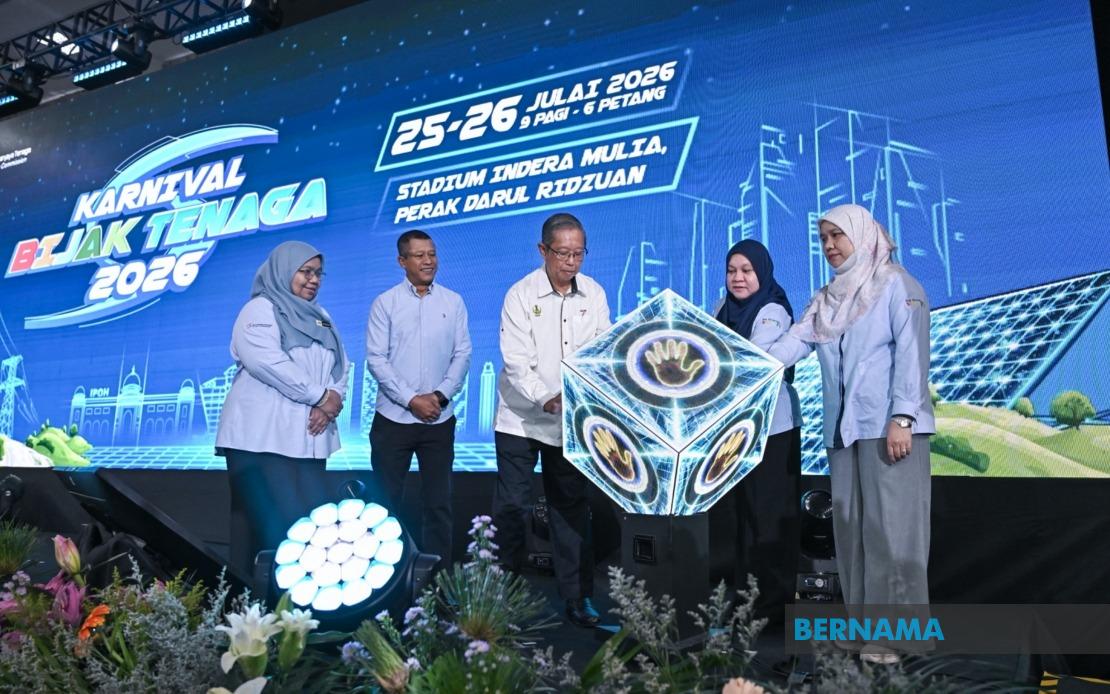
The Energy Commission has launched an ambitious public engagement initiative with the Energy Smart Carnival 2026, a two-day educational event held at Stadium Indera Mulia in Ipoh that underscores the regulator's commitment to fostering informed citizens in an era of rapid energy sector transformation. The carnival represents a strategic pivot towards direct community dialogue, moving beyond traditional regulatory announcements to create accessible, interactive platforms where Malaysians can grasp the tangible implications of the country's shift towards sustainable energy infrastructure.
According to Energy Commission chairman Datuk Seri Asri Hamidon, the carnival fundamentally repositions the Commission's public image from a distant bureaucratic entity to a proactive stakeholder genuinely invested in citizen education. He emphasised that the event bridges a critical information gap, enabling visitors to comprehend not only the Commission's regulatory mandate over electricity and piped gas sectors, but also the practical dimensions of energy transition that will reshape household consumption patterns and industrial operations across Malaysia. This pedagogical approach reflects a broader recognition that successful energy policy implementation depends on public buy-in and understanding.
The carnival's programming demonstrates sophisticated audience segmentation. Attendees encountered detailed information about household electricity conservation techniques, practical guidance on interpreting 4 and 5-Star Energy Efficiency Labels, and the significance of ST-SIRIM Safety Labels for electrical appliances. These educational modules translate abstract sustainability concepts into concrete consumer choices, empowering households to reduce their energy footprints whilst simultaneously lowering utility bills—a compelling dual incentive that resonates across socioeconomic demographics. The inclusion of career pathway exhibits acknowledges that energy transition requires workforce development, creating opportunities for young Malaysians considering specialised roles in this expanding sector.
The inaugural event's performance metrics far exceeded organisational expectations, attracting more than 10,000 visitors compared to an initial target of 5,000. This doubling of attendance reveals substantial public appetite for energy-related information and suggests that Malaysians increasingly recognise energy efficiency as a personal financial and environmental priority. Notably, visitor demographics transcended Perak's boundaries, with participants travelling from Kuala Lumpur, Johor Bahru and other states, indicating that energy transition concerns resonate nationwide rather than remaining regionally compartmentalised concerns.
The carnival's timing coincides with the Energy Commission's Silver Jubilee celebration, lending commemorative weight to what might otherwise be dismissed as routine outreach. By anchoring public engagement initiatives to significant institutional milestones, the Commission reinforces its credibility and emphasises the longevity of its regulatory framework. This positioning proves particularly important as Malaysia navigates complex energy policy decisions; linking carnival activities to the Commission's 25-year track record implicitly argues that current transition strategies benefit from decades of accumulated expertise.
Energy Commission chief executive officer Siti Safinah Salleh and Perak Infrastructure, Energy, Water and Public Transport Committee chairman Datuk Seri Mohammad Nizar Jamaluddin's joint participation underscores governmental alignment regarding energy transition priorities. Such coordination between federal and state authorities signals consistency in messaging, eliminating conflicting narratives that might otherwise confuse constituents about regulatory responsibilities and policy directions. This institutional coherence proves essential in federal systems where overlapping jurisdictions can generate confusion about implementation mechanisms.
ST Strategic Communications Section head Veliana Ruslan's announcement regarding nationwide expansion represents a crucial escalation in ambition. The Commission plans to replicate the carnival format across Malaysian states beginning next year, effectively decentralising access to energy education and regulatory information. This expansion strategy acknowledges that centralised dissemination mechanisms fail to reach diverse demographic groups equally, particularly in less urbanised areas where transportation barriers might prevent attendance at flagship events. By bringing educational programming directly to state capitals, the Commission demonstrates commitment to inclusive engagement transcending geographic privilege.
The carnival's exhibition format—combining demonstrations, competitive elements, and talks—reflects contemporary understanding of adult learning modalities. Rather than deploying conventional lecturing approaches that often fail to retain audience attention, the Commission employs experiential education where visitors engage with tangible equipment, witness live demonstrations of energy-saving technologies, and participate in interactive competitions reinforcing key messages. This pedagogical sophistication suggests the Commission has invested in professional event design expertise, treating public communication with the seriousness it deserves.
From a Malaysian and Southeast Asian perspective, the carnival illuminates broader regional trends in energy governance. As ASEAN nations collectively commit to ambitious renewable energy targets and carbon neutrality aspirations, citizen engagement increasingly determines implementation success. Countries like Malaysia that invest in public education regarding energy transition build constituency support for sometimes unpopular measures—such as shifting from subsidised fossil fuels to market-rate renewable pricing. The carnival exemplifies how regulatory agencies can reframe energy transition narratives from top-down impositions into collaborative societal transformations grounded in shared understanding.
The emphasis on household electricity conservation carries particular significance for Malaysia's economic competitiveness and energy security. As manufacturing costs increasingly correlate with energy expense, households reducing consumption simultaneously diminish pressure on grid infrastructure and reduce import dependency for fossil fuel-based electricity generation. The carnival's focus on appliance labelling and efficiency standards thus extends beyond individual consumer choice into systemic economic resilience—demonstrating how granular public engagement initiatives aggregate into macroeconomic benefits.
Looking forward, the carnival's expansion trajectory suggests the Energy Commission recognises that regulatory legitimacy in the 21st century requires transparent, accessible public communication. Citizens increasingly demand understanding of how regulatory agencies affect daily life; the carnival satisfies this expectation by demystifying energy sector operations and connecting abstract transition goals to concrete household implications. As Malaysia navigates the complex technical, economic, and social dimensions of energy transition, this grassroots educational approach may prove as consequential as policy framework reforms themselves.

