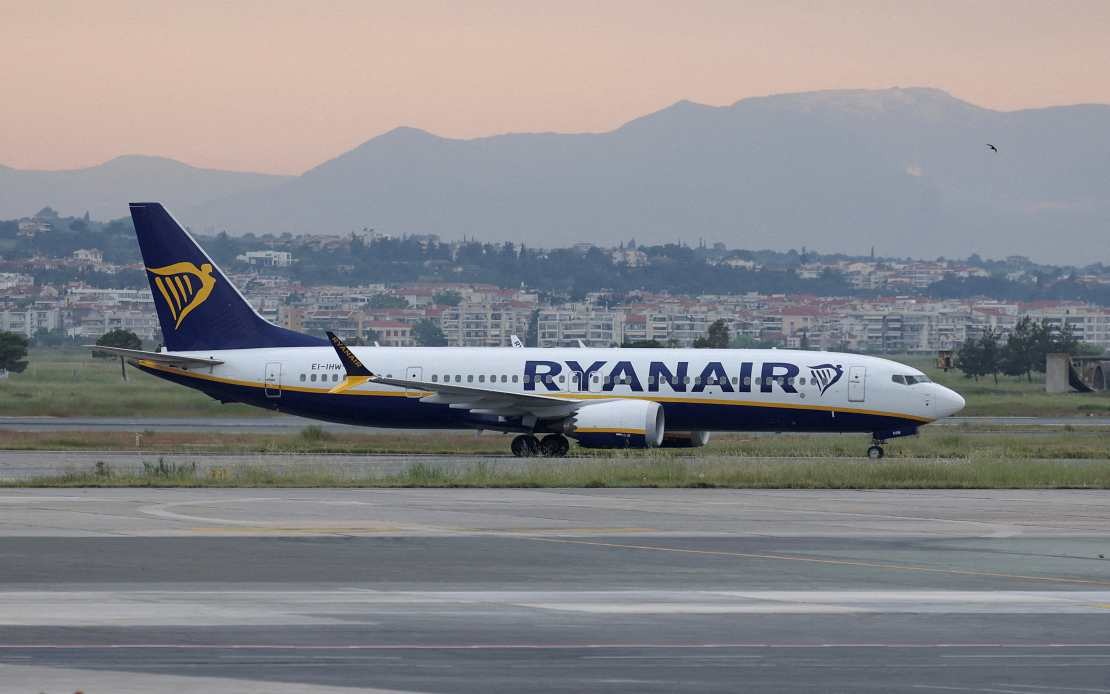
A harrowing incident aboard a Ryanair flight operating from Thessaloniki to Munich last month resulted from catastrophic engine failure, according to findings released by American aviation authorities this week. The Malta Air aircraft, flying under the Ryanair brand, experienced a fan blade separation in its right engine as it climbed away from Thessaloniki International Airport in Greece, triggering a sequence of events that placed a passenger's life in immediate jeopardy before quick action by nearby travellers averted a potential tragedy.
The National Transportation Safety Board released its investigation report on Thursday, detailing how mechanical fragments from the failing engine penetrated the aircraft's fuselage at multiple points. The high-velocity debris tore through the pressurised cabin at row 11, completely destroying the window of seat 11F while simultaneously compromising the lower fuselage skin situated behind the right wing-to-body fairing. This dual breach of the aircraft's structural integrity created a dangerous depressurisation scenario that exposed one passenger to extreme physical forces.
The passenger occupying seat 11F bore the brunt of the catastrophic window failure, becoming partially lodged in the damaged aperture as cabin pressure differentials exerted tremendous suction force. The situation represented an acute aviation emergency—the kind that pilots train extensively to manage yet hope never to encounter during their careers. In such circumstances, the physics of pressurised cabin environments can create life-threatening conditions within seconds, as the aircraft struggles to maintain safe internal pressure while exposed to the external atmosphere at cruising altitude.
What prevented a fatal outcome was the immediate intervention of fellow passengers, who recognised the dire circumstances and acted decisively to pull the injured traveller back into the cabin. Their collective effort, undertaken without hesitation in a moment of crisis, likely saved the passenger's life by preventing complete ejection from the aircraft. The actions exemplify the unpredictable heroism that sometimes emerges when ordinary people confront extraordinary danger, often without formal training or time for deliberation.
The investigation uncovered an additional complication affecting engine reliability. Safety inspectors discovered bird remains, including feathers, embedded within various components of the right engine. This finding suggests that the engine failure may have originated with a bird strike during the initial climb phase after departure from Thessaloniki. Bird strikes represent an ongoing hazard in commercial aviation, particularly during takeoff and landing when aircraft operate at lower altitudes where wildlife activity concentrates, though they can occur at any flight phase near airports.
The damaged aircraft successfully returned to Thessaloniki following the incident, allowing investigators to conduct thorough physical examination of the failed components. This recovery capability was essential for determining the precise sequence of mechanical failures that preceded the fan blade separation. Engine metallurgy analysis and fractography—the examination of broken metal surfaces—provided critical evidence regarding the forces and conditions present during the catastrophic failure.
For Malaysian and Southeast Asian aviation observers, this incident underscores the rigorous investigation protocols that international aviation authorities employ when serious in-flight incidents occur. The NTSB's comprehensive examination of structural damage, engine components, and potential contributing factors like foreign object damage represents the gold standard in accident investigation methodology. These investigations generate safety recommendations that eventually ripple across global aviation operations, influencing maintenance procedures, design modifications, and operational protocols worldwide.
The July incident resulted in injuries to the passenger who was partially ejected, though the severity of those injuries was not detailed in the investigation summary. The psychological impact on all passengers and crew aboard the flight—witnessing a window explosion and a fellow traveller nearly disappearing from the cabin—would undoubtedly have been profound and lasting. Post-incident support for passengers and crew represents an important aspect of airline crisis management that extends beyond the immediate emergency response.
Ryanair and its operating subsidiary Malta Air maintain extensive flight operations across Europe, including routes that frequently carry Malaysian and Southeast Asian passengers who travel between European cities for business and leisure. The airline's safety record, particularly regarding mechanical reliability and incident response, carries direct relevance for regional travellers choosing among European carriers. Individual incidents, while statistically rare given the millions of flights operating annually, carry weight in passenger decision-making and airline reputation management.
The investigation's findings regarding fan blade separation and engine structural integrity contribute to the broader aviation maintenance knowledge base. Airlines and maintenance facilities across the region will review such reports to ensure their own engine inspection protocols and maintenance standards meet or exceed the benchmarks established by investigations into serious incidents. The identification of bird strike as a potential contributing factor will also influence wildlife management procedures at airports throughout Southeast Asia.
Engine manufacturers utilise incident investigations to refine design specifications and material selections, working to prevent identical failures in similar powerplant models across global aircraft fleets. Rolls-Royce, the engine manufacturer involved in this case, integrates findings from major incidents into service bulletins and design improvements that operators must implement across their fleets. This iterative process of incident investigation, analysis, and engineering improvement represents the mechanism through which aviation safety continuously evolves and strengthens.
The successful outcome of this incident—with the aircraft returning safely and the at-risk passenger rescued—demonstrates both the resilience of modern aircraft design and the critical importance of passenger awareness and cooperative response during emergencies. While complete window loss represents a severe structural event, aircraft are engineered to remain controllable and capable of safe descent even with such damage. The combination of robust engineering and human intervention created the conditions for survival in what could have become a catastrophic accident.

