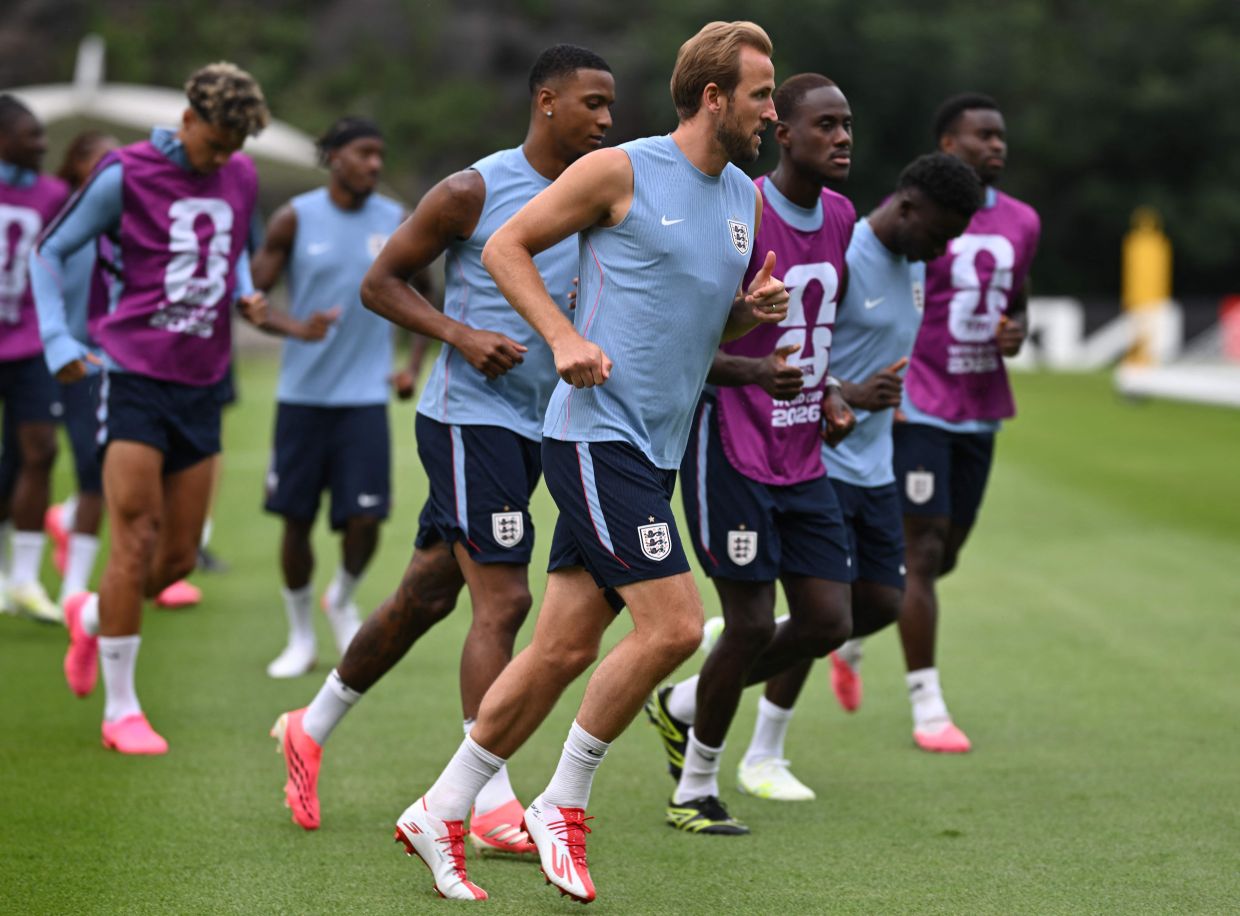
England venture into unfamiliar territory this weekend when they confront Mexico at the Estadio Azteca, a venue that stirs complex memories for the Three Lions and carries enormous symbolic weight for their hosts. Simultaneously, Erling Haaland and Norway will attempt one of football's great upsets against Brazil at the MetLife Stadium, setting up a climactic pair of knockout encounters that will reshape the tournament's trajectory.
The England-Mexico fixture carries particular historical resonance. Four decades have elapsed since England last visited the Azteca, when Diego Maradona's controversial 'Hand of God' goal handed Argentina a 2-1 victory in 1986. That match remains etched in English sporting consciousness. Now, with the Three Lions returning to complete an unfinished chapter, manager Thomas Tuchel faces a convergence of challenges far more complex than nostalgia. His squad has underperformed relative to expectations throughout this campaign. After entering as pre-tournament favorites seeking to end a 60-year drought in major competitions, England labored through group play and required a dramatic late surge from captain Harry Kane to overcome the Democratic Republic of Congo with a 2-1 scoreline.
The altitude presents an underestimated obstacle that could prove decisive. Positioned 2,240 metres above sea level, the Azteca imposes physiological demands that cannot be overcome through four days of acclimatization. Tuchel acknowledged this reality plainly: the human body simply cannot adapt sufficiently in such a timeframe. When he visited the stadium before the pre-match briefing, however, Tuchel recognized something equally important—the electric atmosphere and historical weight of the venue itself. He described it as an iconic stadium hosting a proper World Cup match, suggesting he understands both the tactical and psychological dimensions of the occasion.
Defensive vulnerabilities have emerged as England's primary weakness. The backline has appeared fragile against pace, particularly along the problematic right flank where gaps have opened repeatedly. Tuchel must find solutions to these structural problems while simultaneously managing the disruption that altitude imposes on conditioning. Mexico, conversely, arrive in remarkable form. Javier Aguirre's team has won all four home matches without conceding a goal—a fortress-like defensive record that extends to knockout competition. Their 2-0 elimination of Ecuador marked Mexico's first knockout victory at a World Cup in four decades, suggesting they have developed the mental resilience required for this stage.
Aguirre, the Mexican coach, has correctly identified that despite ranking tenth in FIFA standings against England's fourth position, Mexico will need to execute nearly flawlessly to prevail. His comments about the altitude—suggesting it matters little in an 11-versus-11 contest—carried the ring of psychological gamesmanship. The reality is that Mexico's acclimatization advantage is genuine, yet he framed it as irrelevant. He acknowledged England's quality explicitly, noting their physically powerful roster filled with elite performers competing at the continent's highest clubs. These are not the dismissive comments of a coach confident in superiority, but rather the measured assessment of a veteran tactician preparing for a genuine test.
Weather complications have shadowed the buildup. FIFA initially considered moving the Sunday kickoff earlier to avoid thunderstorms, ultimately deciding to maintain the 6pm local time slot (4am Monday, July 6 Malaysian time). Forecasts continue predicting storms around match time, though temperatures will hover around 21°C—substantially cooler than Saturday's near-record 38°C when France dispatched Paraguay in Philadelphia. The winner advances to Miami for a quarter-final against the victor of the Brazil-Norway encounter at MetLife Stadium, where New Jersey faces its own severe weather threats and regional flood warnings.
Norway's challenge represents perhaps the tournament's most audacious ambition. Erling Haaland has scored five goals in three matches, establishing himself as the competition's most lethal finisher. Carlo Ancelotti's Brazil team, however, boasts the experience and individual caliber required to contain even exceptional talent. Notably, Haaland will face Gabriel Magalhaes, an Arsenal defender familiar with him through Premier League competition, while Brazil's other center-back Marquinhos has encountered Haaland repeatedly in Paris Saint-Germain's matches against Manchester City. Ancelotti adopted a characteristically calm demeanor when assessing the threat, essentially telling his defenders that they require no special tactical instruction—they have faced this opponent sufficiently often that their instincts should suffice.
Yet Norway's coach Stale Solbakken has injected useful perspective into his team's mentality. He cautioned his players against being overawed by the occasion, urging them to treat the match as simply another contest rather than a historic David-versus-Goliath narrative. His observation that Brazil, while favorites, are not the overwhelming forces of previous generations carries weight. The five-time champions face a reset moment; they are no longer the prohibitive favorites they would have been two, three, or four years prior. This shift reflects genuine competitive change in world football, where depth has distributed more evenly across major confederations.
These parallel narratives reveal tournaments operating simultaneously at different registers. For England, this represents both opportunity and danger—a return to Mexico's cauldron that carries historical weight and contemporary stakes. For Brazil and Norway, the clash pits established supremacy against emerging threat. Mexico's transformation into genuine contenders across home soil suggests that traditional hierarchies have become less rigid. The altitude advantage, the defensive solidity, the roaring home crowd—these factors could conspire to create one of the tournament's great upsets. Similarly, Haaland's extraordinary goal-scoring rate has established him as a phenomenon that even elite defenders struggle to neutralize consistently. These round-of-16 contests will determine whether the tournament rewards established power or catalyzes unexpected transformations.

