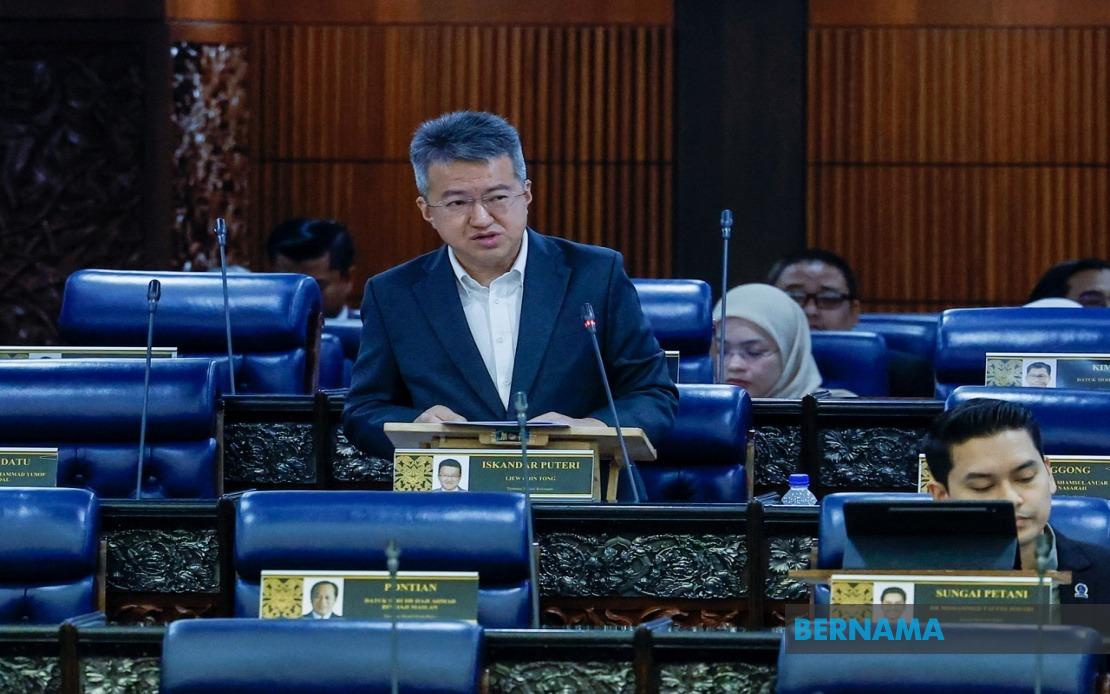
Malaysia's Employees Provident Fund has processed 63 applications through its i-Legasi programme, channelling RM46.3 million in accumulated retirement savings to 86 family members across the country. Deputy Finance Minister Liew Chin Tong made the disclosure during parliamentary question time, highlighting the scheme's early success in redistributing wealth among eligible households. The announcement underscores growing government focus on addressing inadequate retirement savings among Malaysian workers, a persistent challenge as the nation approaches demographic transition.
Launched on February 1 this year, i-Legasi represents a pragmatic policy response to the reality that many Malaysians struggle to accumulate sufficient retirement funds. The mechanism allows EPF members aged 55 and above who have exceeded the Adequate Savings benchmark of RM650,000 to transfer portions of their surplus retirement capital directly into the EPF accounts of qualifying immediate family members. This flexibility recognises that retirement adequacy is not uniformly distributed across households, and enables better-positioned members to bolster their relatives' financial security.
The beneficiaries receiving these transfers represent a cross-section of immediate family members, suggesting the scheme appeals to workers seeking to support spouses, adult children, or other dependent relatives. By directing surplus savings toward family members rather than allowing them to remain idle in a single account, the policy encourages more efficient use of accumulated retirement capital. For recipients, these injections provide a meaningful boost to their own retirement preparation at potentially critical life stages.
Liew's parliamentary response addressed broader concerns about retirement adequacy in Malaysia. Datuk Seri Aminuddin Harun, the Port Dickson MP, had raised questions about government strategies to ensure Malaysians maintain sufficient retirement income amid rising living costs and Malaysia's projected transition to an aged society by 2030. These concerns reflect demographic realities that will reshape the nation's social security landscape within the decade, as the proportion of citizens over 65 rises significantly.
The Deputy Minister presented encouraging progress on the Basic Savings target, a key government benchmark. As of May 31, approximately 3.04 million active EPF members aged 18 to 60 have achieved the Basic Savings target for their respective age groups, representing 38.3 per cent of the 7.94 million members in that demographic band. For those reaching age 60, the target stands at RM390,000. This figure marks genuine improvement from the previous year's performance, when 35 per cent of members—or 2.71 million individuals—had met their age-appropriate target.
The three-percentage-point increase in target achievement, while numerically modest, reflects underlying gains in retirement savings discipline among Malaysian workers. This progression matters because the Basic Savings target serves as the foundation for retirement security; members who fall short face potential financial hardship in their post-work years. The steady improvement suggests that government messaging, EPF initiatives, and increased worker awareness of retirement needs are gradually shifting behaviour.
However, interpreting these figures requires context. With 38.3 per cent of working-age members meeting the Basic Savings target, nearly two-thirds remain below the benchmark. This gap presents a formidable challenge for policymakers committed to reducing elderly poverty and dependency on government support. Many workers face structural obstacles to savings accumulation, including moderate wages, irregular employment, or competing family financial demands that make retirement planning aspirational rather than achievable.
The government and EPF have committed to strengthening collaboration on comprehensive retirement security measures beyond i-Legasi. These include reviewing contribution incentives to encourage higher savings rates and expanding social protection mechanisms that provide floor-level income security for those unable to accumulate adequate private savings. Such integrated approaches recognise that retirement adequacy cannot rely solely on voluntary individual savings; structural support mechanisms prove essential for lower-income workers.
Malaysia's demographic transition compounds the urgency of these efforts. By 2030, the nation will officially transition to an aged society, with rising proportions of citizens entering retirement each year. This demographic shift will place considerable strain on public finances, healthcare systems, and intergenerational support structures. Ensuring that retiring workers possess adequate personal savings reduces pressure on government safety nets and maintains living standards without excessive reliance on public resources. The i-Legasi scheme, while modest in scale, represents one component of this broader strategy to distribute retirement security responsibilities across government, employers, and individuals.
Regional comparison provides additional perspective. Many Southeast Asian nations struggle with similar retirement adequacy challenges, particularly as traditional extended-family support systems weaken under urbanisation and economic transition. Malaysia's structured approach through the EPF, combined with targeted initiatives like i-Legasi, positions the nation relatively well against regional peers. Nevertheless, the gap between target achievement and actual performance indicates that current policy instruments remain insufficient to guarantee universal retirement security.
The i-Legasi scheme also reflects evolving thinking about family support in retirement planning. Rather than viewing retirement savings as strictly individual assets, the policy acknowledges that households function as economic units where surplus resources in one member's account might serve the broader family's long-term security more effectively. This family-centric perspective aligns with Malaysian cultural values while introducing practical flexibility into the rigid traditional EPF structure.
Moving forward, policymakers must address several dimensions of the retirement adequacy challenge. These include expanding coverage to self-employed workers and informal-sector employees often excluded from traditional EPF protections, increasing contribution rates to accelerate savings accumulation, and ensuring that retirement benefit levels maintain purchasing power against inflation. The i-Legasi initiative demonstrates commitment to problem-solving but represents only one incremental step toward comprehensive retirement security for all Malaysians.

