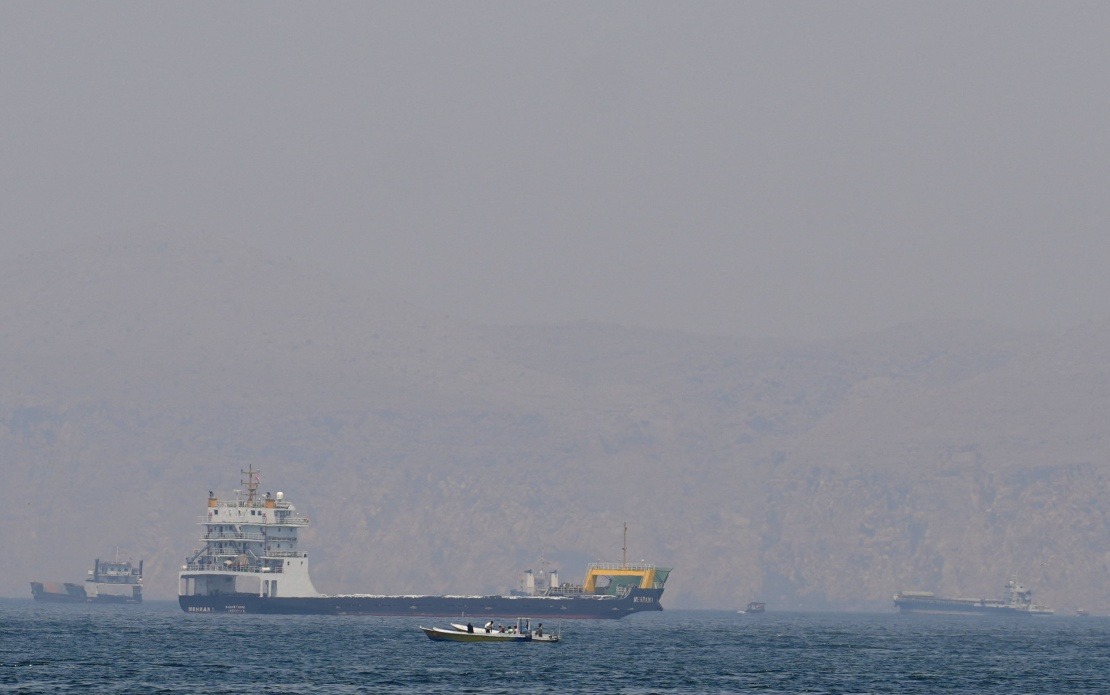
The European Union and the Gulf Cooperation Council have jointly declared unlawful any attempt by a state to assert sovereignty or impose restrictions over the Strait of Hormuz, reasserting the principle that international shipping lanes must remain open and unrestricted. The two regional blocs issued a forceful statement following their High-Level Forum on Regional Security and Cooperation held in Brussels on July 13, making clear that no bilateral arrangement between states can legally regulate or limit passage through this strategically vital waterway. The declaration underscores deepening concerns about maritime security in one of the world's most important energy corridors, through which roughly one-third of global seaborne crude oil passes annually.
EU foreign policy chief Kaja Kallas and Bahraini Foreign Minister Abdullatif bin Rashid Al-Zayani, speaking in his capacity as chair of the GCC Ministerial Council, co-led the forum and signed the statement that firmly reasserts international maritime law principles. The joint position explicitly references the UN Convention on the Law of the Sea, which guarantees all vessels the right of passage through international straits without requiring authorisation, permits, fees, or service charges from any coastal state. This legal framework has been a cornerstone of global maritime commerce for decades, ensuring that even major powers cannot unilaterally restrict shipping lanes or extract tolls from passing vessels.
The statement's emphasis on lawful passage carries particular significance for Southeast Asian nations like Malaysia and Singapore, which depend heavily on unimpeded maritime trade through regional waterways. The Strait of Hormuz's criticality to global energy markets means that any disruption or contested sovereignty claims create ripple effects across Asia's energy-dependent economies. Malaysia, as a maritime nation and major energy consumer, has a direct interest in maintaining stable passage through international straits, a principle that extends to its own strategic waters and the broader Indo-Pacific shipping routes that sustain regional commerce.
Central to the EU-GCC statement are strong condemnations of Iranian attacks on commercial vessels transiting the strait and on several regional countries' sovereign territories. The blocs stressed that such attacks have endangered civilian lives and seafarers of all nationalities, violated international law, and breached UN Security Council Resolution 2817. These attacks have created a pattern of maritime insecurity that threatens not only the immediate region but global supply chains dependent on predictable passage through the waterway. The statement's forceful language reflects frustration that diplomatic channels have failed to prevent escalating incidents that directly threaten international commerce.
EU and GCC officials called on Iran to immediately and unconditionally cease all attacks and interference with maritime navigation, demanding that the Strait of Hormuz remain open without preconditions or charges. This demand reflects a collective position that freedom of navigation cannot be contingent on political negotiations or subject to coercive tactics. The principle at stake extends beyond this specific waterway; it establishes precedent for how international bodies will respond to any state attempting to weaponise or commercially exploit critical chokepoints through which global trade flows.
The two blocs expressed full solidarity with affected countries and seafarers placed at risk, pledging close coordination to protect freedom of navigation and ensure the safety of international shipping. This commitment signals that the EU and GCC view maritime security as a collective responsibility rather than an issue for individual states to manage alone. For regional players like Malaysia, such international backing for established maritime principles provides reassurance that challenges to freedom of passage will face coordinated multilateral responses.
Significantly, the statement called for restraint and reaffirmed commitment to dialogue and diplomacy as the path forward, even as military tensions have escalated. This dual messaging—firm on principles but open to negotiation—reflects the delicate balance between deterring further aggression and leaving diplomatic channels open. The Middle East has witnessed intensifying US-Iran military exchanges, and any permanent closure or contested control of the Strait of Hormuz would trigger global economic shocks affecting energy prices, shipping costs, and supply chain stability across Asia.
The forum's timing reflects broader regional anxieties about maritime security and the effectiveness of international law enforcement in protecting commercial shipping. Despite a Pakistan-brokered memorandum of understanding signed in June aimed at ending conflict and reaching a lasting peace agreement, military escalation has continued, suggesting that diplomatic initiatives alone have proven insufficient to de-escalate tensions. This gap between diplomatic progress and military reality underscores the challenge facing regional and international stakeholders attempting to stabilise the waterway.
For Malaysia and other Southeast Asian nations, the EU-GCC position carries important implications for regional maritime order. As Southeast Asian waters face their own security challenges and sovereignty disputes, the international community's commitment to upholding freedom of navigation principles provides a legal and diplomatic framework for addressing contested claims. The statement essentially establishes that unilateral attempts to control international straits or impose unauthorised fees violate accepted international norms, a principle that resonates across maritime Asia where multiple nations depend on open sea lanes for survival.
The joint statement also reflects broader strategic alignment between Europe and the Gulf states on regional security issues. EU presence in the Gulf through diplomatic engagement and naval coordination demonstrates European commitment to maintaining stability in a region critical to global energy security and trade. This transatlantic and trans-regional coordination model offers lessons for Southeast Asian nations seeking to maintain maritime security through collective action and adherence to international law rather than military escalation.
Looking forward, the effectiveness of this EU-GCC stance will depend on whether it can translate rhetorical commitment into concrete measures that deter further violations without triggering wider conflict. The challenge lies in maintaining the delicate balance between enforcing international law and avoiding actions that could provoke further escalation. For Asian economies, the outcome of these negotiations will directly affect shipping costs, energy prices, and overall economic stability, making the Strait of Hormuz crisis an Asian concern as much as a Middle Eastern one.

