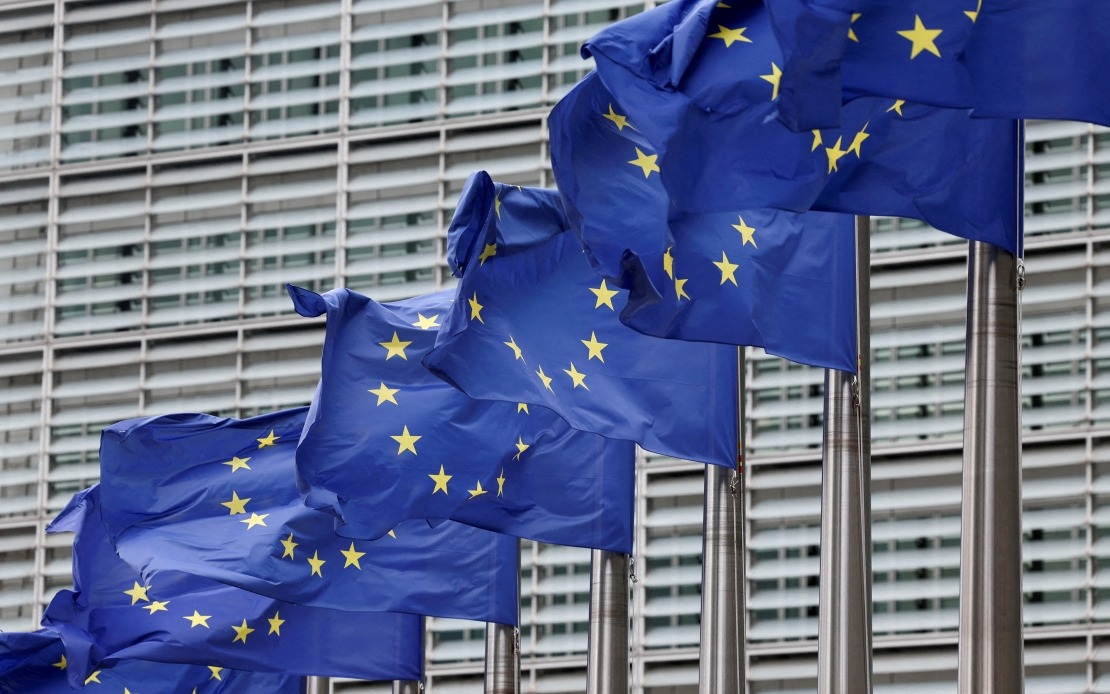
European Union foreign ministers will convene in Brussels on Monday to address pressing geopolitical developments in West Asia, with particular focus on whether the bloc should escalate its response to the expansion of Israeli settlements in the occupied West Bank through targeted economic measures. The gathering represents another critical juncture in Europe's ongoing effort to forge a coherent diplomatic position on a conflict that has repeatedly exposed fault lines between member states, challenging the EU's ability to act with the unified voice it typically demands in foreign affairs.
The European Commission has assembled a comprehensive menu of policy options for the ministerial discussions, centring on potential trade mechanisms that could constrain economic activity linked to settlements. These options range from selective restrictions on the importation of goods produced in settlement areas to broader bans on commercial engagement with enterprises operating there. Such measures reflect growing pressure from within EU circles to move beyond rhetorical condemnation toward concrete economic consequences, yet their implementation hinges entirely on whether member states can crystallise agreement around a common approach.
The path to consensus remains heavily fractured, with Spain, Ireland, and Belgium spearheading calls for stringent sanctions that would meaningfully restrict Israel's economic interests. These three nations have become vocal advocates for a hardline stance, viewing incremental settlement expansion as incompatible with a credible peace process and arguing that Europe's diplomatic leverage should be deployed more decisively. Conversely, Germany and several other member states have thus far resisted such escalation, citing concerns about unintended consequences, the efficacy of unilateral measures, and the diplomatic risks of deepening divisions with a key regional partner.
The procedural mechanics governing EU decision-making add another layer of complexity to the negotiations. Should the proposed measures be classified as foreign policy sanctions—a designation that carries significant political weight—they would require absolute unanimity across all 27 member states, meaning even a single dissenting voice could block the initiative entirely. This requirement reflects the EU's founding principle that member states must maintain sovereignty over matters touching core foreign policy interests, but it also frequently renders decisive action impossible when genuine disagreement exists.
Alternatively, if framed as trade restrictions rather than foreign policy instruments, the proposed measures would require only a qualified majority for adoption, specifically backing from 15 of the 27 member states that collectively represent at least 65 per cent of the EU's total population. This lower threshold theoretically offers a path forward without absolute consensus, yet the distinction between foreign policy sanctions and trade measures remains contested and subject to legal interpretation, creating uncertainty about which procedural rules would ultimately apply.
Beyond the Israeli settlement question, the ministerial agenda encompasses other significant international crises demanding Europe's attention. Developments relating to the conflict in Iran will receive consideration, underscoring the broader instability affecting the wider West Asian region and the ripple effects such tensions create for European interests. The ministers are also expected to revisit the Russian invasion of Ukraine, a conflict that has consumed enormous diplomatic and financial resources while continuing to reshape European security calculations and alliance structures.
On the Ukraine front, foreign ministers are anticipated to move toward strengthening the existing sanctions architecture targeting Russian individuals, organisations, and entities. These additional measures reflect the EU's commitment to maintaining pressure on Moscow despite the prolonged nature of the conflict and the fatigue that naturally accompanies sustained economic and diplomatic coercion. However, significant uncertainty persists regarding whether negotiators can finalise a comprehensive new sanctions package encompassing the trade restrictions that would carry maximum economic impact, or whether disagreements among member states will again force a more modest outcome.
The inclusion of Ukrainian Foreign Minister Andrii Sybiha in the informal ministerial consultations signals the EU's continued prioritisation of Ukraine's strategic perspective and reinforces the principle that those most directly affected by conflicts should have a voice in shaping the international response. Sybiha's participation underscores Ukraine's status as a key stakeholder in European security architecture and the bloc's commitment to maintaining Ukraine's central role in decision-making processes affecting its own future.
For Malaysia and Southeast Asian nations observing these developments, the EU's struggles to achieve internal consensus carry broader implications. The apparent difficulty in crafting unified responses to geopolitical crises, even among wealthy and institutionally sophisticated democracies, reflects the structural challenges facing multilateral organisations in an era of competing interests and values. As ASEAN and other regional groupings grapple with their own internal divisions regarding various international disputes, the EU example demonstrates that diplomatic consensus represents an ongoing negotiation rather than a permanent achievement.
The settlement sanctions debate also illustrates how middle powers navigate pressures from different constituencies and international actors. Germany's reluctance to embrace severe sanctions mirrors the calculation patterns visible in several Southeast Asian responses to various international issues, where economic ties, diplomatic relationships, and strategic positioning must be carefully balanced. The tension between moral clarity and pragmatic engagement remains a persistent theme in contemporary international relations, affecting how nations large and small determine their positions on contentious global matters.
The outcome of Monday's meeting will reveal whether the EU can transcend its internal divisions through creative procedural solutions or whether deadlock will again force a retreat to minimal common-denominator positions. Such outcomes often establish precedents affecting how the bloc responds to subsequent crises, making each ministerial gathering significant not merely for immediate decisions but for what it signals about the EU's institutional capacity and collective will.

