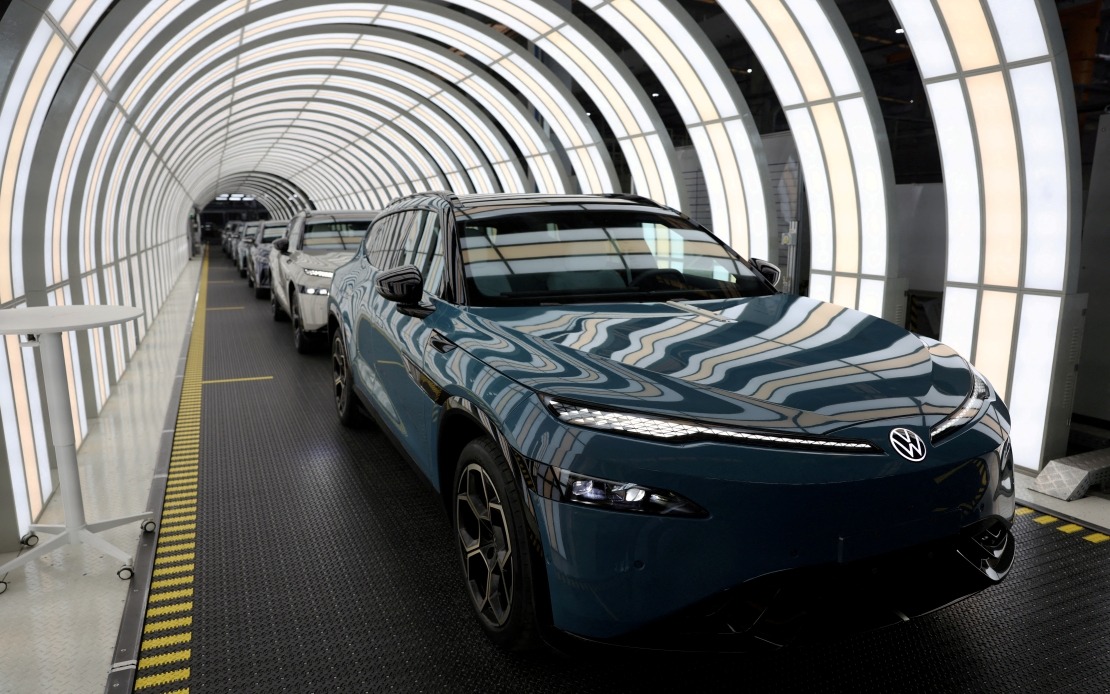
Europe's trade barriers against Chinese electric vehicles are reshaping the continent's automotive landscape, as Western manufacturers redirect production closer to home. A comprehensive analysis by transport advocacy group T&E demonstrates that the tariff regime introduced by the European Union has fundamentally altered import patterns, prompting legacy automakers to consolidate their EV operations within European borders rather than rely on distant suppliers.
The statistical picture is striking. Western automakers—including BMW, Dacia, Volvo, Smart and Tesla—saw their reliance on Chinese-manufactured battery electric vehicles drop dramatically in early 2025. Where these brands previously sourced 38 per cent of their European EV sales from Chinese factories in 2024, that figure collapsed to just 23 per cent by the first quarter of this year. The shift represents a fundamental recalibration of supply chain strategy, with manufacturers calculating that European production, despite higher labour costs, offers advantages in tariff avoidance and closer integration with dealership networks.
Tesla exemplifies this trend. The American electric vehicle pioneer, which had expanded Chinese manufacturing capacity specifically to serve European markets, reduced its China-sourced European sales share from 23 per cent to 19 per cent. While the decline appears modest, it reflects a deliberate strategic pivot by Elon Musk's company to establish greater local production footprints, particularly through its expanding Gigafactory operations across the continent.
However, the tariff regime has not achieved uniform results across all Chinese competitors. Producers such as BYD and Geely have defied expectations by continuing to expand their European market presence despite facing customs duties. This counterintuitive pattern emerges because Chinese factories maintain such substantial production overcapacity that tariffs, even when substantial, remain manageable obstacles to profitable exports. The economics of underutilized manufacturing lines incentivize Chinese producers to absorb tariff costs rather than reduce shipments, allowing them to maintain market share and prevent competitors from capturing their customers entirely.
SAIC presents a cautionary case study in tariff enforcement. The Chinese state-owned enterprise faces levies nearly double those imposed on BYD and Geely, a penalty reflecting the European Union's determination that SAIC benefited disproportionately from government subsidies integrated throughout its supply chain. This differentiated approach signals the EU's intent to target companies deemed excessively dependent on state support, yet even SAIC's sharply declining European sales indicate that sufficiently elevated tariffs eventually curtail imports regardless of domestic overcapacity pressures.
The tariff architecture has inadvertently catalyzed a broader strategic repositioning by Beijing. Chinese automakers, facing restricted export opportunities for battery electric vehicles, have accelerated investment in European manufacturing capacity. Since the European Union initiated its subsidy investigation in 2023, Chinese companies have unveiled concrete plans for ten new production facilities across the continent. These investments represent a fundamental recalibration: rather than exporting finished vehicles, Chinese manufacturers are establishing European subsidiaries that can produce locally and thereby circumvent tariff barriers entirely while claiming investment credentials within the bloc.
This localization strategy reveals the limitations of purely tariff-based trade protection. While duties discourage imports, they simultaneously incentivize foreign producers to invest directly in protected markets, potentially establishing permanent competitive footholds. Chinese automakers transitioning to European production may ultimately deliver greater competitive pressure than importing finished vehicles, particularly as they develop products specifically engineered for European preferences and regulations.
A parallel phenomenon further complicates the competitive landscape. Chinese manufacturers, unable to freely export battery electric vehicles, have aggressively promoted plug-in hybrid technology as an alternative market entry point. These hybrid vehicles, which combine internal combustion engines with electric powertrains, face lower tariffs and less stringent regulatory scrutiny than pure electric models. Chinese plug-in hybrid market share in the European Union surged from a negligible three per cent in 2024 to 13 per cent by early 2025, demonstrating manufacturers' adaptability in navigating protectionist barriers.
For Southeast Asian readers and policymakers, these developments offer instructive lessons about trade policy unintended consequences. The European Union's tariff strategy has succeeded in reversing import patterns and encouraging domestic production investment, yet it has simultaneously accelerated Chinese manufacturing localization and prompted Chinese competitors to pivot toward adjacent market segments. Any regional automotive protection measures must account for similar dynamic responses from established competitors seeking workarounds rather than exit.
The shifting EV supply chain also carries implications for Malaysia's automotive sector and industrial policy. As Chinese manufacturers establish European production bases, the region's positioning as an alternative manufacturing hub becomes more competitive. Malaysian policymakers may consider whether targeted investments in electric vehicle component manufacturing, battery technology, or assembly operations could attract multinational supply chains seeking alternatives to both Chinese production and tariff-constrained European sourcing.
The trajectory of Europe's EV market ultimately demonstrates that tariffs function best as component of broader industrial policy rather than standalone trade tools. Western automakers have responded by consolidating European operations, Chinese manufacturers are investing heavily in local production, and alternative technologies are gaining traction in circumventing restrictions. The result is a more fragmented, regionally distributed automotive sector rather than the unified European EV industry that tariff architects may have envisioned.
Looking forward, the sustainability of these patterns remains uncertain. As Chinese European production facilities mature and begin exporting to other global markets, the competitive dynamics established through current tariffs may shift fundamentally. The European Union faces a strategic decision between maintaining and escalating trade barriers or accepting that localized Chinese manufacturing represents an inevitable cost of market access restrictions.

