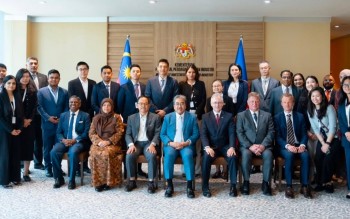
A significant European business delegation comprising more than 25 companies and over 70 representatives spent three days in Kuala Lumpur this week conducting wide-ranging discussions with Malaysian government officials on economic reform, environmental sustainability and prospects for deepened commercial ties. The EU-ASEAN Business Council (EU-ABC) orchestrated the visit from August 4-6, creating a structured platform for European enterprises to engage directly with policymakers and understand Malaysia's strategic direction across multiple sectors and regulatory frameworks.
Chris Humphrey, executive director of the EU-ABC, characterised the visit as a valuable opportunity for delegation members to obtain first-hand insights into Malaysia's policy trajectory while simultaneously demonstrating European business commitment to supporting the country's transformation agenda. The discussions touched on numerous dimensions of Malaysia's economic modernisation, reflecting the breadth of European commercial interests in the region. At meetings with the Economy Ministry, the delegation received detailed briefings on ongoing reform packages and expressed backing for Malaysia's environmental commitments, including progress in sustainable development pathways, circular economy initiatives and digital transformation efforts.
The Finance Ministry meetings introduced another layer to the engagement, with conversations pivoting toward the mechanics of cross-border commerce and investment flows. Senior officials and delegation members explored financing mechanisms, tax frameworks, government procurement processes and the broader investment climate that foreign enterprises navigate when establishing operations in Malaysia. Humphrey noted that discussions at the Finance Ministry generated considerable optimism about Malaysia's business environment and openness to foreign participation in its economic evolution.
The intensity and scope of the delegation's schedule revealed the seriousness of both European and Malaysian stakeholders in advancing their commercial relationship. Across three days, the visitors met Bank Negara Malaysia Governor Datuk Seri Abdul Rasheed Ghaffour alongside Investment, Trade and Industry Minister Datuk Seri Johari Abdul Ghani and Economy Minister Akmal Nasrullah Mohd Nasir. Subsequent meetings included Natural Resources and Environmental Sustainability Minister Datuk Arthur Joseph Kurup, Deputy Finance Minister Liew Chin Tong and Energy Transition and Water Transformation Secretary-General Datuk Seri Mad Zaidi Mohd Karli, establishing touchpoints across critical government portfolios.
The delegation's remaining scheduled engagements extended to multiple additional ministries, signalling the cross-sectoral nature of European business interests in Malaysia. Planned consultations with the Malaysian Investment Development Authority and the Royal Malaysian Customs Department addressed practical dimensions of doing business in the country, while discussions with the Agriculture and Food Security, Transport, Digital, Health and Tourism, Arts and Culture ministries outlined sector-specific opportunities and regulatory environments. This comprehensive approach allowed the European business representatives to develop a textured understanding of Malaysia's economy beyond headline policy positions.
Customs and border procedures emerged as a particular focal point in discussions with government officials. The delegation sought to identify opportunities for streamlining customs clearance processes and advancing customs digitalisation initiatives that would reduce friction in cross-border trade flows. Beyond efficiency gains, EU-ABC members identified another priority area in collaborating with Malaysia's Customs Department to combat illicit trade networks, particularly in tobacco products, a persistent challenge that undermines legitimate commerce and government revenues throughout Malaysia.
Healthcare represented another substantive element of the delegation's engagement with government officials. European companies signalled willingness to contribute solutions to Malaysia's evolving healthcare requirements, exploring how foreign enterprises might support the nation's medical sector development. Discussions addressed multiple dimensions of healthcare delivery including innovative financing approaches, pharmaceutical availability and accessibility, and mechanisms for promoting self-care practices among the Malaysian population. This reflects the growing recognition that healthcare challenges in developing and emerging economies represent both commercial opportunities and genuine development priorities for international partners.
European investment interest in Malaysia stems from the country's considerable structural advantages that distinguish it within the Southeast Asian region. Humphrey highlighted Malaysia's strategic geographic positioning, robust infrastructure and connectivity networks, availability of skilled labour, abundant natural resources and favourable land availability as factors that position the country competitively within the broader context of European foreign direct investment flows. These advantages have translated into tangible investment commitments, with European investment stock in Malaysia reaching €33.1 billion by 2024, underscoring the substantial European business presence already embedded in the Malaysian economy.
The bilateral trade relationship between Malaysia and the European Union reflects the significance of this commercial partnership for both sides. In 2025, goods trade between the partners reached €48.9 billion, with Malaysian exports totalling €30.3 billion and EU exports to Malaysia accounting for €18.6 billion. The European Union ranks among Malaysia's five largest trading partners, a position that carries weight in government policy considerations and demonstrates the economic importance of maintaining and expanding this relationship. This trade volume provides context for why both parties have invested considerable diplomatic and commercial effort in pursuing a comprehensive free trade agreement.
The Malaysia-EU free trade agreement negotiations represent the centrepiece of efforts to institutionalise and expand the commercial relationship. The negotiation process has now reached its fifth proposed round, scheduled for September 21-25 in Brussels, Belgium, with both parties targeting agreement completion by 2027. Humphrey expressed confidence that sufficient momentum exists to conclude negotiations by this time next year, suggesting that the pace of discussions and apparent convergence on key issues justify optimism about final agreement. The completion of four previous rounds and scheduling of a potential sixth round before year's end indicates that negotiators view the trajectory as consistent with achieving the 2027 deadline.
The FTA holds particular significance for Malaysia's position within regional and global trade architecture. A comprehensive agreement with the European Union would strengthen Malaysia's diversification of trade relationships beyond Asian markets and signal commitment to rules-based international commerce frameworks. For European companies, the agreement would provide enhanced market access and improved certainty regarding regulatory treatment in Malaysia. The combination of these mutual benefits explains why both sides have prioritised FTA negotiations despite competing policy demands and explains the business delegation's emphasis on continued progress toward agreement.
The timing and composition of the EU-ABC delegation visit reflects broader trends in Malaysian-European relations. As Malaysia positions itself as a regional economic hub and seeks to diversify its international partnerships, engagement with significant trading blocs like the European Union takes on heightened importance. The business delegation's focus on reform, green transition and investment climate improvements aligns with Malaysia's stated development priorities and suggests that European companies view Malaysia as a market where long-term structural improvements are creating new opportunities. For Malaysian policymakers, such delegations provide valuable feedback on how international business communities perceive the country's reform trajectory and where targeted improvements might yield gains in attracting premium investment.

