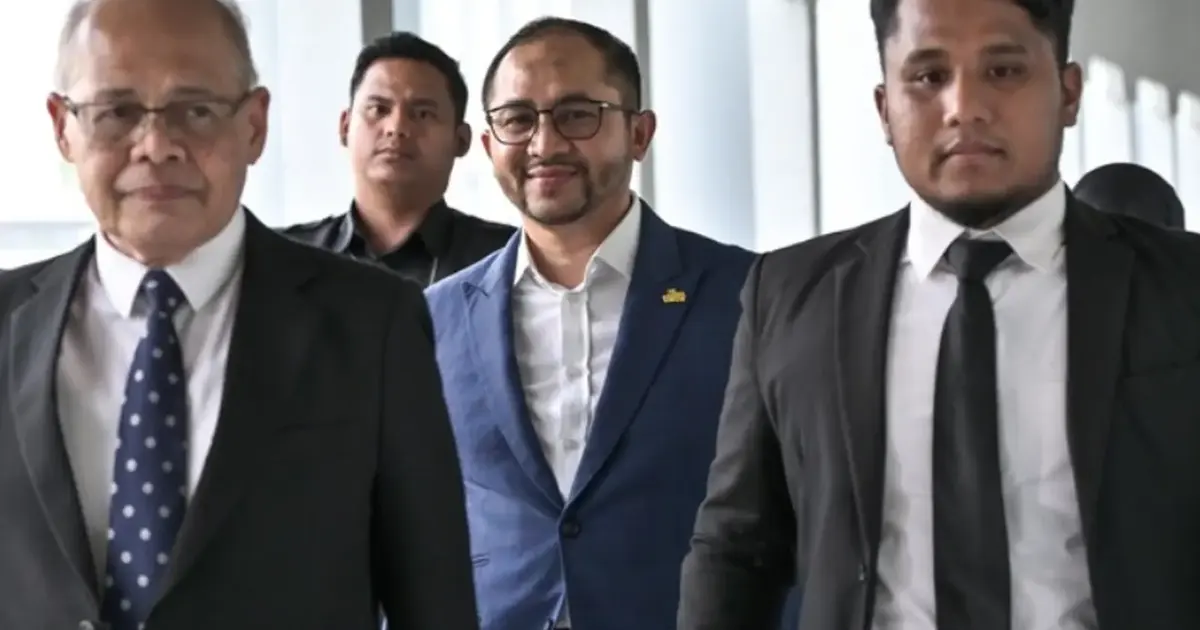
A managing director has told the court that the former political secretary to a high-ranking government official pressured him for a substantial cut from a lucrative consultancy contract linked to a police procurement process. Khairi Mat Jahya's testimony during ongoing legal proceedings sheds fresh light on how political connections are alleged to have been leveraged for financial gain through government contracts, adding another dimension to scrutiny of patronage networks within Malaysia's corridors of power.
The allegations centre on how Sayed Amir Muzzakkir Al Sayed Mohamad, who previously served as political secretary, allegedly sought roughly RM9 million—nearly half of the total RM19 million consultancy fee—after the contract was awarded. This claim underscores a troubling pattern whereby individuals positioned close to political decision-makers may attempt to extract financial returns from business dealings that benefit from government connections, a concern that continues to occupy policy analysts and anti-corruption advocates across Southeast Asia.
Khairi Mat Jahya's account provides a window into the mechanics of how such arrangements allegedly function at the intersection of politics and commerce. Rather than transparent bidding processes driven purely by merit and competitive pricing, the narrative suggests that proximity to influential figures and their inner circles can become a decisive factor in securing government contracts. This dynamic, if substantiated, raises fundamental questions about procurement integrity and the degree to which public spending decisions reflect genuine public interest rather than private advantage.
The connection to a police tender adds particular weight to these concerns. Law enforcement procurement contracts typically involve significant taxpayer resources and should ideally undergo rigorous scrutiny to ensure value for money and adherence to established procedures. When such contracts become entwined with patronage networks and informal sharing arrangements, the integrity of the entire procurement framework comes into question, potentially affecting not only financial accountability but also the operational effectiveness of police services themselves.
The broader implications extend beyond this single case to illuminate systemic vulnerabilities in Malaysia's governance architecture. Political secretaries occupy uniquely influential positions, serving as gatekeepers between ministers and external parties seeking access or favours. When such positions are exploited for personal enrichment through demands on business associates, they effectively become monetised conduits of political influence—a practice that corrodes public trust and creates perverse incentives throughout the business community.
For Malaysian readers and businesses, these developments carry practical significance. Companies operating in sectors dependent on government contracts face potential pressure to accommodate informal financial arrangements with political insiders, creating an uneven playing field where success depends not solely on competitive pricing and service quality but on one's willingness to share proceeds with connected individuals. This dynamic discourages legitimate competition and inflates government costs while diverting resources away from actual service delivery.
The case also resonates across the region, where similar patterns of political patronage affecting procurement have drawn international attention. Singapore, Indonesia, and other Southeast Asian economies have grappled with comparable issues, implementing various reforms ranging from enhanced transparency measures to stricter rules governing government contracts. Malaysia's experience offers both cautionary lessons and opportunities to learn from neighbouring jurisdictions' approaches to tightening procurement governance.
Khairi Mat Jahya's willingness to testify publicly about these alleged demands represents a potentially significant development in challenging entrenched networks. While individual cases may seem incremental, they cumulatively build evidentiary records that support broader reform agendas. His testimony, if corroborated by additional evidence, could contribute to shifting expectations about what constitutes acceptable conduct for those in government-adjacent positions and may encourage others to resist similar pressures by demonstrating legal and social consequences.
The courtroom revelation also intersects with Malaysia's ongoing anti-corruption initiatives. While the Malaysian Anti-Corruption Commission and judicial system have pursued numerous cases in recent years, public proceedings like this one perform an essential function by exposing the operational details of alleged corrupt practices to public scrutiny. Transparency in such proceedings serves as a deterrent and reinforces societal norms against using public office for private gain.
Looking forward, these proceedings may prompt discussions about strengthening political secretary appointment frameworks and establishing clearer ethical guidelines for individuals in such roles. Some jurisdictions have experimented with requiring declarations of post-government employment arrangements or limiting the ability of former political operatives to retain consulting relationships with entities dependent on government contracts. Whether Malaysia adopts similar safeguards remains to be seen, but the case certainly provides ammunition for reformers advocating stricter controls.
The investigation and prosecution of such allegations represent essential components of maintaining public sector integrity. Without consequences for those who leverage political positions for financial extraction, the incentives for continued corrupt practice remain strong. Conversely, successful prosecution and public exposure can gradually shift behaviour by increasing the perceived risk of detection and legal sanction, while simultaneously demonstrating that such conduct violates both law and community expectations of proper governance conduct.

