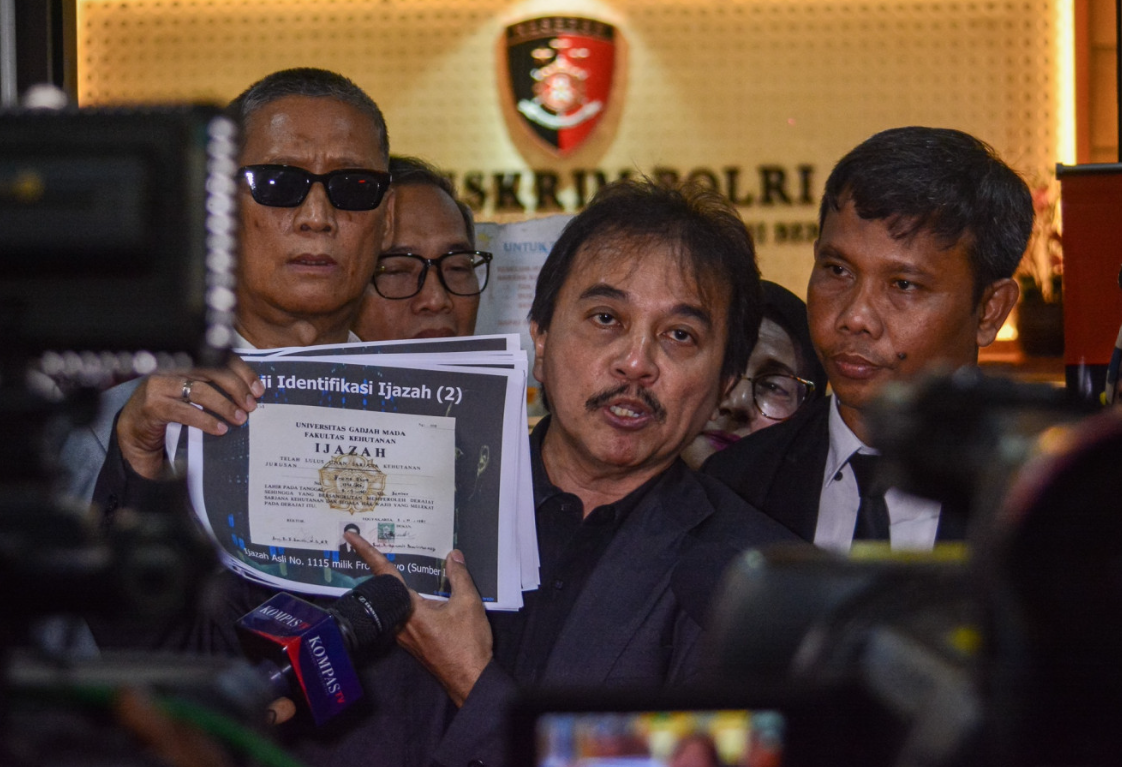
The Jakarta Police have taken former youth and sports minister Roy Suryo and health activist Tifauzia Tyassuma into custody on Friday morning over defamation allegations stemming from their claims that ex-president Joko Widodo's university diploma is fraudulent. The arrests of both suspects at their respective residences represent a significant turning point in a contentious dispute that has periodically surfaced in Indonesian public discourse for the better part of a decade, ultimately drawing in law enforcement and judicial systems.
According to Roy's legal counsel Ahmad Khozinudin, the Jakarta Police's General Crimes Directorate initiated the detention as a procedural measure preceding the second phase of their investigation and the eventual handover of the case to prosecutors. Senior Commissioner Iman Imanuddin, the investigation director, explained during a Friday briefing that the apprehension followed standard criminal justice protocols designed to prevent administrative bottlenecks as case files moved toward the Jakarta Prosecutor's Office. The directorate characterised the detention as a necessary administrative step rather than a punitive measure, noting that it would facilitate the completion of mandatory procedures including health evaluations and evidence verification.
Roy, who previously held ministerial rank under former president Susilo Bambang Yudhoyono, and Tifa now face accusations that extend beyond mere defamation. The authorities have additionally charged them with fabricating electronic documents intended to substantiate their assertions regarding the legitimacy of Jokowi's academic credentials. These allegations fall under the Electronic Information and Transactions Law, a statute that carries penalties of up to six years imprisonment, underscoring the seriousness with which Indonesian law enforcement is pursuing the matter.
The diploma controversy itself has deep historical roots in Indonesian politics. Initial questions about Jokowi's educational background first gained traction on social media platforms in 2019, though they remained relatively peripheral to mainstream political discourse. Over subsequent years, the allegations crystallised into formal legal action, including a civil lawsuit initiated in 2022 that forced various government institutions to examine the documents in question and issue official statements regarding their authenticity.
The National Police conducted their own investigation into forgery allegations and concluded in May 2025 that the diploma was genuine, subsequently closing their initial inquiry into the matter. However, the announcement did not resolve the underlying controversy. Later that same year, in July, the police conducted a case review during which sceptics including Roy Suryo once again publicly challenged the police findings, suggesting that doubts about the document's legitimacy persisted within certain segments of Indonesian society despite official reassurances.
Roy's defence team, represented by attorney Refly Harun, has contested the necessity and proportionality of the detention. Harun characterised the arrest as excessive, particularly given that the formal transfer of the case to prosecutors would not occur until the following Monday. He emphasised that his clients had consistently responded to police summonses and complied with all investigative requirements, suggesting that continued detention served no legitimate investigative purpose and appeared designed to apply pressure rather than advance the case materially.
The defamation investigation originally expanded to encompass nine individuals designated as suspects under the Electronic Information and Transactions Law. However, the police subsequently decided to withdraw charges against three of these individuals—Eggi Sudjana, Damai Hari Lubis, and Rismon Sianipar—following mediation efforts, effectively narrowing the scope of prosecutorial action. This selective approach to charges suggests that the authorities may be distinguishing between those they regard as principal actors in spreading allegedly false information and secondary participants.
For Malaysian observers of Indonesian politics, this development illustrates the broader pattern of legal mechanisms being deployed to defend the reputational interests of political figures against public criticism. The invocation of defamation and electronic fraud statutes in response to disputed claims about official credentials reflects tensions between democratic values of free expression and the legal protections afforded to public figures in Southeast Asian jurisdictions. The case also underscores how document authenticity disputes can escalate into significant political and judicial matters, particularly when they concern high-ranking officials whose legitimacy remains contested in certain quarters.
The detention of Roy and Tifa raises questions about judicial independence and the potential for legal instruments to be weaponised against political opponents or critics. In the Malaysian context, where similar tensions between press freedom and defamation law periodically emerge, the Indonesian experience provides cautionary lessons about the risks of allowing legal processes to become entangled with political rivalries. The selective dropping of charges against three suspects while proceeding against others suggests that political calculations may influence prosecutorial decisions, a concern that reverberates across the region's democratic institutions.
Moving forward, the case will proceed through the prosecutor's office and potentially into court proceedings that could extend over months or years. The outcome will likely influence how Indonesian authorities approach future challenges to official narratives and how they calibrate the balance between protecting individual reputation and preserving space for public scrutiny of government records. For Southeast Asia more broadly, the case exemplifies enduring challenges facing young democracies as they navigate competing demands for accountability and institutional protection.

