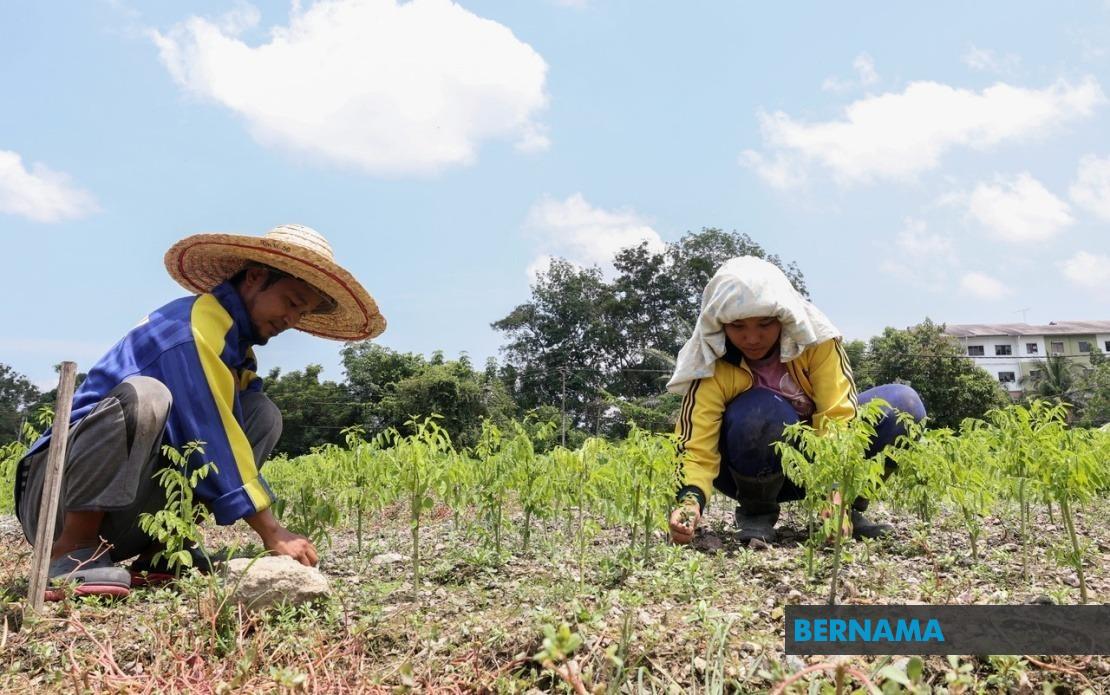
The intense heat gripping Sandakan and 16 other regions across Malaysia is creating unprecedented challenges for the country's agricultural sector, threatening both productivity and farmer livelihoods. The Malaysian Meteorological Department issued a Level 1 hot weather alert on August 25 for these scattered areas following sustained spikes in daytime temperatures, marking a significant weather event with far-reaching economic consequences for rural communities already managing thin profit margins.
The geographic spread of this heatwave reflects the climatic pressures facing Malaysia's diverse agro-ecosystems. Peninsular Malaysia bore the brunt of the alert, with 11 affected areas spanning four states: Perak saw five zones placed under warning status—Larut and Matang, Kuala Kangsar, Kampar, and Batang Padang—while Kelantan, Pahang, and Selangor each contributed affected districts to the list. Across Borneo, Sabah's situation proved particularly acute, with five areas flagged: Telupid, Tenom, Sandakan, Pitas, and Beluran. Sarawak recorded one affected zone in Marudi. This dispersed pattern suggests a regional atmospheric phenomenon rather than localized weather variability, with implications for national food security and regional agricultural trade.
MetMalaysia defines a Level 1 cautionary alert as conditions where daily maximum temperatures persistently reach between 35 and 37 degrees Celsius across at least three consecutive days. This threshold, while seemingly technical, translates into severe practical stress for crop cultivation. The meteorological criteria deliberately avoid hyperbole; the specified temperature range represents genuine biological stress points for most tropical food crops, which evolved in environments with greater atmospheric moisture buffering than current conditions provide. Understanding this benchmark illuminates why farmers describe the impact not as inconvenient but as genuinely threatening to their enterprise viability.
Firyanus Salamba, a 33-year-old vegetable farmer operating in the Batu 7 area near Sandakan, exemplifies the direct hardship cascading through agricultural communities. His experience reveals how climate stress fundamentally alters production economics. The vegetables he cultivates—okra, sweet shoots, and mustard greens—normally require single daily watering under standard weather conditions, a routine that has become obsolete. Current conditions now demand three irrigation sessions: morning, afternoon, and evening. This tripling of labour and water input represents not merely increased effort but genuine financial strain on small-holder operations where margins remain notoriously tight. Water sourcing itself may become problematic if the heatwave persists, as groundwater tables drop and surface sources diminish.
More troubling than the increased labour burden is the stubborn reality that higher watering frequency has failed to prevent yield deterioration. Firyanus's observation carries particular weight because it demonstrates that technology and effort alone cannot overcome certain environmental thresholds. Chilli plants, which occupy significant acreage in Sabah's agricultural landscape and command premium prices, prove especially vulnerable to extreme heat stress. The crop's susceptibility reflects biological constraints: chilli requires specific conditions for flower development and fruit set, conditions that excessively high temperatures disrupt. Farmers across the region face a brutal calculus: invest tripled resources to produce diminished harvests, or accept reduced plantings.
Flower nursery operators face parallel pressures, though their product differs from food crops. A Bernama field survey documented that ornamental plant producers must water flowering specimens at minimum twice daily to prevent wilting and mortality. The aesthetic sensitivity of ornamental horticulture makes this particularly unforgiving; a single day without adequate irrigation can ruin marketable stock. For nurseries operating on inventory that requires months to mature, unexpected heat waves can eliminate entire production cycles, leaving fixed costs stranded against zero revenue. The ripple effects extend beyond individual operators to entire supply chains dependent on consistent flower availability for events, landscaping projects, and commercial arrangements.
The broader implications warrant consideration for Malaysian agricultural policy and food security planning. Sabah's agricultural sector, while diverse, carries particular importance for regional food production. Temperature-sensitive crops represent core components of Malaysian cuisine and domestic consumption patterns. Repeated or intensifying heatwaves could gradually reshape cultivation geography, potentially reducing productive capacity in currently important zones while creating new opportunities elsewhere—a transition hardly costless for established farming communities. The need for climate-resilient crop varieties and irrigation infrastructure becomes increasingly urgent, not theoretical.
Farmers in affected regions face immediate decisions about pest management, fertilization timing, and even crop selection in response to this episode. Stress-induced physiological weakening makes plants more vulnerable to pests and diseases, creating compounding damage scenarios. Extended heat may activate previously dormant pest populations while stressing natural predator populations that help suppress agricultural pests. The resulting ecological imbalance could extend yield losses beyond the heat stress itself, creating cascading agricultural damage.
The Level 1 alert, while cautionary rather than critical, signals weather conditions that demand active management rather than passive acceptance. For Malaysian policymakers, the distribution of these 17 alert zones suggests patterns worth monitoring climatologically. Whether this represents a one-off event or an emerging seasonal pattern carries profound implications for agricultural planning, crop insurance frameworks, and rural economic resilience. The farmers already implementing adaptive strategies—increasing irrigation investment, diversifying crops, or shifting production timing—demonstrate practical resilience, yet their individual efforts highlight system-level vulnerabilities that institutional support might address through research into heat-tolerant varieties, water conservation technologies, and climate-smart agricultural practices suited to Southeast Asian conditions.

