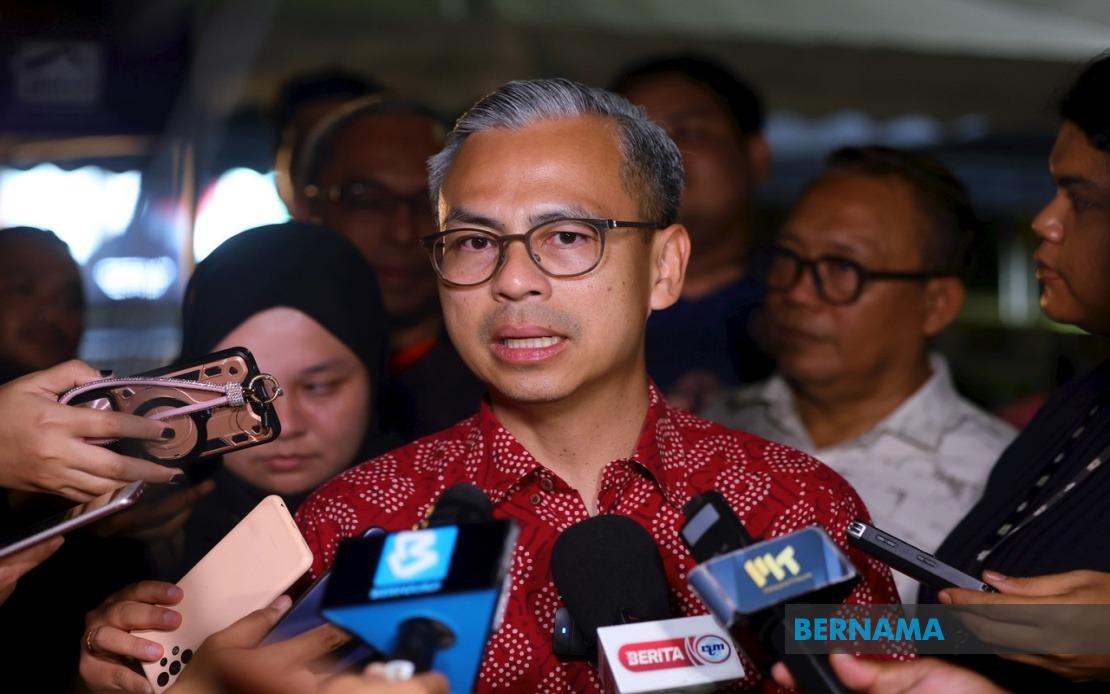
Communications Minister Datuk Seri Fahmi Fadzil has launched a sharp rebuke of Kedah Menteri Besar Datuk Seri Muhammad Sanusi Md Nor, asserting that inflammatory remarks the state leader made about race and belonging demonstrate a calculated strategy within PAS to weaponise ethnic sensibilities rather than foster social cohesion. Fahmi, who leads Pakatan Harapan's communications apparatus, articulated his concerns while addressing reporters at a community event in Jempol on July 25, positioning the controversy against the backdrop of Malaysia's ongoing journey as a multicultural nation that requires unified political leadership.
Sanusi's contentious statement, delivered at a Barisan Nasional and Perikatan Nasional forum during campaigning for the Negeri Sembilan state election, asserted that Malaysia constitutes Tanah Melayu exclusively for Malays, implying that other communities retain primary allegiances to their ancestral homelands such as India and China. This characterisation, made by Sanusi in his capacity as PAS election director, rekindled familiar tensions around belonging and national identity that periodically surface in Malaysian politics, particularly during election cycles when demographic anxieties become more pronounced among certain voter segments.
Fahmi's response extended beyond mere disagreement, instead framing Sanusi's utterances as symptomatic of deeper institutional patterns within PAS. He referenced earlier pronouncements by the party's president on immigration matters, suggesting a consistency in rhetorical choices that privilege divisive framings over bridge-building discourse. The minister contended that constructive politics demands practitioners acknowledge and respect societal diversity while actively channelling political energy towards unity, rather than amplifying grievances rooted in communal difference. His observation carried implicit criticism of electoral strategies that mobilise voters through identity-based messaging rather than substantive policy platforms.
The communications chief's remarks also targeted MARA chairman Datuk Dr Asyraf Wajdi Dusuki, who had previously linked DAP secretary-general Anthony Loke to a potential Menteri Besar candidacy should incumbent Datuk Seri Aminuddin Harun suffer electoral defeat. Fahmi demanded an apology, invoking the Negeri Sembilan Constitution which constitutionally reserves the Menteri Besar position for Malays, thereby rendering Asyraf Wajdi's insinuation both factually groundless and inflammatory in intent. This dual-pronged criticism suggests Pakatan Harapan perceives a coordinated effort across multiple coalition partners to inject racial anxiety into state-level campaigns.
Positioning the Negeri Sembilan contest within broader strategic calculations, Fahmi dismissed predictions by former Rembau MP Khairy Jamaluddin regarding Malay voter support for Pakatan Harapan in Johor, rejecting claims that the coalition garnered merely ten percent backing among Malay communities in that state. He argued that political dynamics vary substantially across states and expressed confidence that Aminuddin's tenure had demonstrated competent administration benefiting all residents irrespective of ethnicity, potentially resetting voter perceptions about PH's capacity to govern with inclusivity.
Fahmi additionally addressed speculation by UMNO deputy president Datuk Seri Mohamad Hasan about a potential sixteenth general election by year's end, characterising such conjecture as personalised opinion divorced from cabinet-level discussions. He emphasised that Prime Minister Datuk Seri Anwar Ibrahim's administration prioritises economic stabilisation and managing repercussions from Middle Eastern geopolitical instability over electoral manoeuvring or accelerated poll scheduling. This framing attempts to position Pakatan Harapan as focused on substantive governance rather than short-term political positioning, contrasting implicitly with opposition assertions of electoral opportunism.
The controversy illuminates persistent tensions within Malaysia's political landscape regarding how leaders articulate and deploy narratives surrounding citizenship, belonging, and communal identity. While constitutional provisions establish Bumiputera rights and Islamic institutional prominence in federal and state governance structures, political discourse has increasingly gravitated toward zero-sum framings that suggest competing ethnic interests rather than shared national projects. This rhetorical shift reflects both genuine anxieties among certain constituencies and calculated appeals designed to mobilise particular voter coalitions, frequently at the expense of inter-communal dialogue.
Fahmi's intervention represents Pakatan Harapan's attempt to claim the mantle of national unity and inclusive governance, contrasting its professed commitment to multiracial coalition politics against what it portrays as Perikatan Nasional partners' more divisive orientations. Yet such positioning requires careful calibration, as the coalition itself comprises diverse ethnic and religious constituencies with occasionally conflicting interests. Pakatan Harapan's credibility on communal harmony depends partly on demonstrating sustained commitment to inclusive policymaking when holding executive authority, rather than merely criticising opposition rhetoric during electoral campaigns.
The Negeri Sembilan state election, occurring amid these heated exchanges, serves as a referendum on voter preferences regarding which coalitional approach to governance resonates more compellingly with constituents. Aminuddin's administration has undertaken various developmental initiatives across constituencies, potentially demonstrating that multiracial administrations can deliver tangible benefits to all communities without sacrificing constitutional protections for indigenous and Islamic interests. However, electoral outcomes ultimately rest on whether voters perceive genuine commitment to equitable governance or view political rhetoric as disconnected from administrative practice.
Broader implications extend across Southeast Asia, where multiple nations grapple with balancing majority-community anxieties against minority-community security and participation concerns. Malaysia's approach to this enduring tension—whether through constitutionalised arrangements, political compromise, or rhetorical appeals—influences regional discourse on multicultural governance. Fahmi's critique suggests Pakatan Harapan believes electoral success requires positioning itself as transcending ethnic mobilisation, though sustaining such positioning demands consistent delivery across multiple administrations and policy domains.

