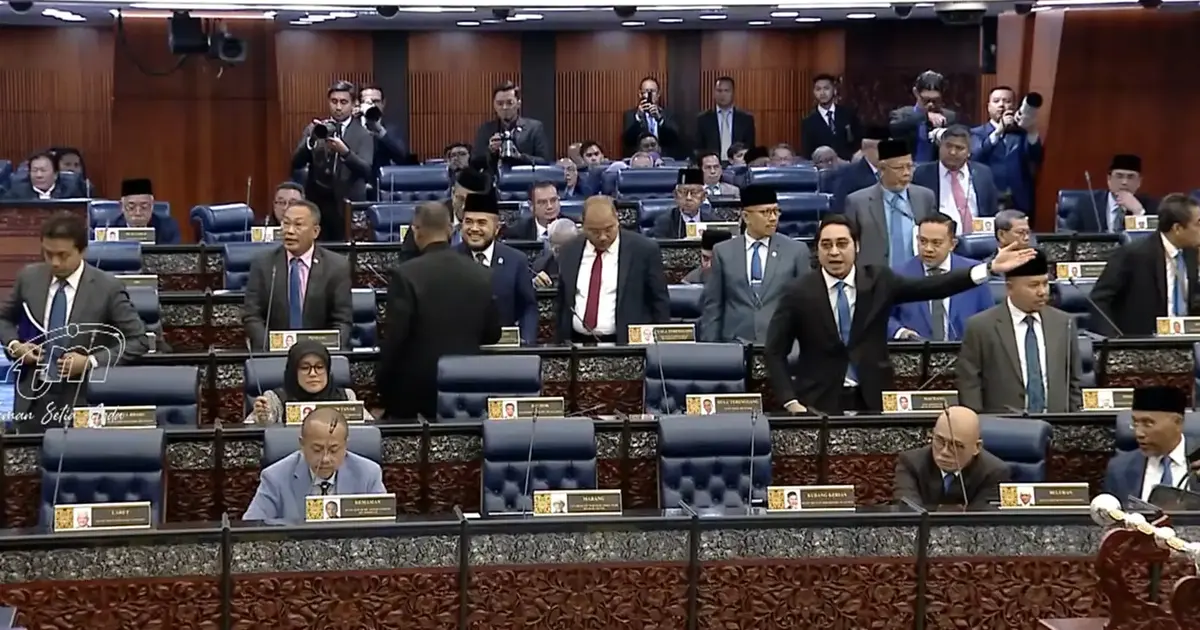
Communications Minister Fahmi Fadzil has drawn a distinction between Bersatu's parliamentary contingent and other Perikatan Nasional legislators by commending those from the Muhyiddin faction for their presence during recent Tabung Haji Royal Commission of Inquiry report proceedings. The implicit rebuke directed at fellow opposition MPs who absented themselves underscores the fractious state of coalition politics as Malaysia navigates a high-profile investigation into the pilgrim fund's operations.
The Tabung Haji inquiry, which examined management and governance issues within the Malaysia Hajj Fund, represents one of the more significant institutional investigations in recent years, touching upon a body entrusted with RM20 billion in assets belonging to millions of Malaysian Muslims preparing for the pilgrimage to Mecca. The RCI's findings carry substantial weight for public confidence in how state institutions manage communal resources, particularly given earlier controversies surrounding the fund's investments and operational transparency.
Fahmi's comments reflect a broader pattern within the current parliament where opposition unity remains conditional and often fragile. Perikatan Nasional, formed after the 2022 elections as a coalition of Bersatu, PAS, and several other parties, has demonstrated internal inconsistencies when responding to government initiatives or parliamentary business. The walkout by certain PN MPs during these deliberations suggests disagreement over either the RCI's methodology, its findings, or broader political strategy regarding how the opposition should engage with or contest official inquiries.
The distinction Fahmi has drawn carries implications for parliamentary decorum and the government's relationship with opposition blocs. When opposition MPs selectively boycott proceedings examining matters of public interest, it complicates the legislative process and can be perceived as obstructionism rather than principled opposition. Conversely, Bersatu's decision to participate, whether driven by genuine interest in institutional accountability or tactical positioning within PN's hierarchy, signals a willingness to engage constructively on governance matters.
Bersatu's relatively more moderate stance on various parliamentary issues has occasionally set the party apart from its PN coalition partners. The party, which entered federal government in 2020 before returning to opposition, occupies an ambiguous political middle ground that sometimes aligns it closer to government positions than to hardline opposition responses. This attendance at the Tabung Haji RCI report sitting may reflect that pragmatic calculus, particularly given Bersatu's traditional focus on institutional stability and respect for formal processes.
The Tabung Haji matter holds particular resonance for Malaysian political culture because it intersects religious administration, public finance, and social welfare. Millions of Malaysian Muslims depend on the fund's services and safeguarding of their resources. Any perception that opposition parties are dismissive of inquiries into its management could undermine their credibility with this constituency. Fahmi's highlighting of Bersatu's participation thus serves to reinforce an image of responsibility and commitment to accountability that extends across factional divides.
For the government, the RCI report provides an opportunity to demonstrate institutional responsiveness and commitment to investigating past governance lapses. Parliamentary engagement with such inquiries, particularly cross-party participation, strengthens the legitimacy of findings and recommendations. When opposition lawmakers walk out or refuse to participate, it potentially weakens public confidence in the investigation's comprehensiveness and the parliament's role in overseeing executive accountability.
The contrast Fahmi has highlighted also speaks to the evolving dynamics within PN itself. Bersatu's position as a party that has cycled between government and opposition gives it different institutional perspectives compared to PAS, which has pursued a more consistent oppositional stance. These tactical differences can manifest in parliamentary conduct, with Bersatu sometimes appearing more inclined toward engagement with government-initiated processes while PAS maintains more confrontational positioning.
Looking forward, the Tabung Haji inquiry's resolution and parliament's handling of its recommendations will likely influence how opposition parties calibrate their engagement with other institutional reviews and government accountability measures. If the RCI produces meaningful reforms that gain broad cross-party acknowledgment, it may establish a precedent for constructive opposition participation in similar exercises. Conversely, if the inquiry is perceived as politically motivated or as producing recommendations that lack substantive impact, opposition skepticism about future participation may harden.
The broader governance question underlying Fahmi's comments concerns how Malaysian democracy functions when institutional accountability intersects with partisan politics. The ideal scenario involves all parliament members, regardless of coalition, treating inquiries into public finance and institutional management as matters transcending electoral calculations. Bersatu's attendance at the Tabung Haji RCI proceedings, as Fahmi has noted approvingly, represents a step toward that ideal, even as the walkout by other PN MPs demonstrates how readily partisan considerations can override such principles in practice.

