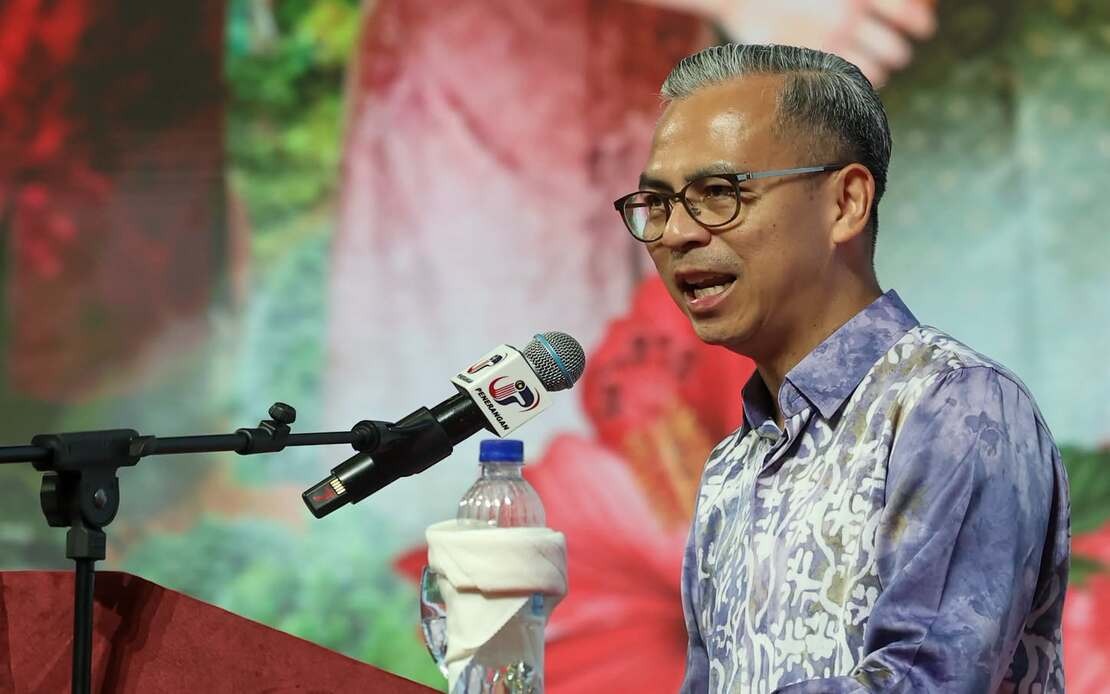
Malaysia's Communications Minister Datuk Seri Fahmi Fadzil has thrown his weight behind a new patriotic anthem, publicly celebrating acclaimed musician Faizal Tahir's composition 'Aku Berjanji' as the centrepiece of next year's National Day and Malaysia Day observances. The minister's endorsement came following the song's inaugural public performance during the launch of the 2026 National Month and Fly the Jalur Gemilang Campaign in Ipoh, an event that marked the formal beginning of the nation's countdown to these twin celebrations of sovereignty and cultural identity.
Fahmi's commendation highlighted the deeper significance embedded within Faizal Tahir's musical creation, emphasizing how the composition transcends typical ceremonial function to deliver substantive messages about national cohesion, communal solidarity, and patriotic devotion. By choosing a song that foregrounds unity and togetherness rather than mere ceremonial pomp, the government has signalled a strategic pivot towards cultural expressions that resonate with contemporary Malaysian society's search for shared purpose amidst ongoing socio-political complexities.
The launch event itself represents a broader governmental initiative to build momentum and public engagement around the 2026 festivities well in advance. Prime Minister Datuk Seri Anwar Ibrahim's presence at the Ipoh gathering underscored the administration's commitment to positioning these celebrations as centrepieces of the national calendar. The campaign to encourage flag-flying across the country serves multiple purposes simultaneously—it represents a tangible patriotic gesture whilst also functioning as a visible demonstration of national unity that observers can witness in their own neighbourhoods and communities.
Fahmi's remarks demonstrate how Malaysian officialdom increasingly recognizes the power of cultural production in nation-building exercises. Rather than relying solely on procedural announcements or administrative directives, the government has engaged one of Malaysia's most respected contemporary musicians to craft an emotional and artistic foundation for the celebrations. This approach acknowledges that patriotic sentiment flourishes most authentically when mediated through cultural forms that people genuinely enjoy and identify with, rather than through top-down mandates that often struggle to generate authentic popular engagement.
Beyond celebrating artistic merit, Fahmi issued a practical appeal for Malaysians to display the national flag with both pride and proper care. His emphasis on the physical condition and correct installation of flags might seem prosaic, yet it reflects a serious concern about maintaining the dignity and respect accorded to national symbols. The minister's attention to such details signals governmental expectations about how citizens should embody patriotism through concrete, visible actions in public spaces.
A particular emphasis in Fahmi's statement concerned the responsible use of artificial intelligence technology when generating or manipulating images of the Jalur Gemilang. This warning reflects mounting awareness of how AI-powered image generation tools can produce flags with distorted proportions, incorrect colour sequences, or other errors that, whilst potentially appearing minor to untrained eyes, constitute visual misrepresentations of a constitutionally protected national emblem. The cautionary note demonstrates governmental attentiveness to how digital technologies can inadvertently undermine the symbolic integrity of national icons, even when deployed without malicious intent.
For Malaysian observers, the 2026 National Day and Malaysia Day celebrations assume particular importance given the nation's ongoing navigation of demographic diversity, political competition, and evolving social values. These occasions provide structured opportunities for the entire population to affirm shared commitment to the Malaysian project, transcending the particular political disagreements that characterize normal democratic discourse. By anchoring these celebrations in a culturally resonant artistic work that emphasizes inclusivity and collective purpose, policymakers have attempted to create a framework within which diverse Malaysians can participate meaningfully.
The selection of Faizal Tahir as the creative voice behind this official anthem carries additional symbolic weight. As a musician whose career spans decades and whose works have consistently demonstrated technical sophistication and emotional authenticity, his involvement lends considerable credibility to the celebrations' cultural ambitions. Rather than commissioning an unknown entity or relying on bureaucratic committees to generate suitable material, the government placed its faith in an artist whose popular standing and artistic integrity would command respect across generational and demographic lines.
Looking ahead to 2026, the success of these celebrations will depend significantly on how effectively 'Aku Berjanji' resonates with the Malaysian public in the intervening months. The song must transcend its ceremonial designation and establish itself as a work that people voluntarily choose to engage with, whether through streaming platforms, public performances, or cultural events. For the flag-flying campaign and other patriotic initiatives to gain traction, they require genuine popular participation rather than mere compliance with governmental appeals.
The Communications Ministry's visible promotion of these celebrations also reflects broader strategic communication objectives. By defining the message around unity, togetherness, and patriotic devotion rather than narrower partisan frameworks, the administration seeks to position itself as guardian of national consensus and representative of the entire nation rather than any single political faction. This rhetorical approach becomes particularly valuable in contexts where political polarization threatens to fragment public discourse and collective identity.
As Southeast Asia's most ethnically diverse major economy, Malaysia's success in crafting genuinely inclusive national celebrations carries implications extending beyond its own borders. The region's other plural societies observe carefully how Malaysia negotiates the delicate balance between asserting national symbols and ensuring that all population groups feel genuine ownership over shared civic occasions. A celebration genuinely rooted in messages of unity and togetherness, rather than domination by any single community, provides a cultural model worth studying and potentially emulating elsewhere in Southeast Asia.
The foundation has now been laid for the 2026 festivities, with an official anthem in place and a coordinated campaign underway. Whether these preparations translate into celebrations that authentically galvanize national unity or remain ceremonial exercises will become apparent as the calendar advances toward these consequential dates. For now, Fahmi's endorsement signals governmental confidence that Faizal Tahir's composition possesses the emotional and artistic resources to serve as a meaningful vehicle for national affirmation.

