Communications Minister Datuk Seri Fahmi Fadzil has appealed to all political contestants to uphold standards of decorum and integrity during the Negeri Sembilan state election campaign, steering clear of personal attacks, misinformation, and destructive tactics. His remarks came after reports that billboards belonging to Dr Azizul Hakim Mahdi, the PH candidate for the Rantau state constituency, had been deliberately damaged. The minister's intervention reflects growing concern about the tone and conduct of electoral contests in Malaysia, where the line between vigorous competition and unhealthy political conduct occasionally blurs.
The vandalism incidents have been documented on social media platforms, with several posts appearing to show individuals actively destroying campaign materials. Fahmi emphasised that such actions constitute criminal offences and should be left to law enforcement agencies to investigate and pursue appropriate legal remedies. His measured response indicates an attempt to de-escalate tensions while simultaneously signalling that authorities will not tolerate sabotage or destruction of property during campaigns. This approach reflects broader efforts by electoral administrators and government officials to maintain order and fairness in the democratic process.
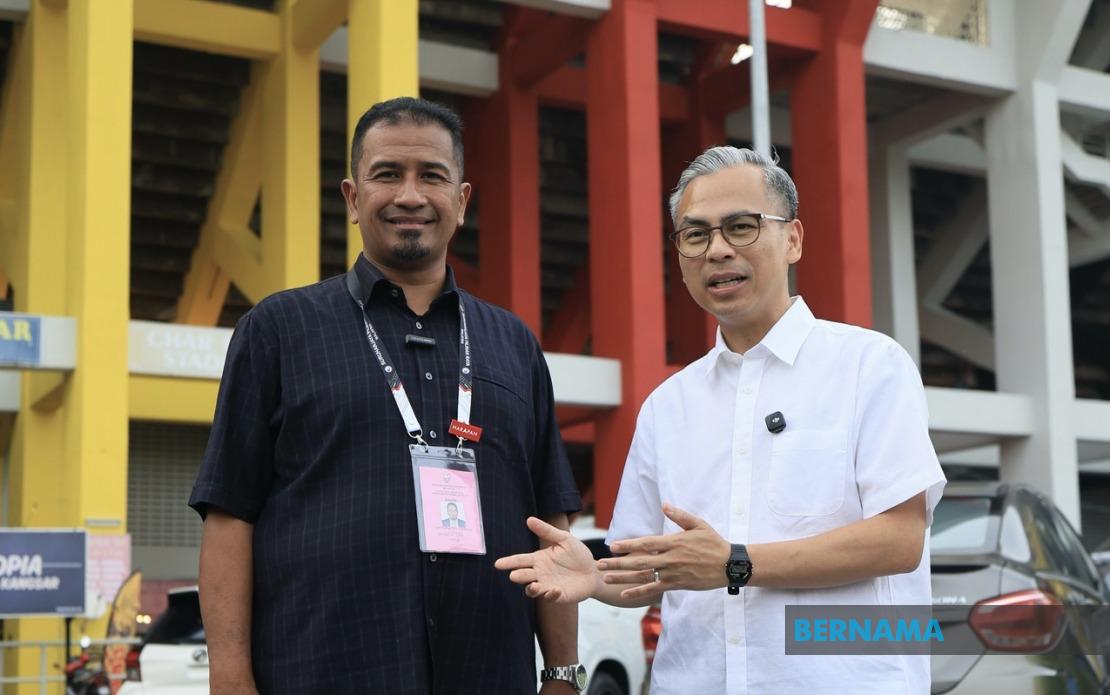
During a campaign walkabout with Nur Azman Mohamad, the PH candidate for the Sikamat state seat, at the Paroi Stadium Seremban City Council stalls, Fahmi took the opportunity to articulate a vision for how political competition should unfold. He stressed that campaigns should centre on substantive policy differences, factual arguments, and ideological contrasts rather than character assassination or acts designed to undermine opponents' capacity to contest fairly. This emphasis on ideas-based competition reflects international standards for democratic electoral conduct and resonates with calls from civil society organisations for Malaysian politics to mature beyond personal grievances and towards principle-driven discourse.
The communications minister also assessed the overall trajectory of the campaign during this early phase. He expressed cautious satisfaction with the conduct observed thus far but predicted intensification in the coming weeks as parties mobilise their full resources and key figures enter the fray more prominently. His analogy comparing the campaign's current pace to lower gears rather than maximum speed suggests expectations that momentum will build significantly heading into the final stretch before polling day. This observation acknowledges the typical rhythm of electoral campaigns, which often accelerate sharply in their closing stages.
Fahmi noted that Prime Minister Datuk Seri Anwar Ibrahim had already undertaken campaign activities across four or five locations on the same day, and anticipated that additional leadership figures from PH would intensify their presence on the campaign trail in subsequent days. This mobilisation of senior personalities typically signals the importance of state-level elections to national political fortunes and reflects the stakes involved for the ruling coalition. As the campaign enters its second and third weeks, such visible leadership engagement helps energise grassroots supporters and amplify messaging to broader voter audiences.
The Negeri Sembilan state election represents a significant contest within Malaysia's political calendar, with the Election Commission designating August 1 as polling day and scheduling early voting for July 28. This timeline provides candidates and parties with roughly two weeks from early July to mount their campaigns, a compressed period that demands efficient resource allocation and strategic messaging. The early voting opportunity, increasingly utilised in Malaysian electoral cycles, allows voters unable to cast ballots on the main election day to participate in advance, thereby broadening accessibility to the franchise.
The vandalism controversy highlights ongoing tensions within Malaysia's political ecosystem regarding the boundaries of acceptable campaign conduct. While verbal sparring and ideological combat form legitimate components of democratic elections, destruction of opponents' property and coordinated sabotage campaigns undermine the principle that electoral contests should be decided by voters making informed choices. The fact that such incidents generate official statements from government communications ministers underscores their significance in shaping perceptions of electoral integrity and fairness.
For Malaysian voters, particularly those in Negeri Sembilan, the minister's call for principled campaigning carries implications for the quality of public discourse they will encounter during this electoral period. Campaigns focused on substantive policy proposals, economic plans, and social initiatives tend to inform voters more effectively than those dominated by personal attacks or damage control. Voters across Southeast Asia increasingly expect their electoral contests to reflect professional standards and ethical norms, and Malaysian political parties recognising this shift position themselves more favourably in the eyes of discerning electorates.
The broader context of state elections in Malaysia involves intricate calculations of political balance at the federal level. Results in Negeri Sembilan carry symbolic weight beyond the state legislature, potentially influencing perceptions of ruling coalition strength and opposition viability nationwide. Consequently, all parties invested in the outcome tend to mobilise significant resources and deploy prominent figures, intensifying the campaign environment and raising stakes for maintaining electoral decorum throughout the process.
As the campaign progresses toward polling day, Fahmi's message will likely be reiterated by other government officials and electoral administrators seeking to establish clear expectations for campaign conduct. Such messaging serves both practical functions—deterring potential vandals and saboteurs—and symbolic purposes, reinforcing commitment to democratic norms and peaceful electoral competition. The success of these efforts in maintaining campaign integrity will partly determine whether the election is remembered as a contest decided by voter choice or one marred by accusations of foul play and questionable tactics.
Looking ahead, political observers will monitor whether the vandalism incidents escalate or diminish in frequency, whether social media discussions become more civil as the campaign matures, and ultimately whether the final weeks of campaigning reflect the elevated standards of conduct that officials have advocated. The outcome will send signals about Malaysian democratic maturity to both domestic and international audiences, influencing perceptions of how the country manages electoral competition and respects institutional norms.

