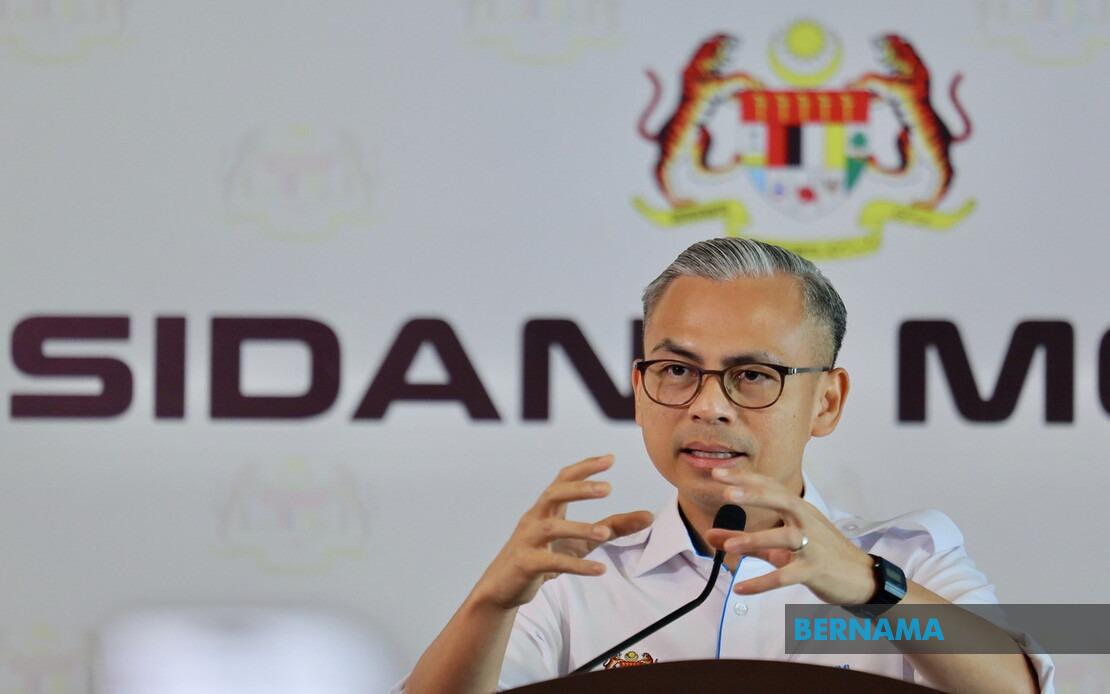
Malaysia's independence represents more than a date on the calendar—it embodies the collective sacrifice and determination of previous generations who fought to establish a sovereign nation. Communications Minister Datuk Seri Fahmi Fadzil highlighted this historical significance as the country prepares for its annual National Day and Malaysia Day commemorations, stressing that contemporary Malaysians must honour that legacy by actively preserving and advancing it for future generations.
In his message marking the 2026 celebrations, Fahmi underscored a fundamental principle that continues to define the Malaysian experience: the imperative of unity across all demographic lines. Rather than viewing Malaysia's diversity as a source of division, the minister framed it as a wellspring of strength when channelled through mutual respect and shared commitment. He explicitly referenced the principle that transcends racial, religious, cultural and socioeconomic boundaries, suggesting that true national cohesion emerges when citizens consciously choose to prioritise collective welfare over particularistic interests.
The minister's call resonates within a broader context of contemporary Malaysian society, where questions of social cohesion and national identity periodically surface in public discourse. By invoking the language of "togetherness and shared responsibility," Fahmi articulated a vision wherein development and prosperity are not zero-sum phenomena benefiting one community at the expense of another, but rather outcomes that strengthen the entire nation when pursued collaboratively. This framing carries particular relevance for a diverse, multi-ethnic Southeast Asian nation navigating the complexities of rapid modernisation whilst maintaining social stability.
Central to Fahmi's message was the 2026 National Day and Malaysia Day theme: "Malaysia MADANI: Kesejahteraan Dinikmati," which translates to enjoying shared prosperity. This thematic choice reflects governmental emphasis on inclusive economic development and equitable distribution of growth's benefits. The minister effectively amplified this message by arguing that national progress cannot be the preserve of select groups or regions, but must encompass all Malaysians regardless of geographic location or socioeconomic status. Such messaging addresses longstanding concerns about regional disparities and unequal access to development opportunities.
The concept of "Malaysia MADANI" itself represents a policy framework introduced by the current administration, encompassing principles of prosperity, harmony, and people-centredness. By invoking this framework within the context of National Day celebrations, Fahmi connected patriotic sentiment to concrete governance objectives, suggesting that genuine patriotism manifests through support for inclusive policies and equitable resource distribution. This approach transforms national day rhetoric from mere ceremonial expression into potential endorsement of specific governmental priorities.
Fahmi's emphasis on harmony and mutual respect carries particular weight in Malaysia's political landscape, where communal sensitivities occasionally generate tension. By positioning these values as foundational to national strength rather than merely aspirational ideals, the minister articulated a pragmatic argument for their maintenance: social harmony directly enables economic progress and international standing. This instrumental framing may resonate with Malaysians concerned about practical outcomes rather than abstract principles.
The minister's hope that Malaysia would "continue to progress as a united nation and command respect on the global stage" introduced an international dimension to his message. For a Southeast Asian nation engaged in regional competition and global economic integration, international standing constitutes a tangible national asset. Fahmi implicitly argued that internal cohesion directly strengthens Malaysia's diplomatic leverage and economic competitiveness, making unity not merely a moral imperative but a strategic necessity in an increasingly complex geopolitical environment.
The invocation of patriotism as the animating spirit for National Day celebrations connects historical memory to contemporary civic engagement. Rather than presenting patriotism as nostalgia or passive acknowledgment of past achievements, Fahmi positioned it as an active force requiring ongoing commitment from current generations. This reframing transforms National Day from commemorative observance into catalyst for sustained national effort.
For Malaysian readers and regional observers, Fahmi's message encapsulates core challenges confronting modern Malaysia: reconciling diversity with unity, distributing development benefits equitably, maintaining social stability whilst pursuing economic progress, and projecting regional influence. The minister's rhetorical emphasis on these themes, timed to major national celebrations, signals governmental priority on these interconnected concerns. Whether such messages translate into policy implementation or remain largely ceremonial depends partly on how effectively subsequent governmental actions reinforce the unity and inclusivity principles outlined.

