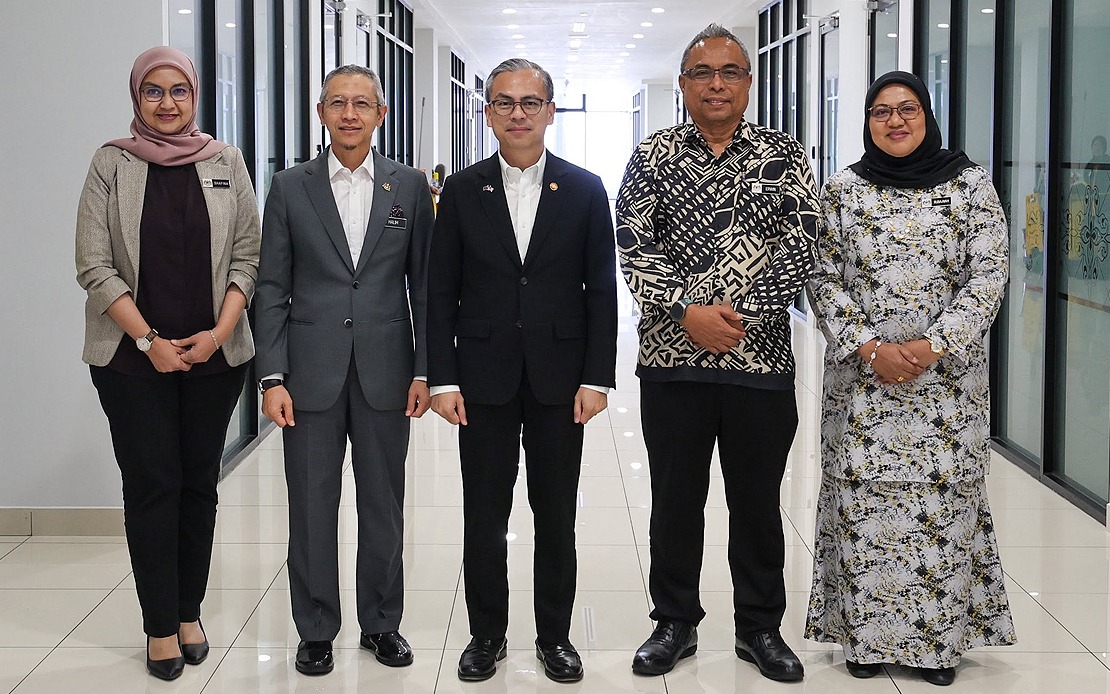
Communications Minister Datuk Fahmi Fadzil has welcomed the appointment of Erwin Khairul Ahmad as the new director-general of the Information Department, signalling a fresh chapter in the government's public communications strategy. Alongside this leadership transition, Wan Saidatul Shafina Mohd Amin has assumed the role of deputy director-general overseeing digital content operations, a pivotal position as Malaysia's government intensifies its online messaging efforts.
These appointments, formally announced by the Public Service Department on June 22, represent significant changes within one of the government's key institutional frameworks for disseminating official information and shaping public narrative. The Information Department, locally known as Jabatan Penerangan Negara or JaPen, functions as the primary vehicle through which federal authorities communicate policy developments, government achievements, and administrative decisions to the Malaysian populace. With digital channels becoming increasingly central to how governments connect with citizens, the elevation of a dedicated digital content leadership position underscores the ministry's recognition that traditional broadcast methods alone are insufficient in the contemporary media landscape.
Fahmi's remarks emphasized the imperative for the newly appointed leaders to bring both dedication and intellectual rigour to their responsibilities. His call for them to strengthen JaPen's role as an "effective medium for delivering information" points to growing concerns within the government about information fragmentation and the spread of misinformation across social media platforms. By positioning the department as a credible conduit for official communications, the ministry appears intent on competing more effectively in the digital information ecosystem where false narratives can proliferate rapidly.
The timing of these leadership transitions carries relevance for Malaysia's ongoing political and economic recovery. As the nation navigates post-pandemic challenges and pursues ambitious development agendas, coherent government messaging becomes essential. A strengthened Information Department with dedicated digital leadership capacity can help ensure that policy announcements, economic initiatives, and administrative reforms reach diverse audiences through channels they actively use, rather than relying solely on traditional press releases and television broadcasts that younger demographics increasingly bypass.
Wan Saidatul Shafina's specific appointment to oversee digital content merits particular attention given the strategic importance of online platforms in contemporary Malaysian politics and governance. The separation of this portfolio into a dedicated deputy director-general position suggests the ministry has determined that digital communications require equivalent status and resources to traditional information services. This structural change reflects how information dissemination has evolved globally, with successful governments now treating social media engagement, content creation, website management, and digital analytics as core competencies rather than ancillary functions.
Erwin Khairul Ahmad's elevation to the top position represents institutional continuity with likely evolutionary direction. As director-general, his mandate will encompass not only the day-to-day operations of JaPen but also the strategic positioning of Malaysia's government communications in an increasingly complex media environment. The director-general of JaPen influences how federal policy narratives are constructed, which government achievements receive prominence, and how the administration responds to crises or criticism through official channels.
Fahmi's acknowledgement of his predecessor Julina Johan's tenure highlights the professional standards expected within the department. Institutional memory and professional competence matter significantly in government communications roles, where credibility and consistency are paramount. The public recognition of Julina's contributions suggests an attempt to maintain respect for institutional processes and to signal that leadership transitions occur through orderly succession rather than political upheaval.
The formal presentation of appointment letters by Tan Sri Wan Ahmad Dahlan Abdul Aziz, the director-general of the Public Service Department, underscores the official nature of these appointments and their alignment with Malaysia's civil service protocols. This procedural formality ensures that the appointments carry institutional legitimacy and follow established government frameworks for staffing senior positions, a matter of importance in maintaining public confidence in administrative processes.
For Malaysia's information ecosystem, these appointments represent an institutional response to recognizing that government communications have become more complex and multifaceted. The Malaysian public increasingly consumes news and information across fragmented media channels—traditional newspapers and television alongside online portals, social media platforms, messaging applications, and alternative news sources. A government information department structured to address this complexity through dedicated digital leadership can potentially enhance the reach and relevance of official communications.
The emphasis on strengthening JaPen's effectiveness also carries implications for press-government relations and public discourse more broadly. A more professionally resourced and digitally sophisticated Information Department could theoretically improve the flow of accurate government information to journalists and the public, though critics sometimes contend that government communications strategies can also serve propaganda functions. The balance between transparent information provision and strategic message management remains an ongoing tension in democratic governance.
These appointments also occur within Southeast Asia's broader trend of governments upgrading their digital communications capabilities. As regional governments compete for public attention and credibility in increasingly crowded information spaces, investing in institutional capacity for digital messaging has become standard practice. Malaysia's moves align it with regional peers attempting to ensure official narratives reach citizens effectively and that government institutions maintain relevance in shaping public understanding of policy and administration.
The road ahead for Erwin Khairul Ahmad and Wan Saidatul Shafina will involve navigating several substantive challenges: combating online misinformation, coordinating messaging across numerous government agencies, maintaining public trust in official information sources, and adapting to rapidly evolving digital platforms and communication trends. Their success or struggles in these areas will partially determine how effectively the Malaysian government communicates with its citizens during a period of significant policy implementation and national development initiatives.