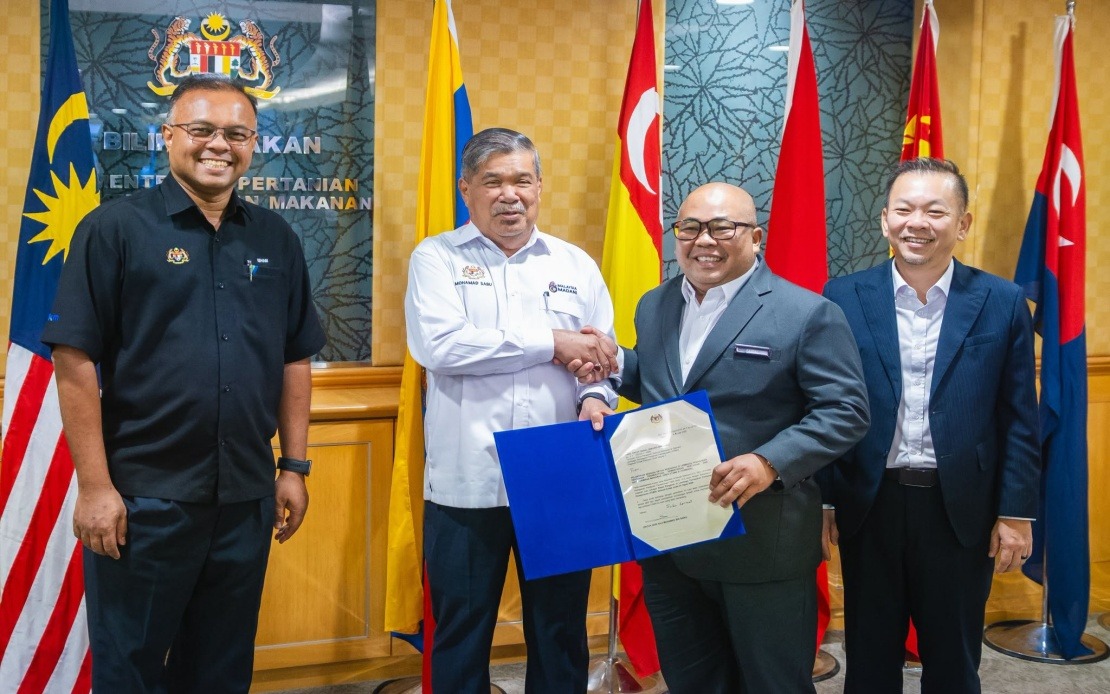
Faisal Iswardi Ismail, who previously served as deputy director-general overseeing Food Security and Operations, has been formally appointed as the new leader of the Federal Agricultural Marketing Authority (FAMA), with his tenure commencing on August 1. Agriculture and Food Security Minister Datuk Seri Mohamad Sabu presented the official appointment letter following Malaysia's Cabinet meeting on August 5, marking a significant transition in leadership at one of the country's most important agricultural institutions.
The promotion of Faisal Iswardi represents a continuity strategy within FAMA's upper management, elevating an internal candidate with demonstrated experience in critical operational and food security functions. His background in managing food security matters and operational oversight positions him to navigate the complexities of Malaysia's agricultural marketing landscape, which has become increasingly important as the nation grapples with supply chain resilience and farmer welfare concerns.
Minister Mohamad Sabu publicly acknowledged the appointment through social media, emphasizing the weight of responsibility now resting on Faisal Iswardi's shoulders. The minister's remarks underscored that FAMA operates far beyond simple transactional functions—the authority serves as a vital bridge connecting farmers and agribusiness entrepreneurs to broader markets, while simultaneously working to stabilize and strengthen the agricultural supply chain that underpins national food security.
The timing of this leadership change reflects ongoing governmental attention to agricultural governance as Malaysia confronts multiple pressures in its food sector. Rising input costs, labour shortages, climate-related production volatility, and increasing consumer demand for locally-sourced products have all placed FAMA under greater scrutiny to deliver measurable improvements in farmer incomes and market access. Faisal Iswardi's appointment signals ministerial confidence that his operational background will enable the authority to address these multifaceted challenges more effectively.
FAMA's core mandate involves facilitating the marketing of domestic agricultural products, managing supply chain coordination between producers and retailers, and ensuring farmers receive fair compensation for their efforts. These responsibilities have grown more complex in recent years as Malaysia seeks to reduce import dependency for essential food categories while simultaneously supporting smallholder farmers who form the backbone of rural agricultural activity. The new director-general will oversee these priorities during a period when food inflation and supply disruptions remain live policy concerns for Malaysian households.
The appointment also carries significance for Southeast Asia's agricultural sector more broadly, as FAMA's operational decisions influence regional trade patterns and market dynamics. Malaysia's agricultural policies, implemented through agencies like FAMA, affect not only domestic farmers but also cross-border supply relationships with neighbouring countries and broader ASEAN food security frameworks. Faisal Iswardi's leadership will thus influence how Malaysia positions itself within regional agricultural cooperation initiatives.
Minister Mohamad Sabu's public congratulations, while ceremonial in nature, conveyed a message about ministerial expectations and governmental commitment to FAMA's mission. The minister's reference to strengthening the food supply chain and increasing farmer incomes suggests that performance metrics in these areas will likely define success during Faisal Iswardi's tenure. This represents implicit pressure to demonstrate tangible improvements rather than merely maintain existing operational standards.
The transition from deputy to director-general typically involves expanded responsibilities in strategic planning, stakeholder engagement with industry associations, and policy advocacy within Cabinet discussions. Faisal Iswardi will need to balance FAMA's traditional role as a marketing facilitator with newer expectations around food security management, agricultural modernization, and sustainability standards that increasingly characterize discussions about Malaysia's farming future.
For Malaysian farmers and agricultural businesses, the leadership change presents both continuity and opportunity. Continuity derives from Faisal Iswardi's internal experience and existing relationships within FAMA's institutional culture. Opportunity emerges from the chance that new leadership might implement innovative approaches to chronic challenges in agricultural marketing, particularly regarding farm-gate prices, market information systems, and logistics efficiency that have long frustrated producers.
The appointment process itself reflects Malaysia's professional civil service traditions, wherein capable candidates advance through demonstrated competence rather than political patronage. This institutional stability contrasts with agricultural leadership volatility in some regional neighbours and suggests FAMA will maintain consistent policy direction regardless of broader political changes. Faisal Iswardi's elevation from within the ranks reinforces organizational knowledge preservation and staff morale, essential factors in an institution requiring technical expertise and stakeholder trust.
As Faisal Iswardi assumes his new role, he inherits an authority navigating significant structural pressures. Competing demands from urban consumers seeking affordable food, farmers seeking higher incomes, environmental advocates pushing sustainability requirements, and international trade obligations create constant tension within agricultural policy. His success will partly depend on whether FAMA receives adequate budgetary support and political backing to implement solutions rather than merely manage existing contradictions.

