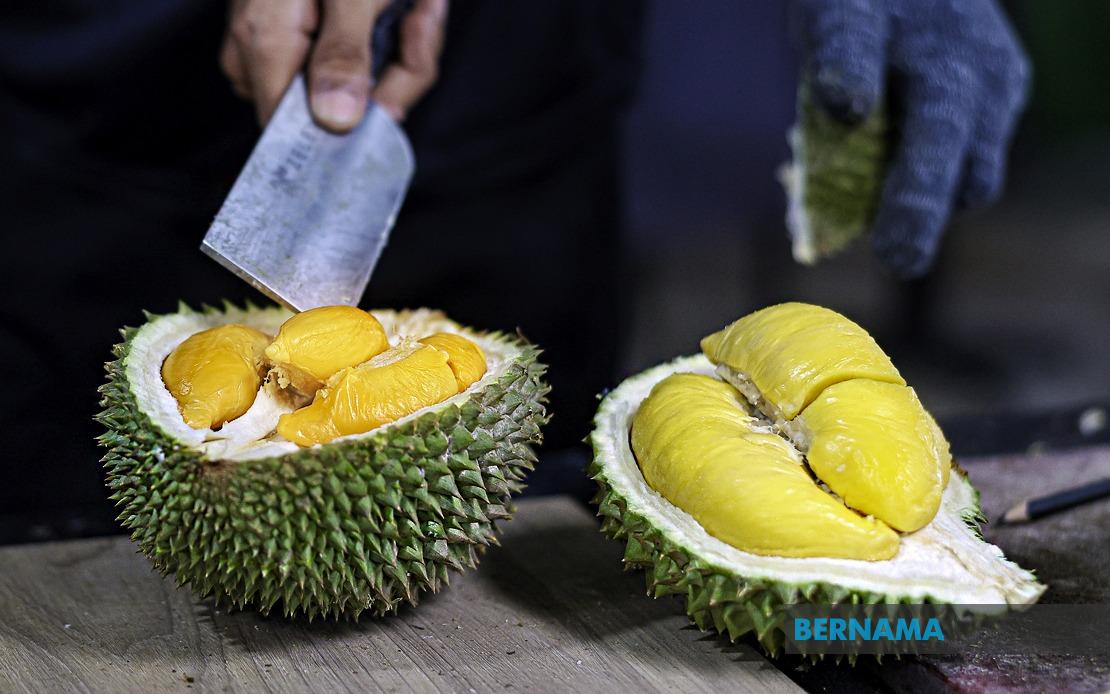
The Federal Agricultural Marketing Authority has unveiled an aggressive marketing and intervention strategy for Penang's durian sector, positioning the state's fruit industry as a centrepiece of national agricultural promotion ahead of the 2026 agricultural showcase. Speaking at the simultaneous launch of the Penang Durian Festival and the Road to MAHA 2026 programme in Nibong Tebal on June 28, FAMA's Penang director Mohd Hafiz Nurulhuda outlined comprehensive plans to navigate what is shaping up as a record production year, with output expected to exceed 18,000 metric tonnes—marking a notable rise from approximately 17,000 metric tonnes in the preceding year.
The expansion in Penang's durian harvest reflects broader production gains across major durian-growing regions in Malaysia, creating both opportunity and challenge for local growers. While output increases signal healthy orchard productivity and strong market potential, they also raise the spectre of oversupply that could depress farmgate prices and squeeze already-thin profit margins. FAMA's intervention strategy appears calibrated to address this tension by deploying a combination of price support mechanisms, demand stimulation, and value-chain infrastructure improvements designed to maintain producer viability while capturing growth opportunities in domestic and regional markets.
Crucially, the expected oversupply dynamic appears concentrated in lower-tier kampung durian varieties rather than the premium segment that commands international recognition and pricing power. Mohd Hafiz noted that approximately 30 per cent of Penang's production consists of kampung durian—the traditional local variety—meaning that roughly 70 per cent comprises more marketable premium and semi-premium cultivars. This composition matters significantly because it suggests that overall price pressure may remain manageable, as the bulk of the harvest occupies higher-value categories less susceptible to commodity-level oversupply shocks.
Premium varieties including the internationally acclaimed Musang King and the Black Thorn cultivar are holding steady pricing at between RM30 and RM40 per kilogramme, indicating sustained market demand for quality fruit. These prices reflect both the scarcity value of premium genetics and the willingness of consumers—particularly in urban centres and export markets—to pay substantially above commodity rates for superior flavour, consistency, and production credentials. This price stability in the premium segment provides a considerable buffer against sector-wide profitability concerns and validates the ongoing investment by Penang growers in orchard improvement and varietal upgrading.
To protect vulnerable kampung durian producers from acute price collapse, FAMA has established a price floor mechanism triggering intervention purchases when prices fall below RM2.70 per kilogramme. Under a forward purchasing agreement, FAMA commits to acquiring approximately 85 metric tonnes at the support price, effectively guaranteeing a minimum income threshold for growers unable to command premium pricing. This safety-net approach reflects a recognition that while overall production is rising, smaller-scale and less-sophisticated growers require institutional support to weather downside price movements. The mechanism demonstrates a nuanced policy response that preserves market functionality while preventing catastrophic income losses among vulnerable producer segments.
Beyond price interventions, FAMA is restructuring the supply chain and demand channels to accelerate product movement and capture value across the distribution network. Two temporary collection centres established in Balik Pulau and Seberang Jaya have already processed approximately 50 metric tonnes this season, providing local aggregation and quality control infrastructure that reduces grower transaction costs and improves product standardisation. Simultaneously, FAMA has supplied 310 metric tonnes to its portfolio of marketing outlets, effectively vertically integrating significant production volume and securing direct retail placement. The expansion of direct sales initiatives targeting the high-demand Klang Valley market demonstrates recognition that Malaysian consumption within the Greater Kuala Lumpur region remains elastic and underserved, particularly for fresh premium fruit.
The broader strategic dimension of FAMA's approach extends beyond immediate supply-demand management to encompass long-term competitive positioning and agricultural modernisation. The agency is actively developing agro-tourism projects and financing orchard facility upgrades, signalling an ambition to transform Penang's durian sector from a commodity production base into a vertically integrated, experience-driven industry spanning cultivation, hospitality, and cultural tourism. This evolution aligns with Malaysia's broader agricultural modernisation agenda and positions Penang to capture premium market segments—including international visitor spending and high-net-worth consumer markets—rather than competing primarily on volume and commodity pricing.
Chief Minister Chow Kon Yeow's involvement in launching both the durian festival and the Road to MAHA 2026 initiative underscores the political salience of the agricultural sector within Penang's economic strategy. The clustering of these announcements signals state government commitment to agricultural modernisation and producer welfare, messaging particularly important in rural constituencies where farming remains economically significant. The MAHA 2026 programme positioning suggests that Penang anticipates a prominent role in the national agricultural showcase, leveraging durian as a flagship product demonstrating state-level excellence and innovation in tropical horticulture.
For Malaysian consumers and regional markets, FAMA's interventions carry implications for price stability and product availability. The combination of production growth, quality concentration in premium varieties, and active demand stimulation suggests that durian availability should improve across income segments—with premium consumers enjoying consistent supply of world-class fruit at established price points, while mainstream consumers benefit from expanded distribution of quality kampung and semi-premium fruit at accessible pricing. Export-oriented neighbouring countries may also find Penang's surplus production relevant to their domestic supply strategies, particularly given Malaysia's durian production dominance in Southeast Asia and pricing leadership in regional trade.
The intervention plan articulates a sophisticated approach to agricultural commodity management that acknowledges market realities—oversupply conditions, price differentiation, consumer segmentation—while deploying targeted policy levers to protect vulnerable producers and stimulate demand through infrastructure investment and agro-tourism development. Rather than relying solely on price supports or protective tariffs, FAMA appears committed to addressing root-cause demand constraints through distribution expansion and value-chain modernisation. This strategic orientation suggests that policymakers view the current production surge not as a temporary crisis requiring temporary fixes, but as an opportunity to lock in structural improvements in productivity, market access, and product positioning that strengthen long-term sector viability and competitiveness in regional and global markets.

