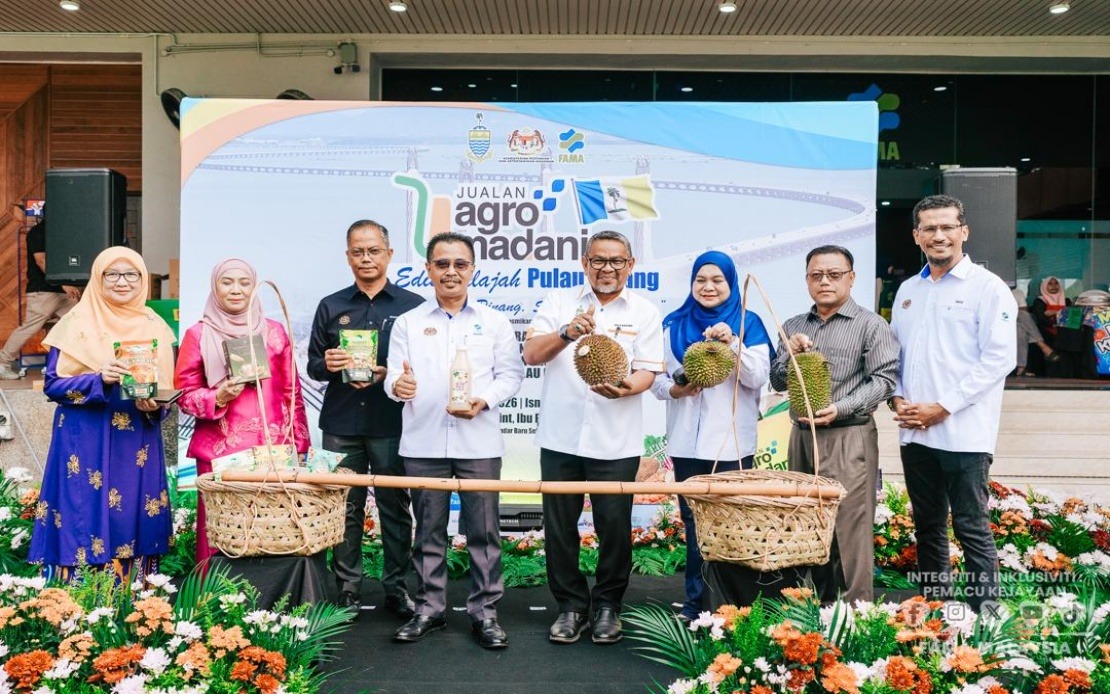
The Federal Agricultural Marketing Authority (FAMA) is making steady progress in its ambitious effort to revitalise Malaysia's agricultural commerce through its Agro MADANI Sales (JAM) programme, which has now crossed the RM46.72 million sales threshold during the January-to-May period. The collective results from 1,833 marketing events held throughout the country demonstrate the growing appetite for locally produced agricultural products and the viability of direct-to-consumer sales models for Malaysian farmers and agri-entrepreneurs.
This performance underscores FAMA's strategic direction in modernising how Malaysian agricultural produce reaches consumers. Rather than relying exclusively on traditional wholesale channels and supermarket networks, the JAM programme creates dedicated marketplace experiences where growers, processors, and consumers interact directly. This approach addresses long-standing inefficiencies in the agri-food supply chain that have historically compressed farmer margins while elevating retail prices, ultimately harming both producers and households seeking affordable fresh products.
The Penang edition, held at FAMA's Selayang headquarters in early July, exemplified the programme's operational model and regional expansion strategy. With 45 sales allocations distributed among 30 Penang-based entrepreneurs, the event projected to attract approximately 2,000 visitors and generate RM100,000 in sales. This reflects the programme's consistent scaling across Malaysia's states, with Penang representing the third instalment of JAM initiatives organised in collaboration with state governments, following previous editions in Selangor.
The product diversity showcased at the Penang edition reveals the specialisation developing across Malaysian agricultural regions. Premium Balik Pulau durians—already renowned for their quality—were positioned alongside newer varieties including Black Thorn, Red Prawn, and Hor Lor cultivars, as well as Cempedak King. This product stratification enables entrepreneurs to target different consumer segments and price points, from budget-conscious households to premium-market buyers seeking exceptional quality.
Governmental coordination at multiple levels amplifies the programme's impact. The Penang State Government collaborated with FAMA through its Rural Development, Agrotechnology, Food Security and Cooperatives Committee, represented by Exco member Datuk Rashidi Zinol. The involvement of the Penang Bumiputera Development Council in a joint entrepreneurship initiative indicates an intentional focus on developing indigenous enterprise, reflecting broader Malaysia Plan objectives around equitable economic participation.
Beyond agricultural products alone, the Penang edition incorporated experiential elements reflecting the state's culinary heritage. Iconic local foods—nasi kandar, Penang laksa, char kuey teow, mee sotong, and air sarbat—were available alongside merchandise, transforming these marketing events into cultural celebrations that deepen consumer attachment to regional identities and local producers. This approach positions JAM not merely as a transactional platform but as a social space reinforcing community food systems.
The programme's stated objectives address multiple market failures simultaneously. By creating platforms for direct producer-to-consumer engagement, JAM enables entrepreneurs to expand distribution networks without the intermediation costs that typically characterise conventional retail. Simultaneously, consumers gain access to fresher products at more competitive prices than conventional retail channels often provide, while supporting local livelihoods directly. This value redistribution throughout the supply chain represents a substantive policy intervention in Malaysia's agricultural economics.
For consumers navigating Malaysia's cost-of-living pressures, programmes like JAM offer tangible relief. The emphasis on affordable pricing for daily necessities positioned alongside premium speciality products means households across income strata can participate. As inflation continues straining household budgets across Southeast Asia, government-facilitated direct marketing becomes increasingly relevant for food security and affordability.
The trajectory evident in these five-month results—RM46.72 million across 1,833 events—suggests sustainable momentum. If sustained, this pace would generate approximately RM112 million annually at current scales, representing meaningful economic activity redistribution toward agricultural producers and small entrepreneurs. Yet this requires continued coordination between federal and state apparatus, reliable entrepreneur participation, and consumer awareness building.
Looking forward, the programme's expansion into additional states and the refinement of its operational model will determine whether JAM becomes a structural feature of Malaysia's agri-food ecosystem or remains a cyclical initiative. The involvement of state development councils and ministerial-level support suggests institutional commitment, but scaling requires addressing logistical challenges: transportation, product standardisation, credit arrangements for participating entrepreneurs, and consistent quality assurance.
For Malaysian entrepreneurs in agriculture and agri-processing, JAM represents a concrete mechanism for market access that circumvents traditional gatekeepers. This is particularly valuable for small-scale producers and value-added processors who lack capital for independent retail expansion. As Malaysia navigates its transition toward higher-value agricultural systems, programmes enabling direct market linkages between sophisticated producers and conscious consumers become strategically important.
The cross-border relevance is notable as well. ASEAN neighbours confronting similar agricultural supply chain fragmentation and consumer demands for fresh local products are monitoring Malaysia's direct-marketing innovations. The JAM model—combining state facilitation, entrepreneur support, and consumer convenience—offers a replicable framework adaptable across different regional contexts throughout Southeast Asia's agricultural sectors.

