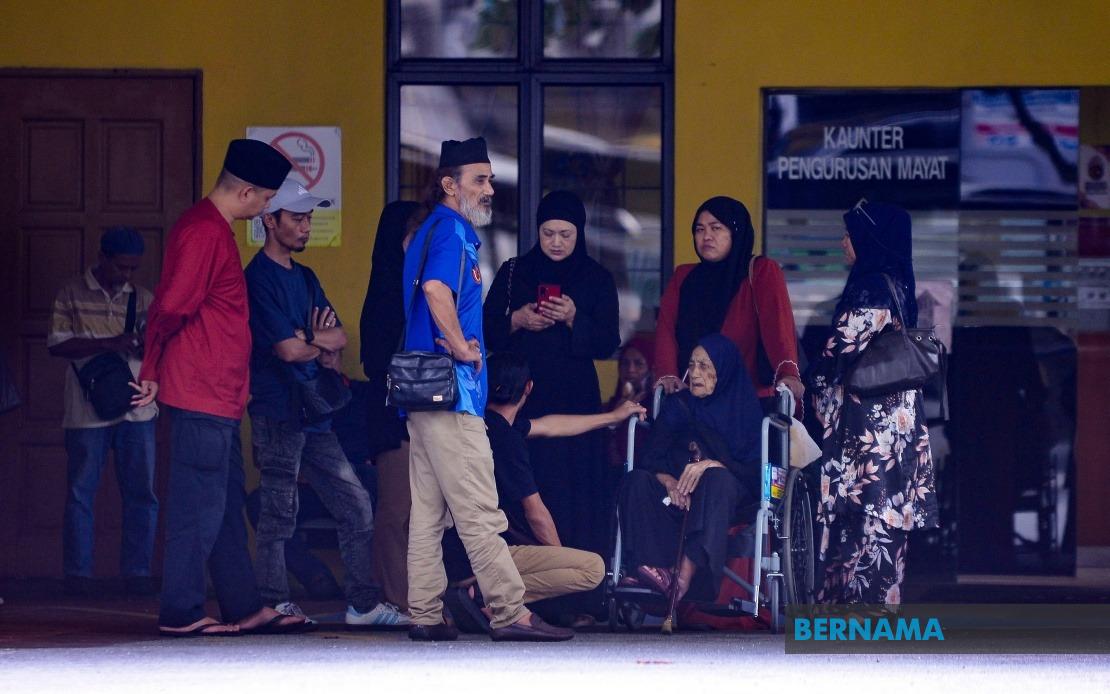
A family devastated by a predawn crash involving a Malaysian Immigration Department lorry is demanding a thorough and impartial investigation into the collision that claimed three lives at Maju Junction. Mohd Nadzri Razali, speaking from his home in Taman Aman Fasa 2 near Kampar, expressed deep anguish over the loss of his brother-in-law and nieces, whilst emphasizing the critical importance of establishing the full circumstances that led to the tragedy.
The incident unfolded around 1 am when an empty Isuzu Black Maria immigration vehicle departed from the Kuala Lumpur Immigration Office bound for Chow Kit to conduct operations targeting undocumented migrants. According to witness accounts and initial investigation findings, the lorry entered the Maju Junction intersection whilst its traffic signal displayed red, despite having activated its beacon lights and siren. Simultaneously, a Proton Saga proceeding with a green light found itself unable to maneuver around the lorry and collided with the larger vehicle at high impact.
The force of the collision sent the immigration lorry spinning out of control through the intersection, where it struck four pedestrians from the same family who were crossing the road at the time. The impact also involved an Inokom Matrix multi-purpose vehicle. Three members of the family—Shaik Mohd Firdaus Shaikh Yahya, aged 53, and his two daughters Siti Nor Sazlin, 25, and Siti Darwisyah Auni, 12—were pronounced dead at the scene. Their mother, Norhayati Razali, 55, sustained severe injuries and remains hospitalized in the Intensive Care Unit at Kuala Lumpur Hospital.
Mohd Nadzri emphasized his particular concern about the allegation that the immigration lorry ran a red traffic light at the moment of impact. He stated that determining whether the vehicle proceeded through the intersection against the signal is crucial to understanding how the collision could have occurred, and whether proper protocols were followed by the lorry operator. The family's insistence on transparency reflects broader public concern about accountability when government vehicles are involved in traffic incidents that result in civilian deaths.
The mother's condition has shown some improvement, with reports indicating she has regained consciousness following emergency treatment. However, her prognosis remains uncertain, and the family is exploring options to transfer her to a hospital closer to their home in the Perak region, either Hospital Ipoh or Teluk Intan, depending on medical clearance and her continued recovery. The family is preparing to bury all three deceased members in a single grave at the Muslim Cemetery in Kampung Air Hitam Labu within their home district of Kampar, in accordance with Islamic burial practices.
The loss has compounded existing grief within the family structure. Mohd Nadzri revealed that the extended family had only recently experienced another death, losing another member just three months earlier on May 30. The sudden deaths of three relatives within such a brief timespan has created profound emotional and logistical challenges for the surviving family members. Mohd Nadzri, who lives in the same residential area as his sister's family, described the shock of losing three loved ones simultaneously as overwhelming, particularly given the proximity of their homes and the regularity of their interactions.
The last occasion he spent time with the victims was approximately two weeks before the accident, when the family traveled together to perform maintenance at family graves located in Teluk Bakong, Ayer Tawar. These routine visits to honor deceased relatives took on added poignancy in light of the subsequent tragedy. The family's cultural and religious observances provided a framework for their lives, making the sudden disruption particularly devastating.
Authorities have initiated formal investigation of the collision under Section 41(1) of the Road Transport Act 1987, the statutory provision governing serious traffic offenses in Malaysia. This legal framework allows investigators to examine whether the lorry operator followed proper procedures during emergency operations, whether the vehicle's safety systems functioned correctly, and whether traffic protocols were appropriately observed. The investigation will also likely examine whether the activation of beacon lights and siren created reasonable expectation for the lorry operator to proceed, or whether such activation does not supersede mandatory traffic signal compliance.
The incident raises significant questions about vehicle operation procedures within government agencies and the balance between rapid response capabilities for official operations and public safety obligations. The timing of the operation—conducted in the early morning hours when roads carry less traffic—suggests planning to minimize disruption, yet the collision demonstrates how even low-traffic periods carry inherent risks when large vehicles operate without full compliance to standard traffic regulations. The case also highlights the vulnerabilities of pedestrians crossing major intersections, regardless of traffic signal status, when larger vehicles enter the intersection unexpectedly.
For Malaysian road safety advocates and transport officials, this collision serves as a sobering reminder of the importance of rigorous training, clear protocols, and unwavering adherence to traffic rules, even during authorized emergency operations. The family's call for transparent investigation reflects a fundamental principle of public accountability: when government operations result in civilian deaths, the circumstances must be thoroughly examined and findings made public to prevent future incidents. The immigration department and relevant traffic authorities will face considerable scrutiny regarding whether proper safeguards were implemented and whether operational procedures adequately prioritized public safety alongside mission objectives.

