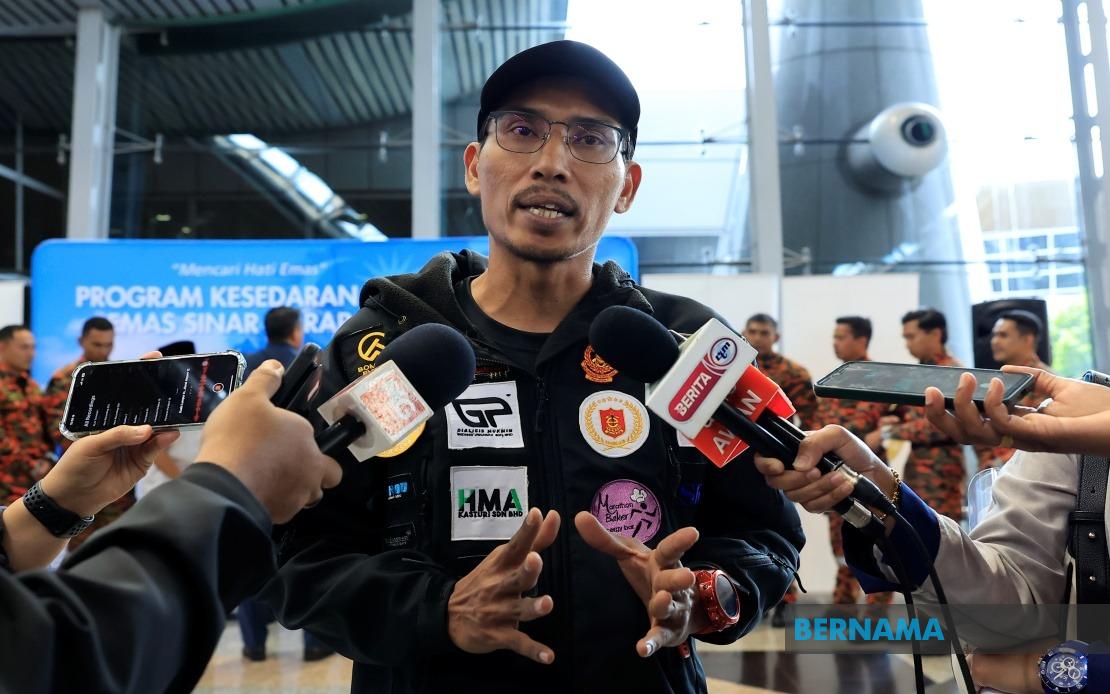
The family of Mohd Fakhrul Munir Mohd Isa, a 44-year-old member of the Malaysian Fire and Rescue Department's elite special forces contingent, is clinging to hope as rescue operations continue in the aftermath of catastrophic flash flooding and landslides that swept through Rasuwa district in Nepal. Mohd Fakhrul Munir, affectionately known as Loe, disappeared when his expedition group encountered the disaster, leaving his loved ones anxiously awaiting news from the mountainous region.
Mohd Saiful Munir Mohd Isa, the missing firefighter's brother, expressed the family's resolve to remain optimistic despite the harrowing circumstances. In remarks to journalists, Mohd Saiful Munir, 46, acknowledged that the communication blackout affecting the region is almost certainly a consequence of the natural disaster's severity rather than an indicator of a grim outcome. The family has maintained continuous prayers for Loe's safe discovery, whilst simultaneously preparing themselves emotionally for whatever developments may emerge from the search and rescue operation unfolding thousands of kilometres away.
The professional mountaineer's regular expeditions to Nepal are well known within his family circle, rendering his latest journey to the Himalayan nation neither surprising nor unprecedented. Mohd Saiful Munir revealed that his brother frequents Nepal on an annual basis, undertaking between three and five climbing expeditions there each year. This pattern of regular mountaineering activity, combined with Loe's reputation as a dedicated outdoor enthusiast, underscores both his commitment to high-altitude mountaineering and his accumulated experience navigating challenging terrain. Beyond his climbing pursuits, Mohd Fakhrul Munir maintains an active interest in cycling, demonstrating a broader commitment to demanding athletic and adventurous pursuits.
The last communication between the brothers occurred approximately one week prior to Mohd Fakhrul Munir's departure for Nepal. During that final conversation, there were no indications of concern or unusual apprehension about the upcoming expedition. Mohd Saiful Munir, who serves as an operations officer at the Port Klang Fire and Rescue Station, acknowledged that based on the planned route his brother's group was following, they were most likely positioned within the valley area when the natural disaster struck. This geographical detail suggests the group was traversing exposed terrain when the flash floods and landslide activity commenced.
Mohd Saiful Munir characterised the situation as one in which his brother and colleagues are essentially trapped in the affected area, unable to establish communication or navigate to safety due to the environmental destruction wrought by the disaster. This framing reflects a measured assessment that distinguishes between confirmed harm and the practical impossibility of maintaining contact through normal channels. The family has adopted a disciplined approach to information gathering, deliberately limiting themselves to official statements released by relevant authorities rather than speculating based on fragmentary reports or social media rumours that invariably proliferate during such crises.
The Malaysian Fire and Rescue Department confirmed that two of its personnel remain unaccounted for in the Nepal disaster zone. Datuk Seri Nor Hisham Mohammad, the department's director-general, identified the missing officers as Mohd Sani Harul, who holds the position of deputy director within the Planning and Research Division, and Mohd Fakhrul Munir Mohd Isa. Both men are part of a larger expedition comprising ten Malaysians who were en route to Everest Base Camp when the disaster unfolded in the Rasuwa region.
The composition of the expedition team, which included both serving JBPM personnel and civilian climbers, reflects the increasingly common practice of professional rescue and emergency services personnel undertaking mountaineering expeditions during their leave periods. These climbers possess superior physical conditioning, technical skills, and mental resilience compared to average trekkers, yet they remain vulnerable to the sudden onset of natural hazards that characterise high mountain environments. The concentration of two JBPM special forces members within the same expedition group underscores the shared passion for mountaineering that binds these professional rescuers outside their official duties.
The Rasuwa district, located in central Nepal, frequently experiences monsoon-related precipitation and terrain instability during the summer months. Flash flooding in such regions can develop with devastating rapidity, transforming normally manageable water courses into torrential flows capable of overwhelming obstacles and washing away structures within minutes. Landslides, which frequently accompany intense rainfall in mountainous terrain with steep gradients and unstable soil composition, compound the hazard environment significantly. These interconnected natural hazards create conditions that can rapidly isolate expedition groups, rendering established communication networks inoperable and forcing survivors to shelter in place until rescue teams can reach them.
For Malaysian families with loved ones engaged in high-altitude mountaineering, the Rasuwa incident represents a sobering reminder of the genuine risks inherent to climbing expeditions, regardless of participants' professional backgrounds or extensive experience. The incident underscores disparities in rescue capability between developed nations and the Himalayan region, where challenging geography, limited infrastructure, and competing rescue priorities can significantly delay response operations. International coordination between Nepali authorities, Malaysian diplomatic representatives, and rescue specialists becomes essential in locating and extracting survivors from inaccessible terrain.
The broader Malaysian community has responded with expressions of concern and support for the families awaiting news from Nepal. Professional organisations, particularly within the fire and rescue sector, have mobilised to provide assistance and coordinate with international partners. The incident highlights both the courage of rescue professionals who pursue mountaineering outside formal duty requirements and the inherent uncertainties that accompany expeditions into remote, geologically active regions. As rescue operations continue, the family of Mohd Fakhrul Munir Mohd Isa remains steadfast in their hope whilst preparing themselves for all possible outcomes.

