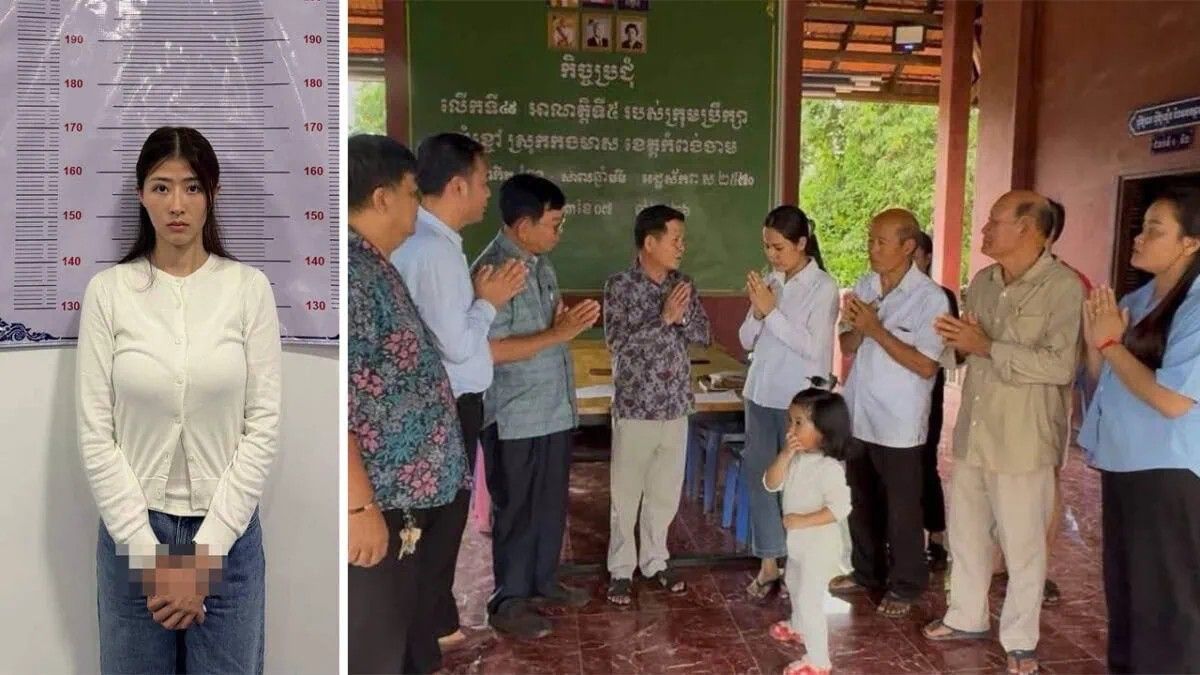
The family of Kuoch Limhan, a construction laboratory official with Cambodia's Ministry of Public Works and Transport who died in a traffic collision in Phnom Penh last month, has reached a financial settlement with the accused driver's family and withdrawn its civil complaint. Sam Meychou, the driver at the centre of the fatal incident, will nonetheless remain subject to criminal prosecution as authorities pursue charges related to the July 28 collision in Sen Sok district.
Both parties formalised an out-of-court settlement on August 6, bringing the civil dimension of the dispute to a close whilst leaving criminal accountability intact. Under the agreement, Oknha Tong Hok Seng, Meychou's father, transferred S$60,000 to Limhan's widow as compensation for her loss. Seung Kimhor, the representative who initiated the civil claim on behalf of the family, was also party to the formal arrangement.
The settlement document was signed and witnessed by Kong Sekleng, the local commune chief, and lawyer Phon Thearin, lending official weight to the resolution. According to the terms, both sides committed to settling the dispute in an "amicable" manner, with the victim's family specifically agreeing to withdraw its claim in criminal case No. 4396, initially filed with the Phnom Penh Municipal Court on July 31, 2026. The agreement further stipulates that neither party will pursue additional claims or demands, with both sides accepting that the matter has been resolved through mutual understanding and goodwill.
The distinction between civil and criminal proceedings has significant implications for the trajectory of this case. In many Southeast Asian jurisdictions, including Cambodia, civil settlements do not automatically terminate criminal liability; the state retains independent authority to prosecute traffic offences that result in death. This separation reflects the principle that serious public wrongs—particularly those involving fatal negligence—transcend private disputes and remain matters of state interest.
According to court documents, Meychou crossed the centre line whilst attempting to overtake another vehicle, striking Limhan's motorcycle in the process. Limhan, who was returning home with milk for his young daughter at the time of the collision, was killed instantly. Security footage from the scene captured Meychou and an associate departing in a tuk tuk whilst Limhan's body remained on the rain-soaked street, contributing to evidence of flight from the scene.
Meychou turned herself in to authorities on the afternoon of July 30, two days after the incident. The following day, the Phnom Penh Municipal Court formally charged her with causing a fatal traffic accident and fleeing the scene. Following questioning and a review of evidence, an investigating judge ordered her remanded in pre-trial detention, a measure that underscores the gravity with which authorities are treating the charges.
The S$60,000 compensation figure, whilst substantial, reflects a common practice in Cambodia whereby families of deceased victims reach financial settlements with those responsible for their deaths. Such arrangements frequently occur in traffic accident cases and serve multiple purposes: they provide immediate relief to bereaved families facing economic hardship, they acknowledge civil liability, and they reduce court congestion by resolving one component of multi-faceted cases. However, the financial settlement in this instance does not diminish the criminal allegation that Meychou's actions—specifically crossing the centre line and subsequently fleeing—demonstrate culpability warranting state punishment.
For Malaysian observers, the case highlights how different legal systems balance compensatory and punitive approaches to traffic fatalities. Malaysia's own road safety framework has increasingly emphasised criminal accountability for reckless driving causing death, with sentencing guidelines reflecting the severity of such offences. The withdrawal of civil claims in Cambodia following settlements does not prevent criminal adjudication, mirroring provisions in other regional jurisdictions where families' financial needs and state interests in prosecuting dangerous driving are kept analytically separate.
The incident also underscores ongoing challenges with hit-and-run cases across Southeast Asia. Meychou's initial flight from the scene, captured on video, compounds the original traffic offence with the aggravating factor of attempting to evade accountability. This pattern—whereby drivers involved in fatal collisions leave the scene rather than immediately seeking assistance—has prompted calls for enhanced enforcement and public awareness campaigns throughout the region.
The criminal proceedings against Meychou will likely continue through trial, with the prosecution bearing the burden of establishing guilt beyond reasonable doubt on the charges filed. The outcome remains uncertain, though the evidence—including video footage, witness testimony, and the admitted circumstances of the overtaking manoeuvre—appears substantial. The case will be closely monitored by transport safety advocates across Cambodia and the region, particularly given the victim's employment in the construction sector of the Ministry of Public Works and Transport.
For the victim's family, the S$60,000 settlement provides immediate financial security whilst grief and loss remain. The withdrawal of civil claims reflects a pragmatic decision to accept available compensation rather than pursue protracted litigation. Meanwhile, the state's continuation of criminal prosecution ensures that questions of culpability, deterrence, and the proper punishment for fatal traffic negligence will still be addressed through Cambodia's court system, preserving the public interest in holding drivers accountable for actions that result in death.

