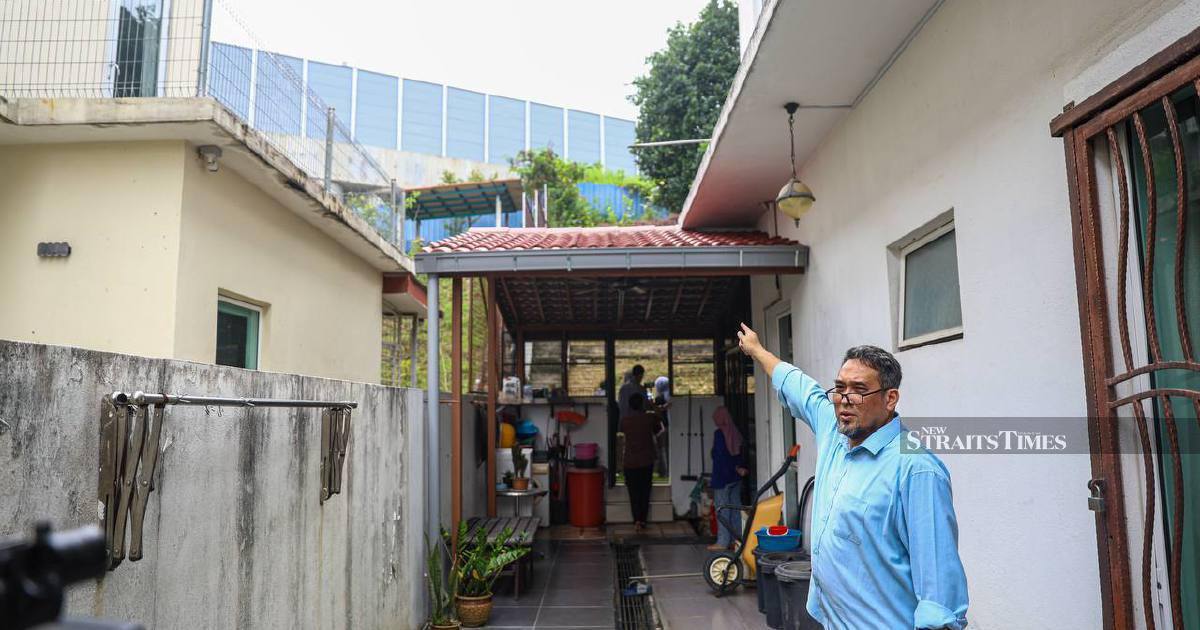
A family in Kuala Lumpur has commenced legal action against three parties connected to the East Coast Rail Link project, seeking RM1.33 million in compensation over claims that ongoing construction has jeopardised the safety and structural soundness of their residential property. The case highlights mounting tensions between residents in affected areas and the consortium undertaking Malaysia's flagship transport infrastructure initiative.
The lawsuit represents one of several disputes emerging as the ECRL construction programme advances through populated zones across the peninsular east coast and central regions. These conflicts typically centre on property damage, dust pollution, noise disturbance, and structural concerns arising from tunnelling, pile-driving, and other heavy engineering activities. The monetary claim suggests the family has documented substantial damage warranting professional assessment and remediation.
The ECRL, a RM110 billion railway initiative designed to connect Port Klang in Selangor to Kota Bharu in Kelantan via 665 kilometres of track, has fundamentally reshaped infrastructure planning across Malaysia since its 2017 inception. The project aims to enhance regional connectivity, reduce road congestion, and unlock economic potential in less-developed east coast states. However, its execution has invariably disrupted communities living along its designated corridor.
Residential areas situated near construction zones face particular vulnerability. Vibration from pile-driving and tunnelling activities can cause micro-fractures in structural foundations, especially in older properties built before modern anti-vibration engineering standards became mandatory. Clay-based soils common to Malaysian geography amplify vibration transmission, potentially affecting buildings located several hundred metres from active work sites. The cumulative effect of constant low-frequency disturbance can weaken load-bearing walls, crack plasterwork, and compromise waterproofing systems.
Disputes of this nature typically progress through technical assessment phases where independent structural engineers evaluate properties to establish baseline conditions, identify damage patterns consistent with construction activities, and estimate remediation costs. Courts must then determine whether defendants owed a duty of care, whether they breached that duty, and whether causation between construction work and claimed damage can be substantiated. The burden of proof in civil cases rests on the balance of probabilities rather than criminal-standard certainty.
Malaysia's legal framework governing construction liability and neighbouring property protection derives from common law principles, particularly the tort of nuisance and negligence. However, gaps exist between statutory obligations imposed on project developers and contractors versus practical enforcement mechanisms available to affected residents. The ECRL consortium and relevant subcontractors are legally obliged to implement dust suppression, vibration monitoring, and community notification protocols, yet monitoring and enforcement capacity at the local authority level often lags behind project scale and complexity.
For residents in peninsular Malaysia experiencing similar concerns, this lawsuit establishes important precedent regarding the feasibility and potential outcome of damage claims. Success could encourage additional filings from others in comparable circumstances, while failure might discourage similar actions. Either scenario carries implications for how future mega-projects manage community relations and liability exposure. The case also reflects broader regional patterns, as major infrastructure development across Southeast Asia increasingly triggers disputes between state interests and residential property rights.
The ECRL project timeline projects substantial completion by 2026, meaning construction intensity will likely escalate in subsequent years. Communities along the route that have not yet experienced major work activities can observe this case's progression to better understand their own potential options and timelines for legal action. Documentation of baseline property conditions, photographic records of damage, and contemporaneous expert reports strengthen evidentiary foundations for future claims.
Project developers and contractors have financial incentive to resolve such disputes efficiently, as litigation consumes management attention, generates negative publicity, and creates uncertainty affecting project finances and schedules. Many major infrastructure schemes internationally have incorporated community redress mechanisms, including no-fault compensation schemes or rapid dispute resolution panels, as alternatives to protracted court proceedings. The Malaysian government's approach to ECRL-related grievances will likely influence public acceptance of subsequent mega-projects.
The lawsuit also underscores the tension between national development imperatives and localised residential interests. While the ECRL promises substantial long-term benefits to national and regional economic capacity, those benefits accrue broadly across society and over extended timescales, whereas construction harms concentrate intensely on small communities over concentrated periods. Balancing these competing interests requires transparent communication, genuine damage assessment, fair compensation for verified losses, and meaningful efforts to minimise disruption.
Regulatory oversight of the ECRL construction programme involves multiple agencies including the Ministry of Transport, the Land Public Transport Agency, and state governments along the corridor. Coordination between these bodies and responsiveness to resident complaints significantly influences project reputation and social licence to operate. Residents who lodge formal complaints through established channels and maintain documentation of interactions strengthen future legal positions should disputes escalate toward court proceedings.

