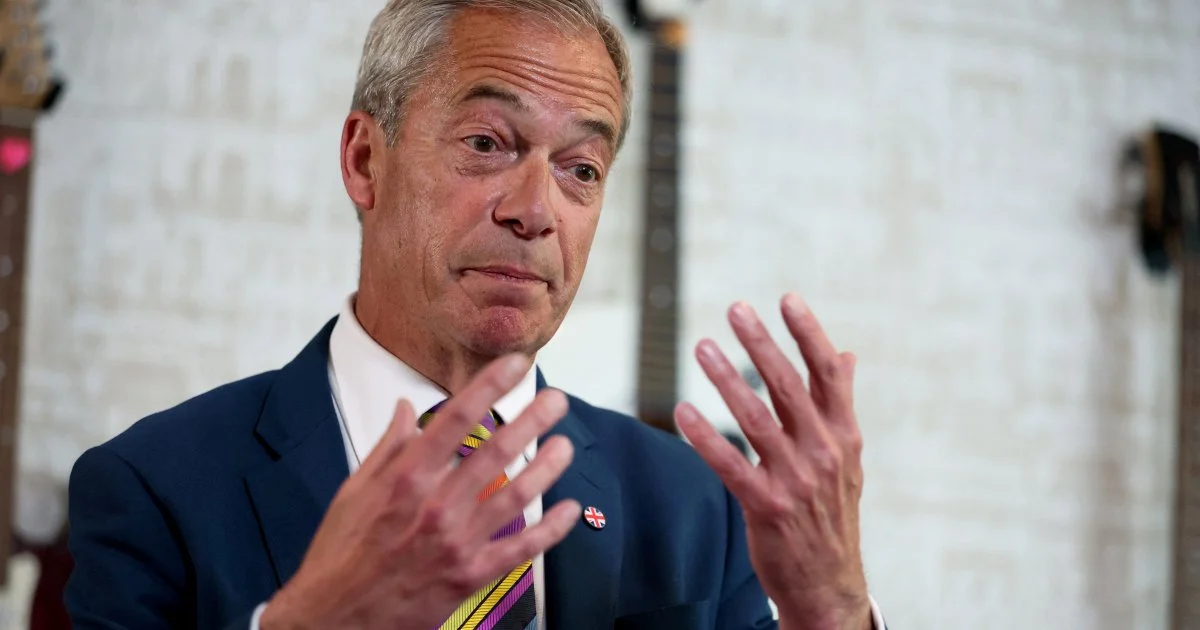
Nigel Farage, the controversial hard-right British politician who has wielded significant influence over UK politics through his leadership of the Brexit movement, has found himself embroiled in a fresh scandal concerning the transparency of his personal finances. The allegations centre on his failure to properly declare gifts and financial support, with particular focus on assistance allegedly provided by an individual with a criminal conviction for fraud. This latest chapter in Farage's tumultuous political career raises serious questions about parliamentary accountability and the adequacy of current disclosure rules governing politicians' personal interests.
According to reporting that emerged on Sunday, a man previously convicted of fraudulent activities provided substantial financial assistance to cover Farage's security expenses and staff salaries during a period before Farage secured his seat in Parliament. The arrangement, if confirmed, would represent a significant departure from standard parliamentary conduct and transparency expectations. Such undisclosed support raises immediate concerns about potential conflicts of interest and the integrity of funding sources backing political figures, particularly those who have positioned themselves as crusaders against establishment corruption.
The timing of these revelations underscores broader discussions within Westminster about the adequacy of existing gift disclosure frameworks. Parliamentary rules require members to register significant gifts and financial benefits, ostensibly to maintain public confidence in the independence and impartiality of elected representatives. However, gaps and ambiguities in these regulations have repeatedly allowed politicians to navigate disclosure requirements with relative ease, leading to recurring controversies that periodically shake public trust in the institution itself.
Farage's response to the allegations will likely prove consequential for his political standing. As a figure who has consistently positioned himself as an outsider challenging the British establishment, questions about his own financial propriety strike at the heart of his political brand. His supporters have long viewed him as authentically anti-establishment, willing to challenge Westminster consensus on issues ranging from European integration to immigration policy. Such allegations, if substantiated, could undermine the populist credentials he has carefully cultivated over decades of political activity.
The involvement of a convicted fraudster in funding Farage's operations adds particular sting to the controversy. Beyond the specific disclosure violations, the association invites broader scrutiny of Farage's judgment and the reliability of his claims to represent ordinary British citizens. Political opponents will inevitably seize upon such vulnerabilities, framing the incident as hypocritical given Farage's reputation for attacking financial impropriety among traditional politicians and business elites.
For Malaysian observers and Southeast Asian readers, this episode illustrates universal challenges facing democratic institutions worldwide. Questions about political financing transparency, the enforcement of parliamentary conduct standards, and the mechanisms available to citizens for holding elected representatives accountable transcend national boundaries. Many Commonwealth nations, including Malaysia, grapple with similar difficulties in establishing robust systems that effectively deter undisclosed financial arrangements while respecting legitimate privacy interests of public figures.
The scandal also provides context for understanding contemporary British politics and the fragmentation of its traditional two-party system. Farage's various political incarnations—from senior figure in the UK Independence Party to leader of the Brexit Party and subsequent alignment with the Reform UK movement—have consistently capitalised on public discontent with establishment politics. Such episodes, however, demonstrate that operating outside traditional party structures does not necessarily insulate figures from the ethical and legal expectations applying to all parliamentarians.
Parliamentary authorities face pressure to clarify and strengthen disclosure requirements in response to recurring revelations about inadequately transparent funding arrangements. The current system appears insufficiently robust to prevent motivated actors from circumventing regulations through technical compliance while violating their spirit. Policymakers must balance legitimate interests in protecting privacy with the overriding public interest in understanding the financial relationships that may influence political decision-making.
The parliamentary commissioner responsible for reviewing members' conduct and financial disclosures will likely examine whether Farage's conduct violated existing rules and, if so, what consequences should follow. Even if current regulations prove insufficient to prosecute violations technically, the reputational damage from the allegations may prove substantial. Public confidence in Farage's leadership and judgment represents political capital that such scandals inevitably erode, regardless of technical legal outcomes.
Broader implications extend to questions about the sustainability of populist political movements built on anti-establishment messaging. When figures claiming to represent genuine alternatives to traditional politics themselves face credibility questions regarding financial transparency and ethical conduct, the effectiveness of their populist appeal diminishes. Voters disillusioned with establishment politics may reasonably question whether alternative movements offer genuine reform or merely different packaging of the same underlying problems they sought to escape.
The allegations also highlight the international dimensions of modern political controversy. In an era of instant global communications, reputational damage spreads rapidly across borders, and the standards expected of major political figures have become increasingly uniform. British parliamentarians increasingly face scrutiny comparable to that applied in other mature democracies, with expectations for transparency that earlier generations of politicians might not have anticipated.
Moving forward, the outcome of investigations into Farage's conduct will significantly influence both his political future and broader parliamentary reform efforts. Should authorities determine violations occurred, their response will establish important precedents about accountability applying even to prominent and politically influential figures. Conversely, should Farage be cleared, critics will likely characterise the episode as symptomatic of inadequate oversight mechanisms requiring comprehensive reform. Either way, the controversy reinforces ongoing debates about political financing transparency and the structural challenges democracies face in maintaining public trust.

