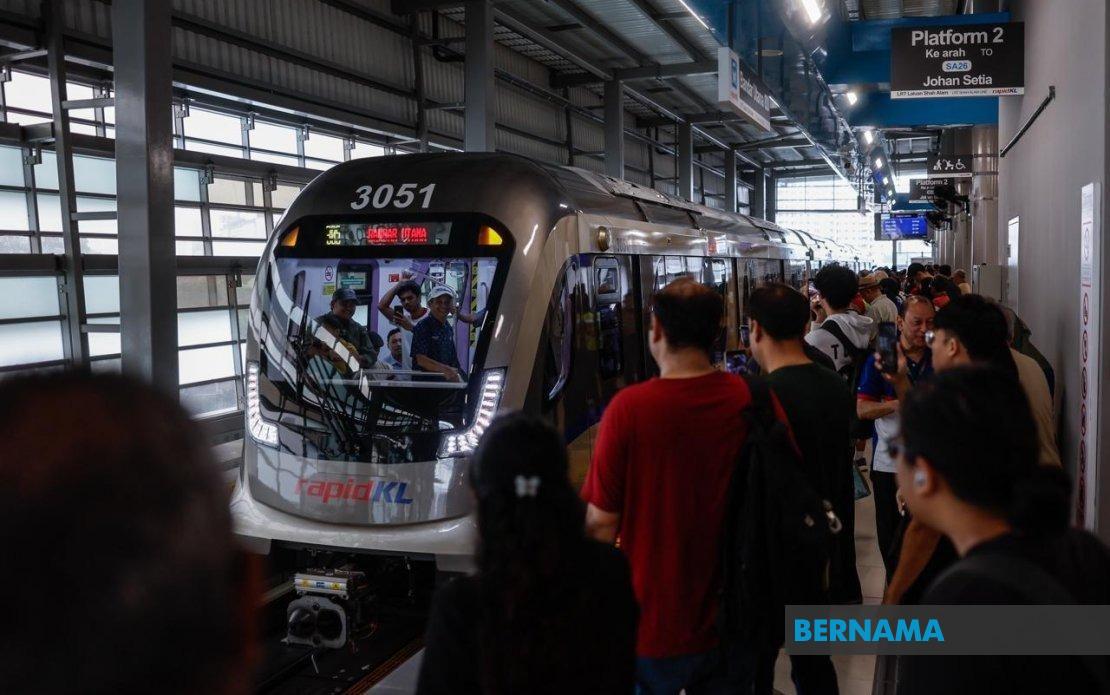
A mechanical failure in one of the train's components was behind a July 4 incident on the Light Rail Transit 3 (LRT3) Shah Alam Line, when the faulty part made contact with the power conductor rail, according to Rapid KL. The operator disclosed the findings today, nearly two weeks after the occurrence at Shah Alam Stadium Station, providing clarity on what caused the unexpected disruption.
The incident unfolded at 7.05 pm on the evening of July 4, manifesting as an audible pop accompanied by visible sparks as the component bridged the gap to the electrical system. Despite the dramatic nature of the electrical discharge, no passengers sustained injuries in the event, and the rail service continued to operate smoothly throughout the remainder of the day. The quick identification and isolation of the affected train prevented any cascade of operational failures across the network.
Rapid KL's response to the incident followed established safety protocols for such situations. Passengers on board the affected train were instructed to disembark at the subsequent station along the line, where they were able to board an alternate train to continue to their intended destinations. This managed transfer prevented passenger congestion and maintained the flow of commuters through the Shah Alam corridor, demonstrating the importance of having contingency procedures in place.
Following the incident, the train was immediately withdrawn from passenger service and transported to the depot facility for comprehensive examination. Engineering teams conducted a thorough inspection to identify the precise nature of the fault and determine whether the damage was isolated or symptomatic of a broader systemic issue. The problematic component was subsequently removed and replaced with a functional unit.
Once repairs were completed and safety inspections confirmed the train met operational standards, Rapid KL authorised its return to active service. The clearance to resume operations came only after meticulous verification that the replacement component was properly installed and that all related systems functioned within specifications. This measured approach prioritised reassurance over operational urgency.
Beyond addressing the immediate issue, Rapid KL initiated a wider precautionary programme across its fleet. The operator stated that additional inspections and monitoring had been extended to other trains within the Shah Alam Line and potentially other sections of the LRT3 network, reflecting a commitment to identifying and rectifying any similar faults before they manifest as service incidents. This proactive stance is particularly relevant for commuter confidence in the system.
The incident highlights the importance of preventive maintenance in rail operations, where a single component failure can create hazardous conditions and disrupt service to thousands of daily users. For Malaysian commuters reliant on public transport, such breakdowns underscore the need for transit operators to maintain rigorous inspection schedules and invest in timely component replacement before deterioration occurs. The July 4 event, though resolved without injury, demonstrates that even brief electrical faults can pose risks in a system serving dense urban corridors.
Rapid KL's statement emphasising passenger safety as its top priority is particularly significant given Malaysia's expanding urban rail networks and the growing dependence on LRT services across the Klang Valley and beyond. As ridership continues to climb, maintaining both the reliability and safety of the fleet becomes increasingly critical. Regular, systematic checks can prevent the kind of unexpected electrical contact that occurred on July 4 and protect the reputation of public transport in the region.
The LRT3 Shah Alam Line serves a key section of the Klang Valley's transport ecosystem, connecting residential and commercial areas in Shah Alam to broader network connections. Any disruption, however brief, affects thousands of commuters and their ability to reach workplaces, educational institutions, and services. The swift identification and resolution of this fault, combined with reassuring communication about the cause and remedial action, helps maintain public confidence in the system's safety management.
Looking forward, the incident underscores the value of transparent reporting when technical faults occur in public infrastructure. By explaining the root cause and the steps taken to prevent recurrence, Rapid KL provides context that transforms a potentially alarming event into evidence of proper operational oversight. For Malaysian readers and transit users across Southeast Asia, such clarity around maintenance practices and safety protocols represents a standard that operators should consistently maintain and communicate.

