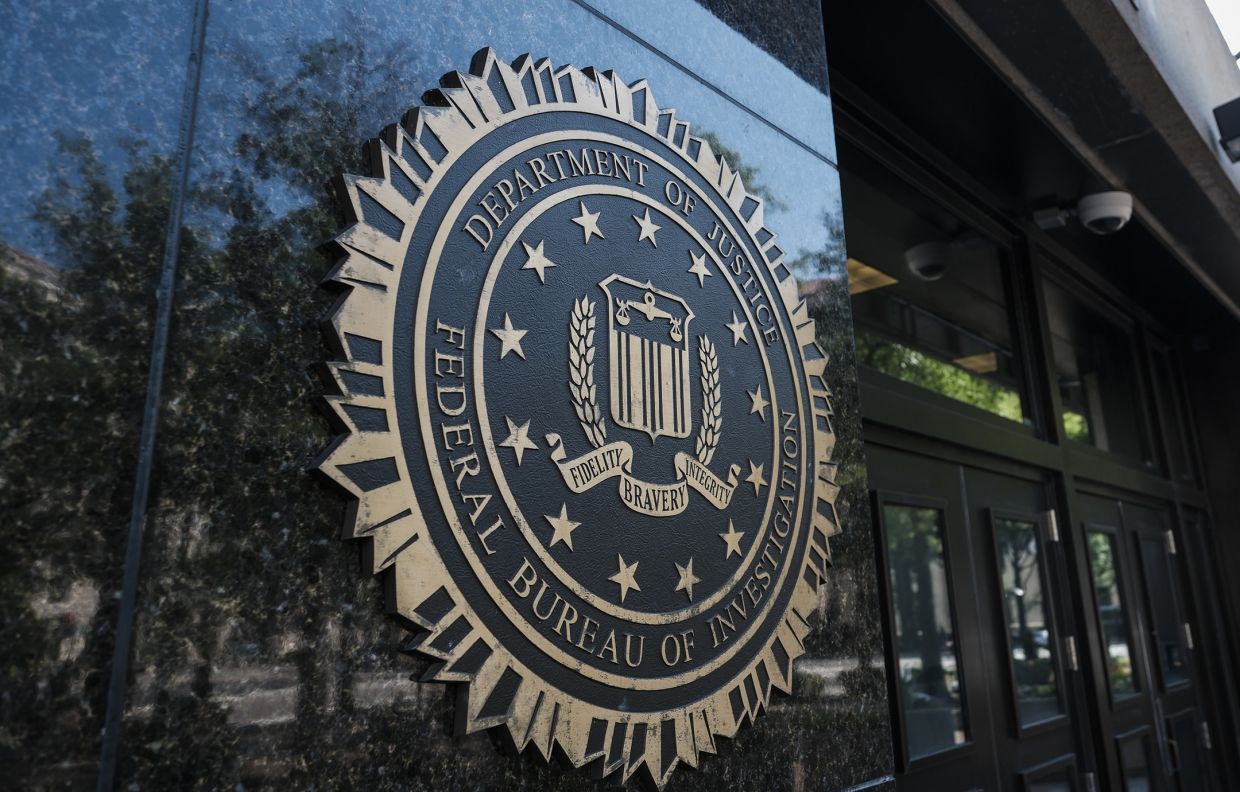
Patrick Yaroch, a supervisory agent stationed in the Washington office of the Federal Bureau of Investigation, has been arrested following a confession that he misappropriated cryptocurrency seized during an agency investigation. The disclosure, detailed in court documents, reveals how the agent came forward after experiencing what prosecutors describe as a moral reckoning about his actions, approaching a Justice Department employee and acknowledging the theft because the matter was, in his own words, "eating him up inside." This admission prompted the rapid unravelling of what may be one of the more unusual security breaches within the FBI's ranks in recent memory.
The precise amount Yaroch took remains subject to some dispute in the official record. The agent himself suggested the sum fell short of US$1 million (RM4.09 million), explaining that he had difficulty determining the exact figure because the stolen funds were commingled with his personal financial holdings. However, when federal investigators examined the cryptocurrency wallet into which Yaroch had deposited the illicit proceeds, forensic analysis revealed approximately US$1 million in digital assets. The discrepancy between Yaroch's own accounting and the wallet evidence raises questions about whether the agent genuinely miscalculated or understated his theft.
According to charging documents, Yaroch's criminal conduct commenced in late 2024 or early 2025, a timeframe suggesting the theft occurred over a relatively compressed period. He executed between ten and twelve separate withdrawals from the cryptocurrency account, gaining access through a passphrase that the FBI had lawfully obtained during its investigation of an unnamed third party suspected of illicit activity. The use of investigative credentials and passwords obtained through official channels to commit personal theft represents a particularly egregious breach of the trust embedded in law enforcement authority.
When questioned by investigators, Yaroch attributed his actions to mounting frustration with what he perceived as institutional inadequacy. He told colleagues that he had been "spinning out of control" and expressed exasperation that the FBI "could not or would not act against adversarial cryptocurrency accounts." This explanation suggests Yaroch may have felt that seizing illicit digital assets was justified or that the agency's crypto enforcement capabilities were insufficient. Yet such rationalizations carry little weight in law; using that frustration as justification for stealing official property represents a fundamental violation of his oath as a federal agent.
The timeline of events surrounding Yaroch's arrest underscores the urgency with which federal authorities moved to apprehend him. He had begun cooperating with investigators and indicated his willingness to continue conversations on August 3rd, contingent on consulting with legal counsel beforehand. Rather than allowing that engagement to proceed, FBI leadership opted over a weekend to conduct a search of his residence and take him into custody on charges of possession of stolen property. This accelerated approach suggests investigators feared further obstruction or the destruction of evidence, despite Yaroch's apparent cooperation.
Notably, prosecutors have not yet filed charges specifically related to theft of the cryptocurrency itself, a prosecutorial choice that likely reflects the compressed timeline of the investigation. Federal authorities evidently prioritized swift apprehension over the more time-consuming process of developing comprehensive charges. Court filings do not yet identify a defence lawyer representing Yaroch, leaving open questions about his legal strategy and whether he will continue to cooperate with authorities in exchange for potential leniency.
Additional details from Yaroch's digital footprint paint a revealing portrait of his intentions for the stolen funds. Internet records show that in May, the agent had prompted the artificial intelligence system ChatGPT with a request to recommend investment strategies for US$1 million, explicitly stating that his goal centred on retiring by age forty and eventually establishing a leisurely lifestyle centred on vineyard and agricultural pursuits in locations such as Cilento, Italy, or Portugal's Dao region. This evidence suggests the theft was not impulsive but rather part of a calculated plan to accumulate capital for a fundamentally different life trajectory.
For Malaysia and the broader Southeast Asian region, this case carries implications for how financial regulators and law enforcement agencies approach cryptocurrency oversight. The incident demonstrates that vulnerabilities in digital asset handling extend even to elite federal agencies with substantial resources and security protocols. As countries across Asia develop their own cryptocurrency regulatory frameworks and enforcement capacity, the Yaroch case illustrates how institutional safeguards must extend to personnel access and auditing procedures, preventing bad actors from weaponising legitimate investigative tools.
The broader context of cryptocurrency crime enforcement makes this matter particularly striking. Law enforcement agencies worldwide have been ramping up efforts to combat ransomware payments, money laundering, and terrorist financing conducted through digital currencies. Yet here was an agent within one of the world's premier investigative bodies using his privileged access to steal precisely the type of assets his agency was tasked with recovering. The incident exposes potential gaps in compartmentalisation, oversight, and internal controls that could embolden other bad actors within government to exploit similar weaknesses.
Yaroch's case may also prompt uncomfortable conversations within American law enforcement about institutional culture and employee retention. That a supervisory agent felt so desperate about his financial future and disillusioned with his agency that he saw theft as a viable pathway suggests broader questions about compensation, career prospects, and the psychological toll of federal service. Whether such concerns apply more broadly to the FBI's workforce remains unclear, but the incident invites reflection on how agencies support personnel well-being and financial security.

