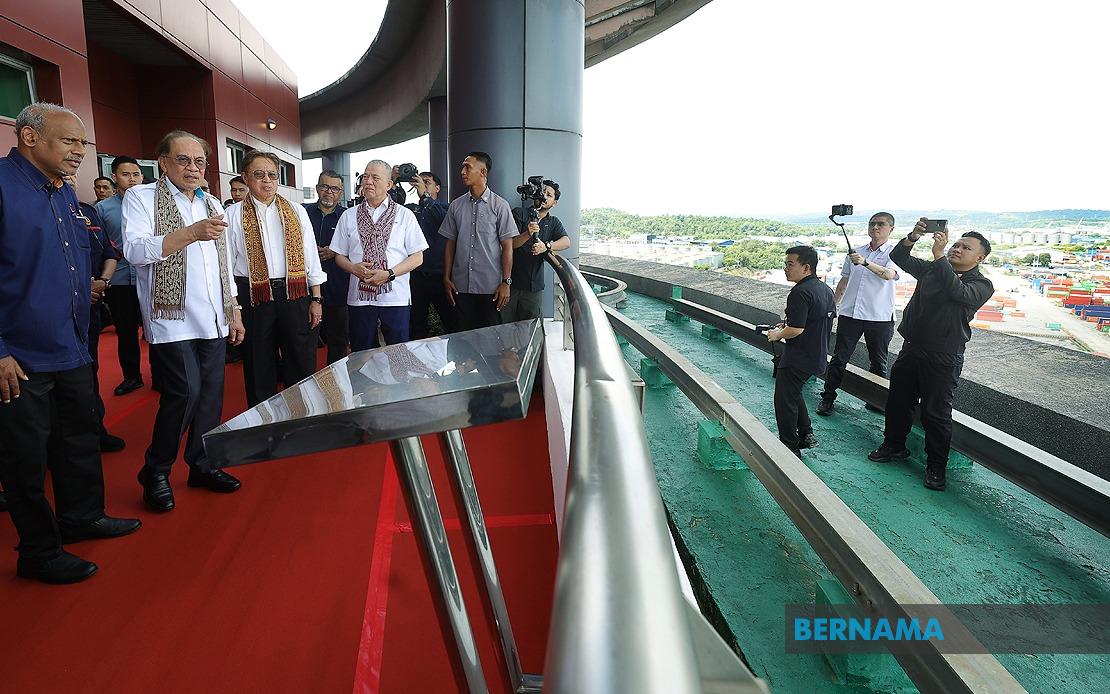
Prime Minister Datuk Seri Anwar Ibrahim has publicly endorsed the Sarawak State Government's capability to operate Bintulu Port following its shift from federal to state administration, signalling a significant devolution of port management authority to the eastern Malaysian state. The endorsement came during remarks made at the Sarawak Level Gawai Dayak 2026 Dinner in Kuching on June 21, where Anwar emphasised that the handover represents both practical recognition of competence and a gesture of goodwill between the federal and state governments.
The Bintulu Port represents one of Malaysia's most strategically important maritime installations, serving as a vital hub for the country's liquefied natural gas industry and regional trade networks across Asia. Its significance extends beyond national borders, as it functions as a critical node in Asian supply chains and energy markets. The transition of this facility from federal stewardship to state control therefore carries implications not only for Sarawak's economic development trajectory but also for broader regional commerce and Malaysia's standing in international trade corridors.
Anwar's confidence statement rested on the assertion that Sarawak possesses both the technical expertise and qualified personnel necessary to manage port operations effectively. He highlighted that the state has cultivated a pool of experienced professionals capable of handling the complex logistics, regulatory compliance, and commercial negotiations that characterise modern port administration. This acknowledgement suggests that the decision to transfer control was predicated on concrete assessments of institutional capacity rather than political expediency alone.
The formal change of status was finalised through a Cheque Handover Ceremony conducted in Bintulu itself on the same day, cementing the administrative transition and marking a watershed moment in the decentralisation of critical infrastructure management within Malaysia's federal structure. Such ceremonies, while often ceremonial in nature, carry symbolic weight in affirming institutional shifts and establishing clear records of responsibility transfer between governmental levels.
The handover must be understood within the broader context of centre-state relations in Malaysia, where resource management and infrastructure control have long been sources of negotiation and partnership between Kuala Lumpur and state capitals. Sarawak, as one of the two Malaysian states with special constitutional protections regarding autonomy in certain matters, has historically maintained distinct governance arrangements. The port transfer aligns with this trajectory of state empowerment in critical sectors, allowing Sarawak greater control over resources that directly generate revenue and shape economic policy.
For Sarawak specifically, assuming operational responsibility for Bintulu Port presents both opportunities and challenges. The state gains the ability to shape port development policies, tariff structures, and expansion strategies in alignment with local economic priorities. Conversely, management of a major international port demands sustained investment in infrastructure maintenance, competitive service standards, and regulatory compliance with maritime authorities. The state must now balance commercial viability with broader development objectives.
The LNG industry connection proves particularly crucial, as Bintulu has historically served as the export point for Malaysian liquefied natural gas destined for markets throughout Asia and beyond. Energy security considerations at both national and regional levels therefore intersect with port management decisions. Sarawak's stewardship of this facility positions the state as custodian of infrastructure that influences Malaysia's energy export capacity and international commercial relationships.
Anwar's framing of the handover as evidence of federal confidence and friendship carries political significance beyond administrative mechanics. By characterising the transfer as affirmation rather than retrenchment, the Prime Minister sought to position the move as recognition of Sarawak's achievements rather than federal withdrawal. This rhetorical approach helps manage perceptions that might otherwise interpret devolution as loss of federal authority, instead promoting narratives of partnership and mutual respect between governmental levels.
The capacity of Sarawak to deliver on port management expectations will likely influence future discussions about infrastructure devolution in Malaysia. Success would validate arguments for expanded state control over critical facilities, while operational difficulties could prompt recalibration of the federal-state balance. Consequently, the Bintulu Port transition functions not merely as a administrative change but as a test case for broader questions about optimal governance structures for Malaysia's major economic assets.
Looking forward, Sarawak faces the task of demonstrating that state-level port management can maintain the high operational standards, safety protocols, and commercial competitiveness that international trade demands. The state must also navigate potential coordination challenges with federal maritime authorities, customs agencies, and national energy policy frameworks. Success requires both effective internal governance and constructive engagement with federal counterparts on matters affecting national interests.
The transition also reflects evolving relationships between Malaysia's federal centre and resource-rich states, particularly as those states seek greater control over development trajectories. Sarawak's acquisition of port management authority exemplifies how infrastructure devolution can advance state economic autonomy while theoretically preserving national oversight of strategic sectors. The model, if successful, may inform similar conversations regarding other critical facilities and resources across Malaysia's federal system.
%22%2F%3E%3C%2Fpattern%3E%3C%2Fdefs%3E%3Crect%20width%3D%22100%25%22%20height%3D%22100%25%22%20fill%3D%22url(%23ph24037g)%22%2F%3E%3Crect%20width%3D%22100%25%22%20height%3D%22100%25%22%20fill%3D%22url(%23ph24037p)%22%2F%3E%3Ctext%20x%3D%2250%25%22%20y%3D%2250%25%22%20text-anchor%3D%22middle%22%20dominant-baseline%3D%22central%22%20fill%3D%22rgba(255%2C255%2C255%2C0.95)%22%20font-family%3D%22Georgia%2C%20'Times%20New%20Roman'%2C%20serif%22%20font-weight%3D%22700%22%20font-size%3D%22320%22%20letter-spacing%3D%22-0.02em%22%3EIran%3C%2Ftext%3E%3C%2Fsvg%3E)
%22%2F%3E%3C%2Fpattern%3E%3C%2Fdefs%3E%3Crect%20width%3D%22100%25%22%20height%3D%22100%25%22%20fill%3D%22url(%23ph1r7fsg)%22%2F%3E%3Crect%20width%3D%22100%25%22%20height%3D%22100%25%22%20fill%3D%22url(%23ph1r7fsp)%22%2F%3E%3Ctext%20x%3D%2250%25%22%20y%3D%2250%25%22%20text-anchor%3D%22middle%22%20dominant-baseline%3D%22central%22%20fill%3D%22rgba(255%2C255%2C255%2C0.95)%22%20font-family%3D%22Georgia%2C%20'Times%20New%20Roman'%2C%20serif%22%20font-weight%3D%22700%22%20font-size%3D%22320%22%20letter-spacing%3D%22-0.02em%22%3EIran%3C%2Ftext%3E%3C%2Fsvg%3E)