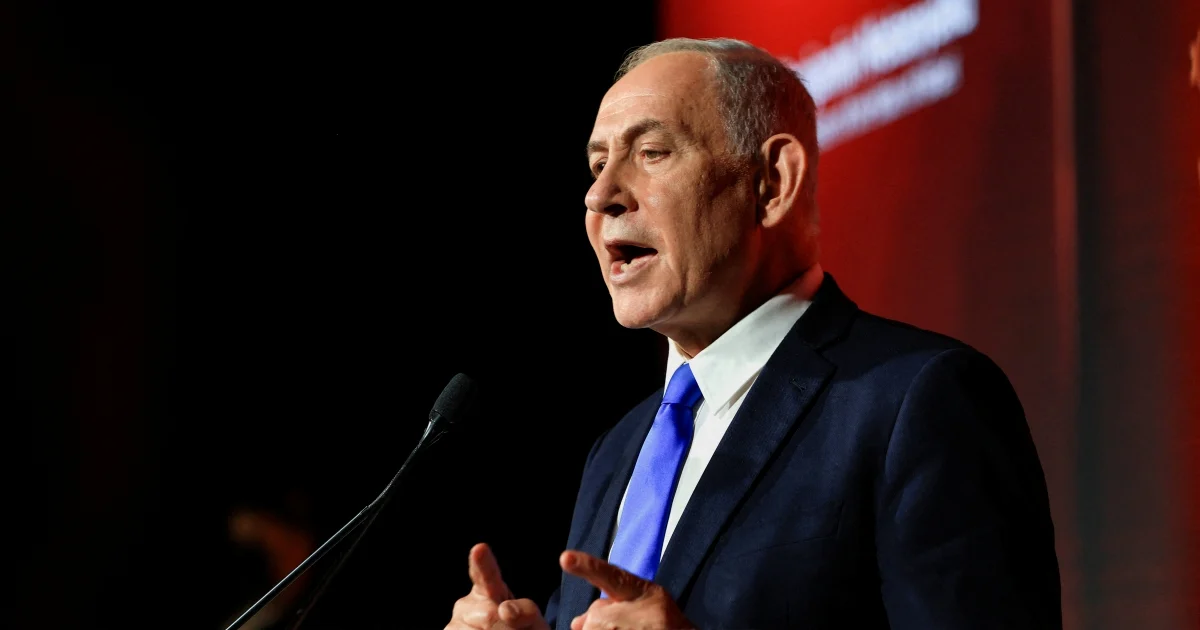
Israeli Prime Minister Benjamin Netanyahu has declared that military forces under his command will remain stationed in southern Lebanon for whatever duration deemed necessary, a pronouncement made on Sunday that underscores the indefinite nature of current operations in the neighbouring territory. The statement, coupled with his reiteration of resolve regarding Iran's nuclear capabilities, reflects the multifaceted security calculations dominating Israeli strategic thinking in the Middle East.
The assertion of an open-ended military commitment to southern Lebanon marks a significant development in the ongoing conflict dynamics that have characterised the region for months. Rather than committing to a specific timeline for withdrawal, Netanyahu's framing emphasises the conditional nature of Israel's presence—contingent upon achieving undefined security objectives and presumably the absence of threats from Hezbollah and other militant organisations operating from Lebanese territory.
For Malaysia and other Southeast Asian nations, the implications of this declaration warrant careful consideration. The Middle East remains a crucial trading partner and source of energy for the region, with several ASEAN members maintaining substantial commercial interests and diaspora populations in both Israel and Lebanon. Any prolongation of military operations threatens to destabilise energy markets and disrupt maritime commerce, particularly affecting the critical Strait of Hormuz through which significant petroleum flows destined for Asian markets transit.
Netanyahu's dual emphasis on southern Lebanon and Iran's nuclear programme reflects an interconnected security vision that ties regional state actors and non-state militant groups into a broader strategic calculation. The Israeli leadership perceives these two concerns as fundamentally linked, with the southern Lebanon situation viewed through the prism of Iranian influence projection through proxy organisations. This framing suggests that any resolution to the Lebanese situation remains contingent upon broader developments in Israel-Iran relations.
The absence of a defined exit strategy raises questions about the actual end conditions for Israeli military operations. Without explicit benchmarks for measuring success or specific triggers for withdrawal, the southern Lebanon deployment risks becoming a quasi-permanent fixture of the regional landscape. This open-endedness carries psychological and economic costs for all parties involved, from Lebanese civilians caught in the operational theatre to international investors concerned about regional stability and energy security.
Hezbollah's presence in southern Lebanon fundamentally shapes Israeli strategic calculations. The militant organisation, substantially armed and funded by Iran, has maintained a substantial military apparatus in the region for decades. Israel's security establishment views this presence as an existential threat, particularly given Hezbollah's demonstrated capacity to strike Israeli territory with advanced weaponry. Netanyahu's government sees the southern Lebanon operation as essential to degrading this capacity and creating a buffer zone insulating Israeli population centres from potential attacks.
The nuclear dimension of Netanyahu's statement demonstrates how Israeli security concerns extend beyond immediate military threats to encompass longer-term existential calculations regarding Iranian capabilities. The Israeli government has historically positioned nuclear non-proliferation as a red line, viewing an armed Iran as fundamentally incompatible with regional security arrangements favourable to Israeli interests. This conviction shapes not only Israeli diplomatic initiatives but also operational decisions regarding militarily relevant targets and strategic threats.
Southeast Asian observers must recognise that Middle Eastern conflict dynamics increasingly intersect with great power competition affecting Asia-Pacific interests. The American military presence supporting Israeli operations, China's economic investments throughout the region, and Russia's diplomatic positioning all create a complex geopolitical context extending well beyond traditional Middle Eastern boundaries. Malaysian policymakers must balance traditional Islamic solidarity with the Arab world against economic and strategic considerations demanding stable relations with multiple regional and global powers.
The Lebanese government's position remains fundamentally constrained by its weakness relative to Hezbollah's military and organisational capabilities. Despite formal sovereignty, Lebanon's state structures lack the capacity to exercise effective monopoly over force throughout national territory. This weakness creates a security vacuum that both Israel and Iran exploit, producing a frozen conflict dynamic where military operations occur with limited possibility of genuine resolution through diplomatic mechanisms. For regional stability, this represents a deeply problematic situation offering no obvious pathway toward deescalation.
The economic implications of indefinite military operations extend beyond immediate destruction costs to encompass broader investment climate deterioration. Lebanese infrastructure already devastated by years of civil conflict and more recent Beirut port explosion faces further degradation. International investors increasingly avoid Lebanese assets, deepening the country's economic crisis and humanitarian emergency. For Malaysia's development and export-oriented economy, such regional instability threatens commerce and energy security requiring immediate stabilisation.
Netanyahu's public commitment to indefinite southern Lebanon operations simultaneously serves important domestic political functions within Israeli society. Projecting strength and commitment to security resonates with significant portions of the Israeli electorate, particularly those residing in communities proximate to Lebanese border areas. The formulation of open-ended commitment, rather than promising quick victory, reflects mature strategic communication acknowledging the complexity of the situation while maintaining domestic political support.
Movement toward international mediation and diplomatic resolution faces substantial obstacles given these unilateral military declarations. Regional actors including Saudi Arabia, Egypt, and potentially Gulf states possess interests in de-escalation, yet lack sufficient leverage to compel Israeli compliance with withdrawal timelines or Hezbollah disarmament simultaneously. The situation thus remains locked in a pattern where military operations continue absent genuine diplomatic breakthrough.
For Malaysian foreign policy, the challenge involves maintaining constructive relationships with diverse Middle Eastern actors while protecting economic interests and upholding humanitarian principles. The indefinite Lebanon deployment signals a region unlikely to experience stabilisation in the near term, requiring Malaysian policymakers to adjust development strategies and risk assessments accordingly while engaging through established diplomatic channels toward eventual de-escalation.

%22%2F%3E%3C%2Fpattern%3E%3C%2Fdefs%3E%3Crect%20width%3D%22100%25%22%20height%3D%22100%25%22%20fill%3D%22url(%23ph4jhhpg)%22%2F%3E%3Crect%20width%3D%22100%25%22%20height%3D%22100%25%22%20fill%3D%22url(%23ph4jhhpp)%22%2F%3E%3Ctext%20x%3D%2250%25%22%20y%3D%2250%25%22%20text-anchor%3D%22middle%22%20dominant-baseline%3D%22central%22%20fill%3D%22rgba(255%2C255%2C255%2C0.95)%22%20font-family%3D%22Georgia%2C%20'Times%20New%20Roman'%2C%20serif%22%20font-weight%3D%22700%22%20font-size%3D%22151%22%20letter-spacing%3D%22-0.02em%22%3EPerikatan%3C%2Ftext%3E%3C%2Fsvg%3E)