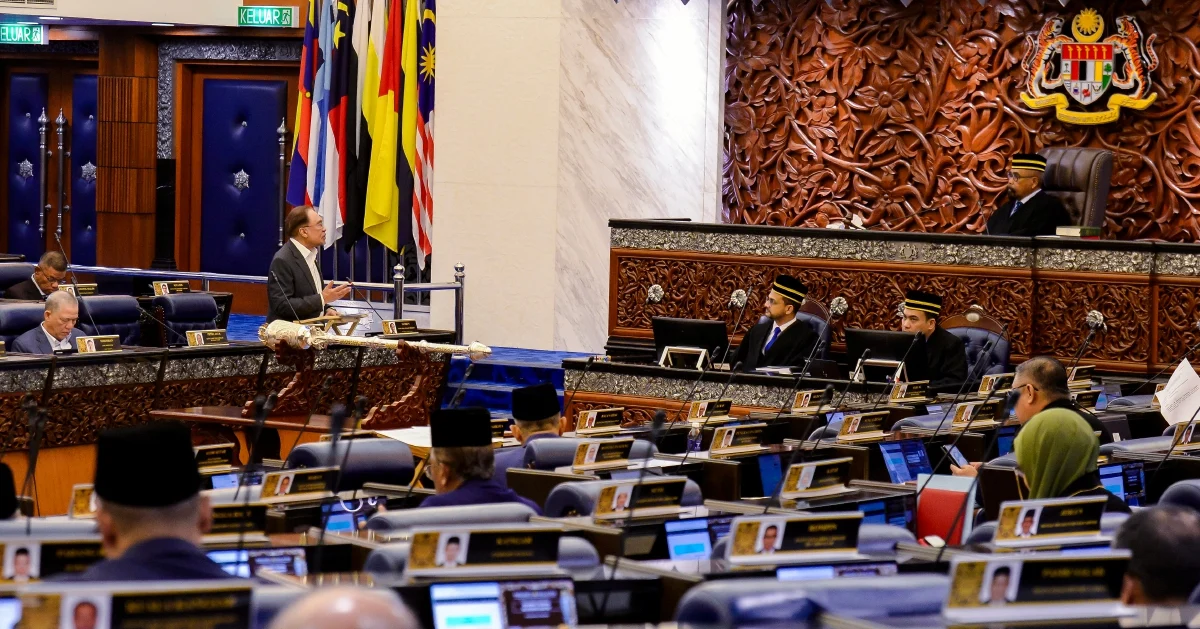
Prime Minister Datuk Seri Anwar Ibrahim has made clear that the federal government will not automatically absorb the financial consequences of decisions taken by state administrations, marking a significant stance on the boundaries of fiscal responsibility between Putrajaya and the states. The declaration underscores growing tensions over how Malaysia's layered system of governance should distribute spending obligations, particularly as states increasingly pursue development projects and policy initiatives that carry considerable cost implications.
Anwar's position reflects a broader federal strategy to establish clearer demarcation lines around which tier of government bears responsibility for what expenditures. This approach has gained traction at a time when Malaysia faces considerable budgetary pressures, with the federal government managing a complex portfolio of national obligations from defence and healthcare to infrastructure and social support programmes. By signalling that state decisions cannot simply shift their financial burden to federal coffers, Anwar is attempting to enforce greater fiscal discipline across the country's administrative structure.
The timing of this statement carries particular weight given Malaysia's ongoing economic challenges and the need for prudent resource allocation. The federal government has limited fiscal headroom and cannot afford to subsidise every initiative conceived at the state level, especially when such projects may not align with national priorities or may duplicate existing federal programmes. This assertion effectively places responsibility squarely on state governments to think carefully about the feasibility and funding mechanisms for their own policy proposals before implementation.
The statement has implications for how states manage their relationships with Putrajaya, particularly in sectors where overlap exists between state and federal responsibilities. Whether in education, public health, infrastructure, or welfare provision, state governments will need to demonstrate clearer planning and sustainable financing arrangements rather than relying on federal bailouts. This shift demands greater transparency and accountability at the state level, forcing elected officials to justify their spending choices to constituents without the safety net of automatic federal support.
For states governed by the ruling coalition, the message serves as both warning and instruction to streamline operations and align spending with federal priorities where possible. For opposition-led states, the declaration may be perceived as pressure to conform or risk financial marginalisation, though such states would argue this represents political weaponisation of fiscal policy. Regardless of interpretation, the principle Anwar articulated establishes a new framework for federal-state relations centred on fiscal responsibility and clear demarcation of obligations.
The practical implications extend across numerous policy domains. States considering expansion of civil service roles, new welfare schemes, or major infrastructure commitments will need to identify sustainable funding sources within their own revenue streams rather than assuming federal support. This includes examining existing state revenues from land and service taxes, licensing fees, and other sources. Some states may face difficult choices about prioritising expenditures or seeking alternative financing mechanisms such as public-private partnerships.
Anwar's statement also reflects the central government's broader agenda of strengthening federal finances and achieving fiscal sustainability targets set in the medium-term framework. With Malaysia targeting specific budget deficit ratios, every ringgit counts toward meeting these objectives. Unexpected costs flowing from state decisions create unpredictability that complicates federal planning and forecasting, making it harder to maintain consistent fiscal discipline.
The challenge lies in distinguishing between decisions that genuinely fall within state jurisdiction and those that carry broader national consequences requiring federal consideration. Infrastructure projects in one state often have spillover effects for neighbouring states and national economic growth. Social programmes implemented in one jurisdiction can create pressure for similar provision elsewhere. The boundary between state autonomy and federal interest remains contested, and Anwar's statement does not resolve this tension but rather asserts federal resistance to covering costs unilaterally.
For Malaysian businesses and investors, particularly those engaged with state governments, the implications are significant. Projects previously assumed to have federal backing may now require more rigorous financing evaluation. State governments may become more conservative in approving major initiatives, or alternatively may seek joint ventures and private sector partnerships to offset costs. Either way, investment decisions will be affected by clearer signals about the limits of federal support.
The statement also resonates with broader governance debates about accountability and the proper role of different tiers of government in a federal system. Malaysia's constitution delineates state and federal powers, but practice has often involved fluid arrangements where federal government steps in to address state-level shortfalls. Anwar's declaration suggests an intent to enforce constitutional principles more strictly, requiring states to live within their means and plan accordingly.
Stateassemblies and state cabinets will need to recalibrate their approach to policy-making and budgeting in light of this position. More stringent internal review processes will likely emerge, with greater emphasis on ensuring that decisions have genuine local funding mechanisms in place before approval. This could slow certain initiatives but may ultimately produce more sustainable governance at the state level.
Looking forward, this stance will shape federal-state relations significantly. Clear precedents will be established through how specific disputes are handled, creating a body of practice that defines the actual rather than theoretical boundary between state autonomy and federal obligation. States will watch closely to see whether Putrajaya applies this principle consistently or whether political considerations influence implementation, particularly regarding which states receive federal support despite this declared policy.
Ultimately, Anwar's assertion represents an attempt to impose fiscal discipline on a system that has historically lacked clear consequences for profligate state spending. Whether this boundary holds and whether states adapt their behaviour accordingly will depend on consistent implementation and the federal government's willingness to enforce its stated position across all political circumstances.

