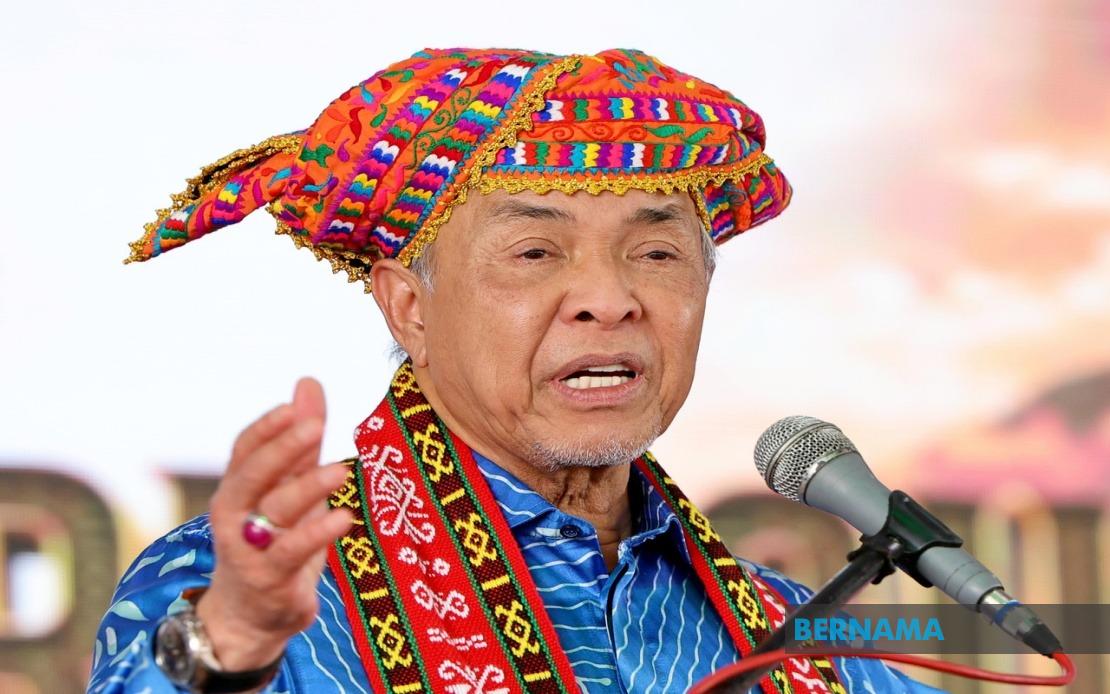
Deputy Prime Minister Datuk Seri Dr Ahmad Zahid Hamidi has announced a substantial federal investment of RM4.06 billion directed towards the Sabah state government to implement comprehensive Rural Water Supply (BALB) projects statewide. The announcement, made during the opening of the Rungus Cultural Festival in Matunggong, underscores the federal government's commitment to tackling persistent service delivery challenges in one of Malaysia's most geographically challenging and economically disadvantaged states.
The infrastructure initiative represents a significant policy push to address what Ahmad Zahid identified as Sabah's most pressing development constraints: inadequate clean water access and unreliable electricity supply in rural communities. As Minister of Rural and Regional Development, Ahmad Zahid framed the investment as both a practical response to genuine hardship and a philosophical commitment to ensuring that Malaysia's development benefits reach all regions equitably. His emphasis that "development is the right of all Malaysians, whether in Sabah, Sarawak or the Peninsula" signals a federal priority to narrow the regional development gap that has persisted since Malaysia's founding.
The allocation will be distributed across Sabah's most vulnerable districts, with particular emphasis on Kudat, Kota Marudu, and Pitas—all classified among Malaysia's poorest regions. This geographic targeting reflects a deliberate strategy to concentrate resources in areas where basic infrastructure deficits have constrained economic participation and quality of life. Rural water scarcity in Sabah has long been a constraint on agricultural productivity, health outcomes, and the viability of rural settlements, making this intervention potentially transformative for affected communities.
Implementation will remain under direct state government supervision, though Ahmad Zahid assured that the Rural and Regional Development Ministry (KKDW) will maintain active oversight and technical support to ensure projects proceed on schedule. This collaborative governance model attempts to balance federal resource provision with state administrative ownership, a structure increasingly common in Malaysian development programming. The ministry's monitoring role carries implications for project quality and timeline adherence, areas where rural infrastructure schemes historically face execution challenges.
Beyond water infrastructure alone, the federal initiative encompasses broader socioeconomic programming aimed at eradicating hardcore poverty in Sabah's rural communities. Complementary initiatives targeting the bottom 40 percent income group (B40) include livelihood enhancement programs and income-generation schemes designed to address the structural economic dimensions of rural poverty. This multi-faceted approach acknowledges that infrastructure investment alone cannot sustainably improve living standards without concurrent efforts to expand economic opportunities.
The announcement carries particular significance given Sabah's political importance within Malaysia's federal system. As a major East Malaysian state with substantial indigenous populations and significant geographic remoteness, Sabah's development trajectory affects national cohesion and federal legitimacy. Infrastructure deficits in Sabah have occasionally fueled political grievances about unequal development distribution, making visible federal investment a strategically important signal about the central government's commitment to regional equity.
Ahmad Zahid additionally pledged federal support for upgrading Matunggong Sub-District to full district status, a constitutional change that would unlock access to enhanced development allocations from both federal and state budgets. This administrative elevation, which requires Cabinet approval and coordination with Chief Minister Datuk Seri Hajiji Noor, would represent significant institutional recognition of the area's population size and development needs. District-level status typically triggers additional bureaucratic capacity and budgetary authority, potentially accelerating implementation of local development priorities.
Immediate action has already been directed toward local infrastructure rehabilitation, with Ahmad Zahid instructing relevant KKDW agencies to commence repair works on the Matunggong Community Hall within a three-month timeframe. This operational directive demonstrates an attempt to deliver tangible, visible improvements quickly, though three-month timelines for public construction projects in remote areas frequently face unforeseen complications involving procurement, logistics, and weather conditions.
The magnitude of the RM4.06 billion commitment positions water supply as a central pillar of Sabah's current development agenda, reflecting evolving federal priorities toward basic infrastructure completion. For Malaysian policymakers, the announcement suggests recognition that rural development cannot be indefinitely deferred without risking social fragmentation and political instability in peripheral regions. The presence of Natural Resources and Environmental Sustainability Minister Datuk Seri Arthur Joseph Kurup and multiple parliamentary representatives indicates coordinated institutional commitment across multiple portfolios.
For Sabah's rural populations, particularly in designated hardcore-poor districts, the BALB rollout could substantively alter daily life by reducing water collection burdens—typically borne disproportionately by women and children—and enabling improved hygiene and sanitation. Access to reliable clean water constitutes a foundational development input with documented spillover effects on educational attendance, health outcomes, and productivity. However, successful rural water system implementation in Sabah's topographically complex terrain remains dependent on sustained technical support, spare parts availability, and community training—execution factors that historically determine whether infrastructure investments translate into genuine service improvements.
The initiative also reflects broader Southeast Asian development trends emphasizing rural infrastructure completion in countries where previous generations of development programming concentrated investment in urban cores and plantation regions. Malaysia's later-developing rural states are now receiving the kind of utility infrastructure investment that more developed regions completed decades earlier, positioning the RM4.06 billion commitment within a longer historical narrative of uneven development correction across the federation.

