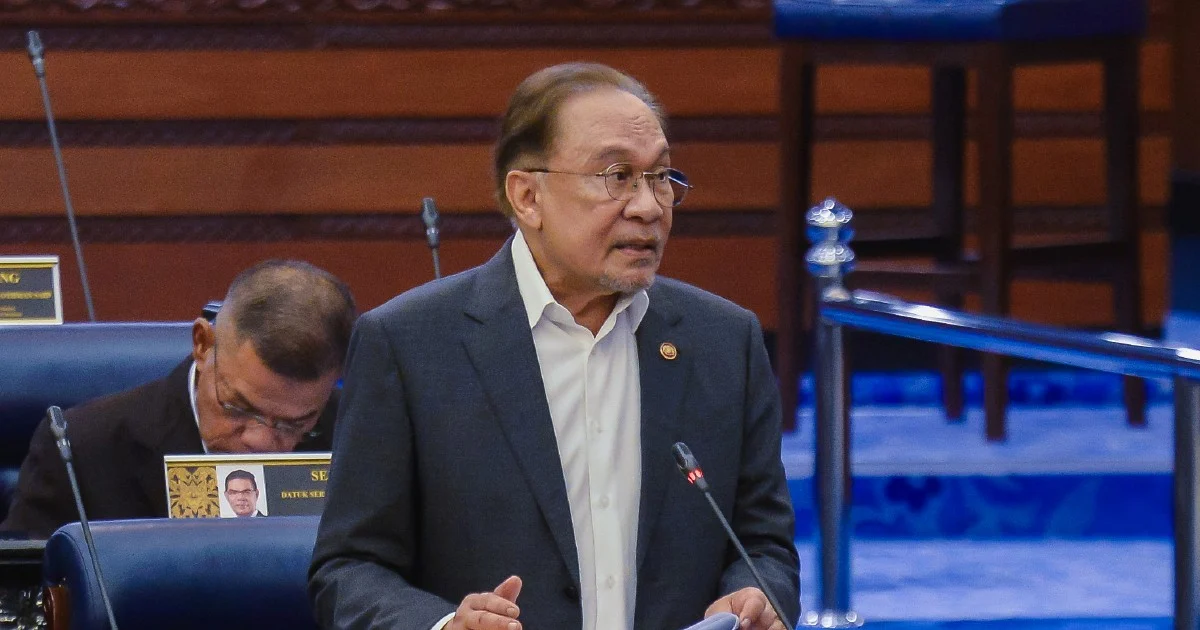
Prime Minister Datuk Seri Anwar Ibrahim has announced that the federal government is actively negotiating with Sarawak to increase the state's special grant under the Malaysia Agreement 1963, underscoring Putrajaya's commitment to addressing longstanding fiscal arrangements between the centre and the East Malaysian state. The disclosure comes as the government seeks to manage revenue-sharing agreements that have been a cornerstone of constitutional relations since Malaysia's formation in 1963.
The MA63 special grant remains one of the most significant elements of Sarawak's constitutional settlement with the federal government, guaranteeing the state a minimum annual financial allocation. This provision was intended to provide Sarawak with sustained resources for development and administrative functions. However, the purchasing power of the grant has been eroded by decades of inflation and economic growth, prompting recurring calls from Kuching to revisit the quantum.
Sarawak's position within Malaysia's federal framework has always been distinct from the peninsular states, granted specific safeguards and financial guarantees as a condition of joining the federation. The MA63 arrangement reflects this unique constitutional status and has served as the bedrock for managing centre-state relations. Discussions around adjusting the special grant amount invariably touch on broader questions about autonomy, resource allocation, and the recognition of East Malaysian interests within the wider national context.
The timing of these negotiations carries significance in the current political landscape. Sarawak's government, led by Chief Minister Datuk Patinggi Abang Johari Openg, has consolidated considerable influence within Malaysia's political system. The state's multiple parliamentary seats and substantial electoral weight give Sarawak considerable leverage in discussions with the federal government. This positioning has elevated the state's ability to press claims for enhanced fiscal arrangements.
Increasingly, states across Malaysia are scrutinising their financial relationships with the federal government, particularly as economic pressures mount and development ambitions expand. For Sarawak, a resource-rich state with substantial oil and gas revenues, the question of adequate federal support intertwines with broader debates about state autonomy and the distribution of wealth from natural resources. The state government has articulated a vision of accelerated development and economic diversification that requires substantial capital investment.
The negotiations reflect a broader pattern of dialogue between the federal government and states seeking to redefine fiscal partnerships. Anwar's administration has signalled openness to reviewing revenue-sharing arrangements and addressing historical grievances within Malaysia's federal structure. This approach contrasts with previous governments and suggests a willingness to engage with state governments on their specific concerns regarding resource allocation and development funding.
For Malaysian readers, these discussions are relevant because they demonstrate how federal-state relations are being recalibrated under the current administration. The outcome of negotiations with Sarawak may establish precedents for discussions with other states or inform broader constitutional and fiscal reform. An increased MA63 grant to Sarawak would represent a significant budgetary commitment from Putrajaya, with implications for national fiscal planning and spending priorities.
Regionally, the negotiation process also signals Malaysia's approach to managing diversity within a federal system. Southeast Asia contains multiple federalised nations, and how Malaysia handles centre-periphery financial relationships offers lessons to observers elsewhere in the region. A successful resolution of the MA63 grant question would strengthen federal cohesion and demonstrate effective conflict resolution mechanisms within Malaysia's constitutional framework.
The quantum of the current MA63 grant and the scale of increase being contemplated remain subjects of ongoing discussion. The federal government faces the challenge of balancing Sarawak's legitimate claims for enhanced support with its own budgetary constraints and competing demands from other states and federal programmes. Any agreement must be financially sustainable while genuinely addressing the state's needs.
Enhancing the MA63 grant would also support Sarawak's economic aspirations in sectors including energy transition, digital infrastructure, and high-value manufacturing. The state views adequate federal funding as essential to realising its development potential and competing effectively within Malaysia's regional economy. A more generous grant arrangement could facilitate these ambitions while simultaneously strengthening the broader federal partnership.
The negotiations underscore that Malaysian federalism remains dynamic and subject to renegotiation based on changing circumstances and political contexts. Unlike some federal systems where fiscal arrangements are relatively fixed, Malaysia's structure allows for ongoing dialogue and adjustment. This flexibility has historically provided a mechanism for accommodating diverse regional interests and managing potential tensions within the federation.
Looking forward, the resolution of MA63 grant discussions will likely influence Sarawak-Putrajaya relations for years ahead. A successful negotiation that satisfies Sarawak's concerns would enhance the state government's relationship with the centre and potentially unlock closer cooperation on national development initiatives. Conversely, an impasse could become a source of tension that reverberates through federal politics and electoral calculations.
As discussions progress, observers will assess whether the federal government can craft a fiscally responsible package that meaningfully increases Sarawak's special grant while maintaining equitable treatment of other states. The outcome will signal the Anwar administration's capacity to manage Malaysia's complex federal arrangement and respond to legitimate claims for historical recognition of East Malaysian interests within the broader national framework.

