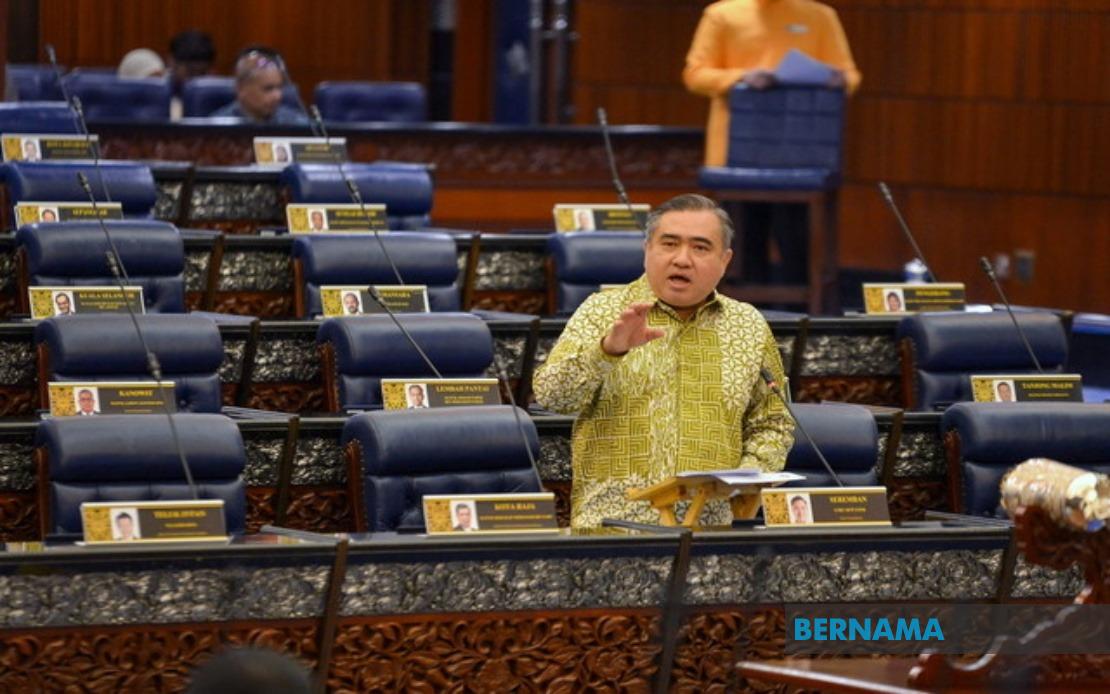
Transport Minister Anthony Loke has declared that the Federal Government will shoulder financing responsibilities for Johor's ambitious Elevated Autonomous Rapid Transit (E-ART) project, marking a significant policy shift for the controversial infrastructure development. The announcement came during parliamentary question time, where Loke outlined the government's evolving approach to a project initially envisioned as a private-sector-led venture. The decision reflects growing recognition that major urban transit infrastructure in Malaysia requires substantial public investment to remain economically viable and serve the broader interests of commuters rather than investor returns alone.
The financing framework remains fluid as key details continue to be negotiated between government agencies and the appointed consortium. Loke emphasised that the specific mechanisms for funding disbursement, the extent of financial commitment from federal coffers, and how repayment obligations will be structured across the project's concession period have not yet been finalised. This extended negotiation period is typical for large infrastructure projects in Malaysia, though it also underscores the complexity of bridging private-sector expectations with public-interest objectives. The minister indicated that preliminary assessments have fundamentally altered the project's financial assumptions, with private financing alone proving insufficient to deliver the initiative as planned.
Loke's candid acknowledgment that the E-ART project lacks viability under pure private-sector financing represents an important reality check for Malaysian infrastructure planning. Mega-projects serving urban transit often generate fare revenues insufficient to cover construction, operational, and maintenance costs while remaining affordable to ordinary commuters. The government's willingness to inject public funds acknowledges this inherent tension and signals a commitment to ensuring that Johor's transportation infrastructure serves residents broadly rather than remaining a boutique service catering to higher-income users. The shift also reflects international best practices, where government co-financing of transit systems is standard across developed and developing economies.
Before formal commitments crystallise, the negotiated terms will require Cabinet approval, followed by the signing of a formal Concession Agreement. This gatekeeping process ensures that any arrangement strikes an acceptable balance between public interest and commercial viability. The E-ART project itself, which involves elevated tracks traversing key Johor Bahru corridors, is expected to reach completion within four years of the Letter of Acceptance being issued, assuming no significant delays in procurement, land acquisition, or construction phases. This timeline places the project's opening in the mid-2020s, coinciding with broader regional transport expansion initiatives.
A crucial context for the E-ART project is the imminent arrival of the Singapore-linked Johor Bahru-Singapore Rapid Transit System (RTS) Link, scheduled for operations in January 2027. This cross-border connection will dramatically reshape travel patterns across the Johor Strait, potentially increasing pedestrian and vehicular traffic at key border checkpoints and within Johor Bahru's urban core. The E-ART system must therefore integrate seamlessly with this incoming connectivity to avoid creating bottlenecks or isolated transit corridors. Loke's parliamentary response addressed concerns that traffic congestion would peak during the interval between RTS Link's opening and E-ART's completion, acknowledging the genuine vulnerability in Johor's transport capacity during this transitional period.
To mitigate congestion risks, the Transport Ministry and Johor state government have jointly developed a traffic dispersal strategy centred on strengthening existing public transport infrastructure. The BAS.MY service, a government-backed bus network, is slated for significant expansion to 28 routes comprising 254 buses, including electric-powered vehicles that align with sustainability objectives. This bus network serves as the backbone for distributing passengers across Johor before E-ART becomes operational, making its expansion critical for preventing gridlock during the RTS Link's early years. The emphasis on electric buses also reflects Malaysia's broader commitments to reducing transport-sector emissions and improving air quality in urban areas.
Under the Stage Bus Service Transformation (SBST) 2.0 programme, a dedicated allocation of 157 buses will be deployed on high-traffic routes linking Johor Bahru Sentral and Bukit Chagar, with service commencement targeted for early 2027. This timing aligns the bus expansion with RTS Link's opening, ensuring that adequate surface-level transport capacity exists to feed passengers into both the border-crossing facility and broader Johor Bahru transport hubs. The concentrated focus on these specific corridors reflects traffic modelling that identifies them as likely choke points during the transitional period between RTS Link activation and E-ART completion.
Rail connectivity is also receiving attention, with the ministry actively pursuing procurement of 12 new KTM Komuter Southern train sets to enhance capacity on existing commuter rail lines. While formal approvals for this procurement remain pending, the government has already launched interim solutions including the newly inaugurated Shuttle Selatan service, which began operations on June 16. This shuttle links Kulai, Kempas, and Johor Bahru with a Kempas-Pasir Gudang branch, offering 14 daily trips and providing a temporary capacity boost for passengers in the southern Johor corridor. These incremental improvements, though modest individually, collectively aim to prevent transport network collapse during the critical 2027-2028 period.
A secondary parliamentary query from Padang Besar MP Rusdan Rusmi highlighted another contentious issue in Malaysian public transport policy: fare regulation. Transport Minister Loke confirmed that government remains committed to controlling fares across all public transport projects, a stance that directly acknowledges the affordability concerns that have long constrained ridership growth in Malaysia. However, Loke also articulated the financial challenge this stance creates: controlled fares reduce project revenue, necessitating ongoing government subsidies to maintain operational viability. This dynamic explains why the E-ART project cannot rely on fare revenues alone to justify private investment, and why government co-financing becomes essential. The minister's framing presents fare control as a deliberate policy choice, positioning accessibility over profit maximisation as the government's priority.
The broader implication of Johor's E-ART and its supporting initiatives is a recalibration of Malaysia's infrastructure financing model toward greater public responsibility. For decades, the country pursued aggressive privatisation of major infrastructure, assuming that private operators would deliver services efficiently while reducing fiscal burdens. Experience has demonstrated that this model struggles in the transportation sector, where social benefit (reducing congestion, improving air quality, enhancing mobility for lower-income residents) often diverges from commercial return. The E-ART announcement suggests that policymakers increasingly recognise this gap and are prepared to reconcile public investment with market mechanisms rather than purely privatising major transit systems.
For Southeast Asian observers, Malaysia's pivot carries instructive lessons. As regional cities grapple with rapid urbanisation and chronic congestion, the temptation to rely on private-sector solutions remains strong, yet the costs of inadequate public transport infrastructure—in lost productivity, environmental damage, and social friction—ultimately exceed the fiscal outlays required for proper government funding. Johor's approach, if executed effectively, could model a pragmatic middle path: leveraging private-sector management expertise and operational efficiency while acknowledging that government financing is fundamentally necessary for equitable, efficient urban mobility.
The success of Johor's integrated transport strategy will depend critically on timing, coordination, and sustained funding commitments. The window between January 2027 (RTS Link opening) and mid-2028 (anticipated E-ART completion) represents a test case for Malaysia's ability to scale and synchronise complex infrastructure projects. If congestion peaks during this interval, political pressure to deprioritise public transport investments may intensify. Conversely, if the expanded bus and shuttle services function smoothly, it will validate the government's commitment to multi-modal transit systems and justify continued investment in rail and elevated transit technologies.

